NA 2026.009
Last revised
Nihontō · Katana · Koshirae
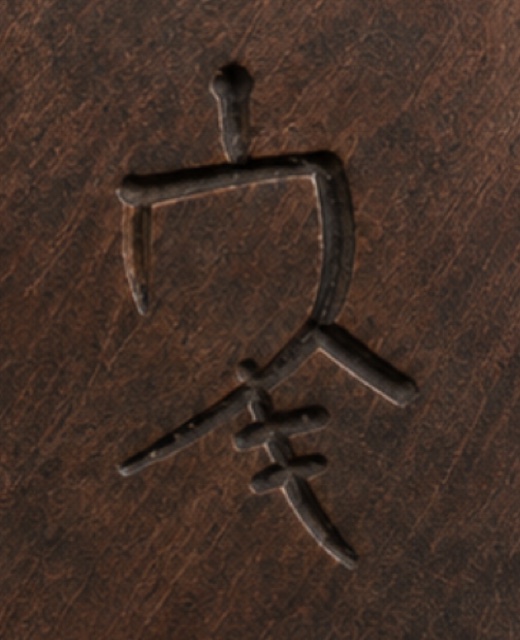
Katana Signed Seki Kanemune
刀 · 関兼宗作
Period unrecorded · a struck mark on the nakago bears on the question and is not yet identified
An unpapered 67.1 cm katana in black-lacquer koshirae, signed 関兼宗作 (Seki Kanemune saku) and carrying a small struck mark above the mekugi-ana; the blade is out of polish and the mark is not identified from the listing photographs.
AttributionSeki Kanemune saku · mei as cut · 関兼宗作(銘)Four-character signature recorded as cut on the nakago, accompanied by an unidentified struck mark; no maker, generation, or period finding is asserted
- Nagasa
- 67.1 cm
- Sori
- 1.7 cm
- Mei
- 関兼宗作 · with a struck mark
Object record
Overview
Object record
- Item
- Katana (刀) in black-lacquer koshirae
- Mei
- 関兼宗作 · Seki Kanemune saku
- Struck mark
- One, above the mekugi-ana on the mune side · unidentified
- Nagasa
- 67.1 cm
- Sori
- 1.7 cm
- Width
- Motohaba 3.3 cm · sakihaba 2.3 cm
- Kasane
- Motogasane 0.8 cm · sakigasane 0.6 cm
- Mekugi-ana
- One · both nakago faces photographed
- Period
- Unrecorded · no appraisal paper supplied
Condition record
- Photographs
- Nineteen archival photographs · no video
- Documents
- No registration card, NBTHK/NTHK paper, or other certificate shown
- Mounting
- Mekugi-ana reads as open in the mounted photograph
Photographic record
Plates · 19
Available views arranged as a comparative object study; descriptions distinguish observation from documentary attribution.
Click underlined specialist terms for concise notes and construction diagrams.
IV
Koshirae & Ensemble
拵・全体
2 plates
Plate IV.1 · 拵・全体
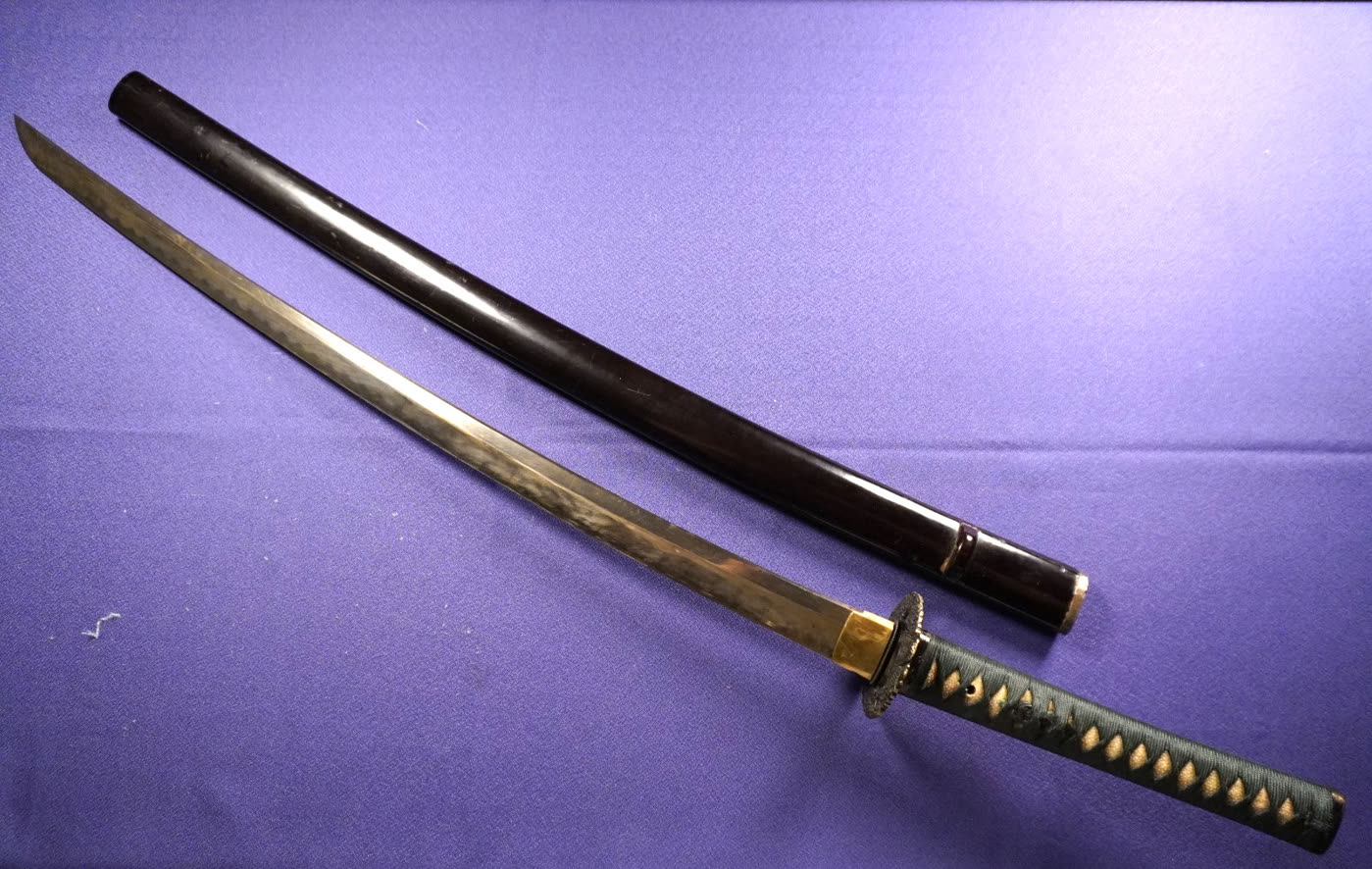
Ensemble, drawn
The blade laid out beside the mounting: black-lacquered , dark green over pale same, a high-relief dark iron and a plain gilt . The blade surface is grey and mottled along its length.
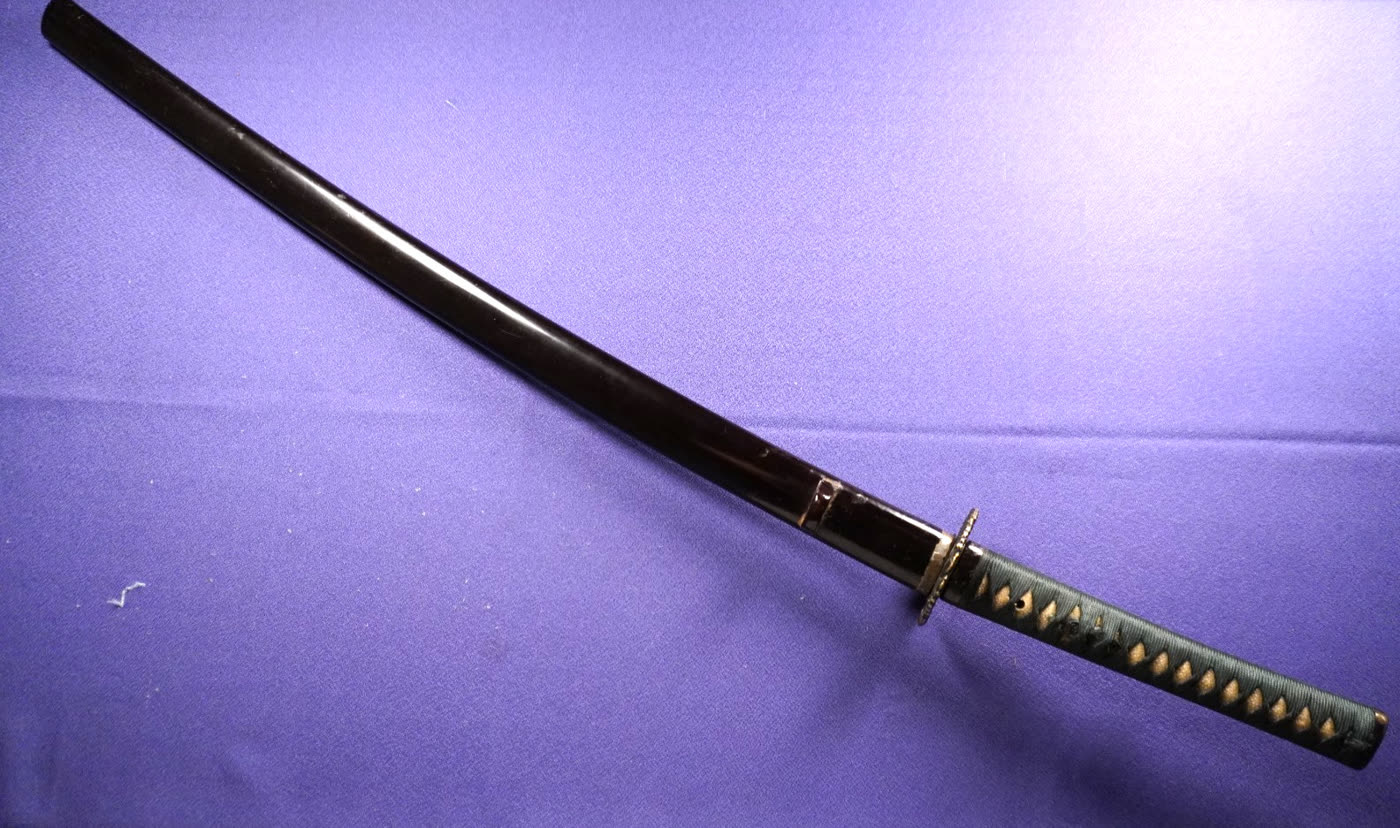
Plate IV.2 · 拵・全体
, housed
The complete mounting with the blade housed. The is glossy black lacquer with a raised band at the position and a fitted ; the overall curvature follows the blade's 1.7 cm .
II
Sugata & Nakago
姿・茎
13 plates
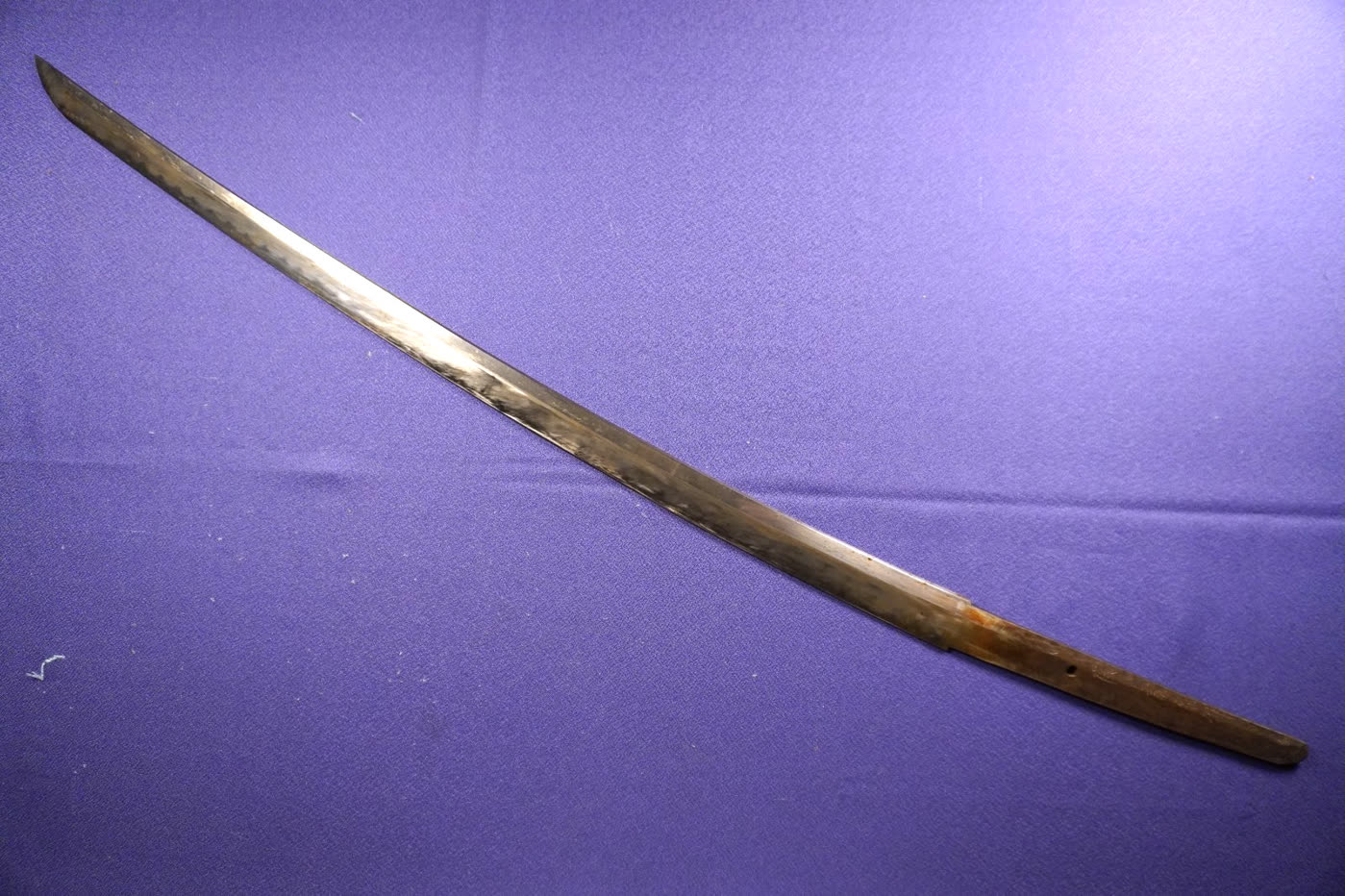
Plate II.1 · 姿・茎
Full · first face
Full length on the first photographed face. Nagasa 67.1 cm with 1.7 cm and taper from 3.3 cm at the to 2.3 cm at the (measurements per the source description); motogasane 0.8 cm is substantial. Orange corrosion sits across the area.
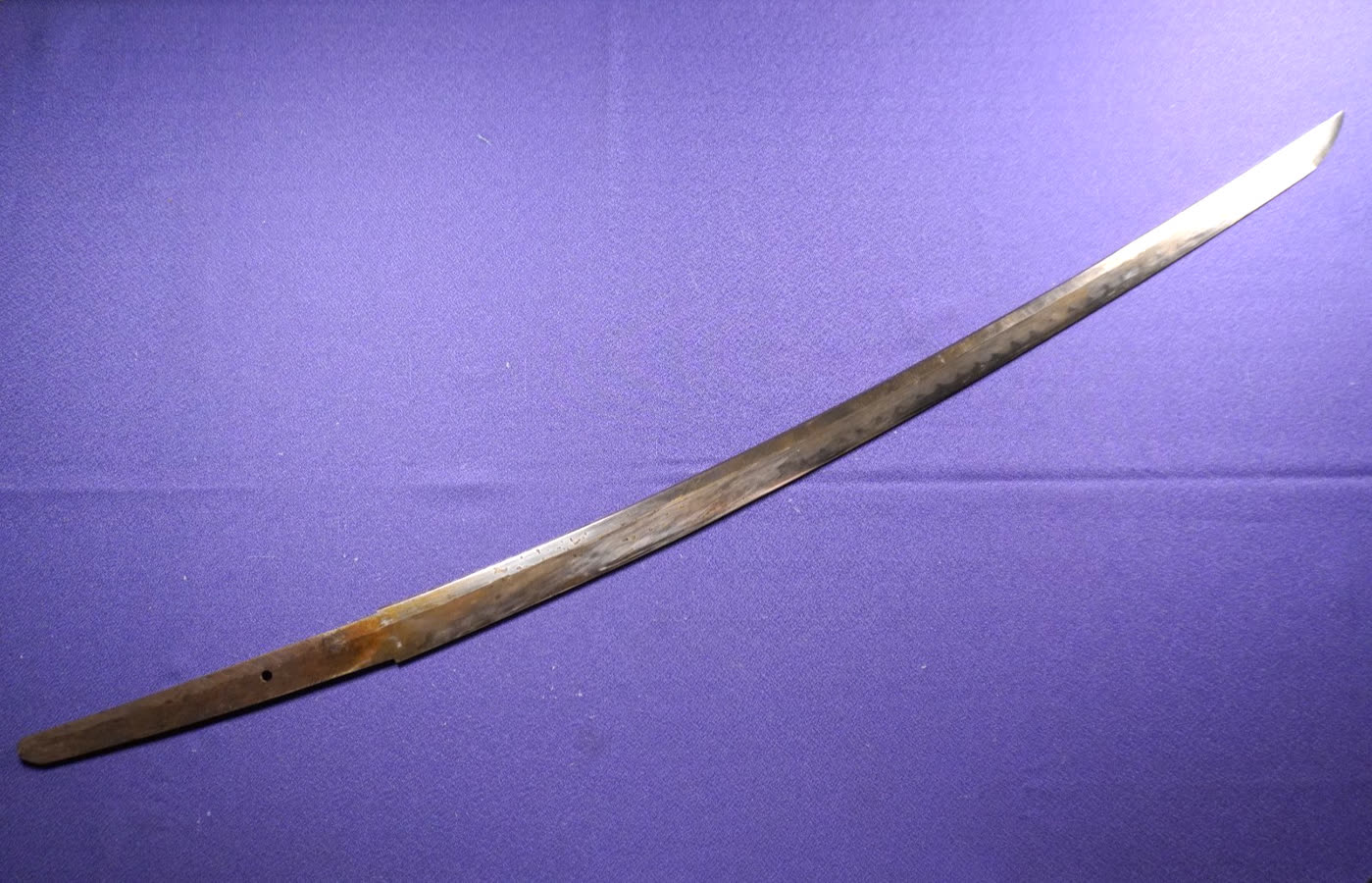
Plate II.2 · 姿・茎
Full · second face
Full length on the second photographed face. The tang is dark and evenly patinated; the signature is too shallow to register at this scale and is recorded in the tang plates that follow.
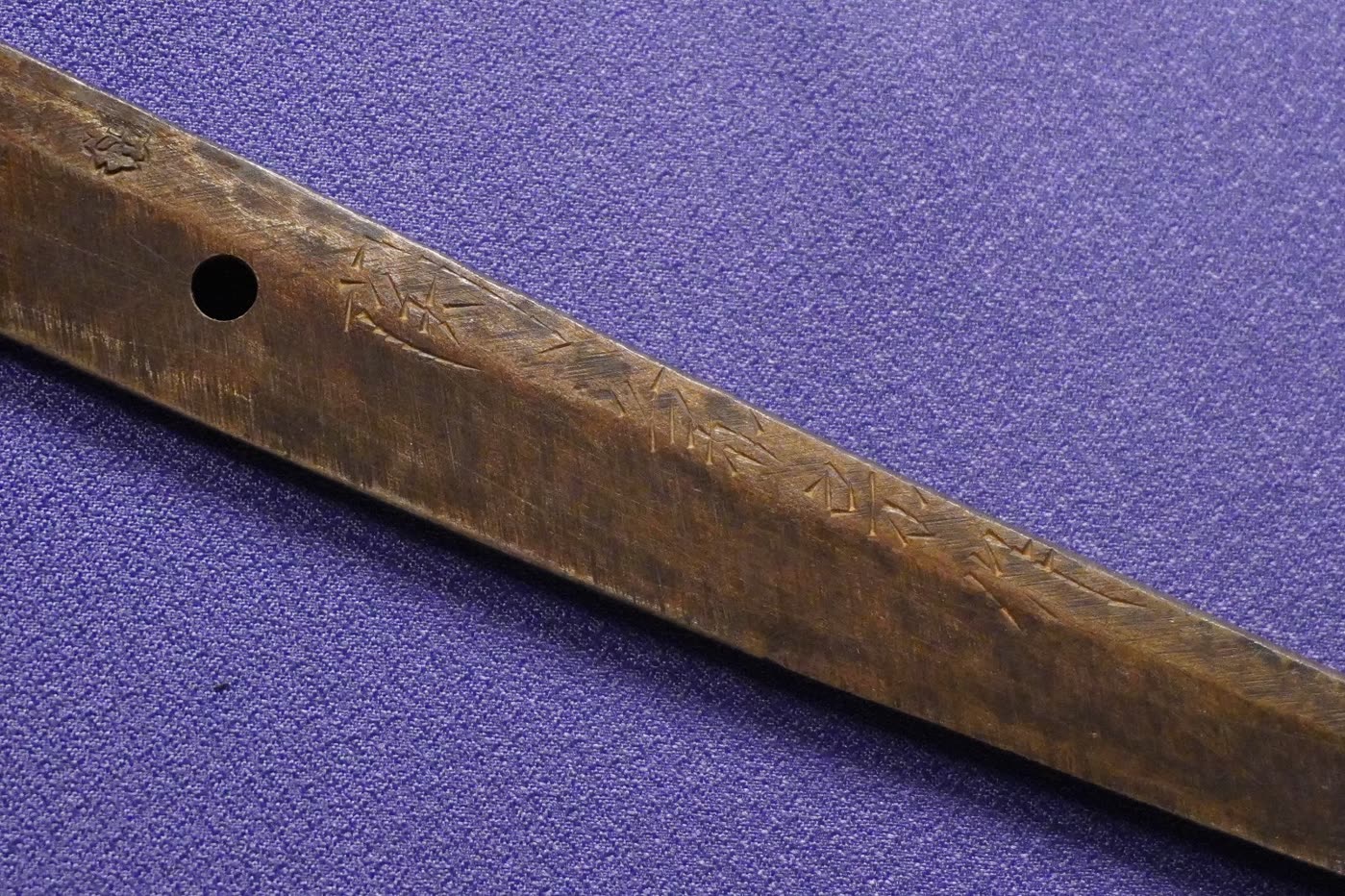
Plate II.3 · 姿・茎
· and struck mark
The tang with one , diagonal file marks, and a four-character running below the hole — transcribed in the source description as 関兼宗作, Seki Kanemune saku, which the visible strokes support. Above the hole, close to the mune, sits a small struck mark: a rounded, lobed outline enclosing a multi-stroke character, roughly five to six millimetres across. The mark is recorded here as present; it is not legible at gallery resolution and is not identified.
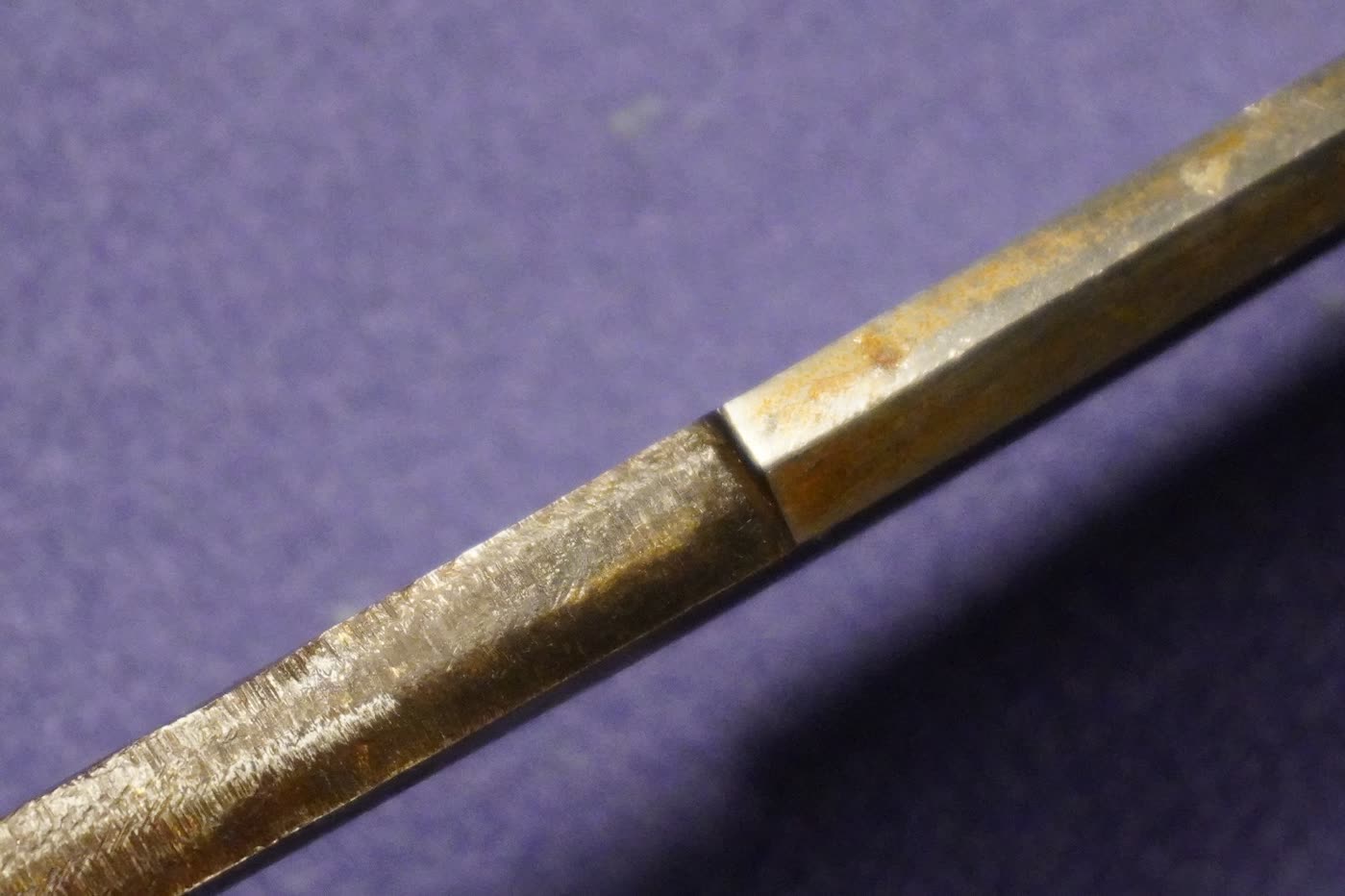
Plate II.4 · 姿・茎
Mune &
The mune photographed at the : a clean step where the polished blade ends and the tang begins, with rust freckling starting immediately behind it.
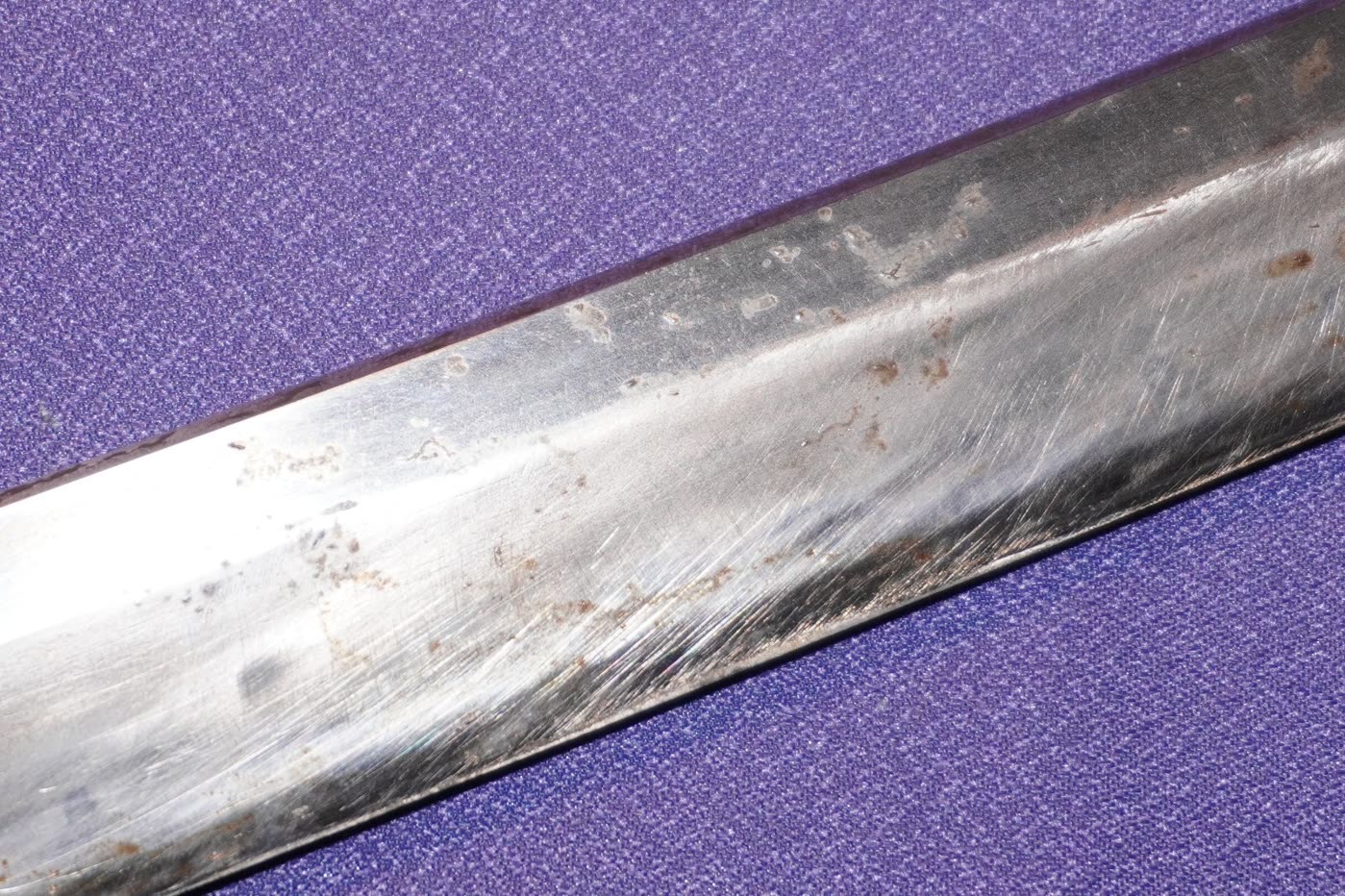
Plate II.5 · 地刃
Surface · lower blade
Lower blade. The surface carries broad grey clouding, fine directional scratching and scattered orange freckles. A paler band follows the edge but its boundary is diffuse; no type is assigned.
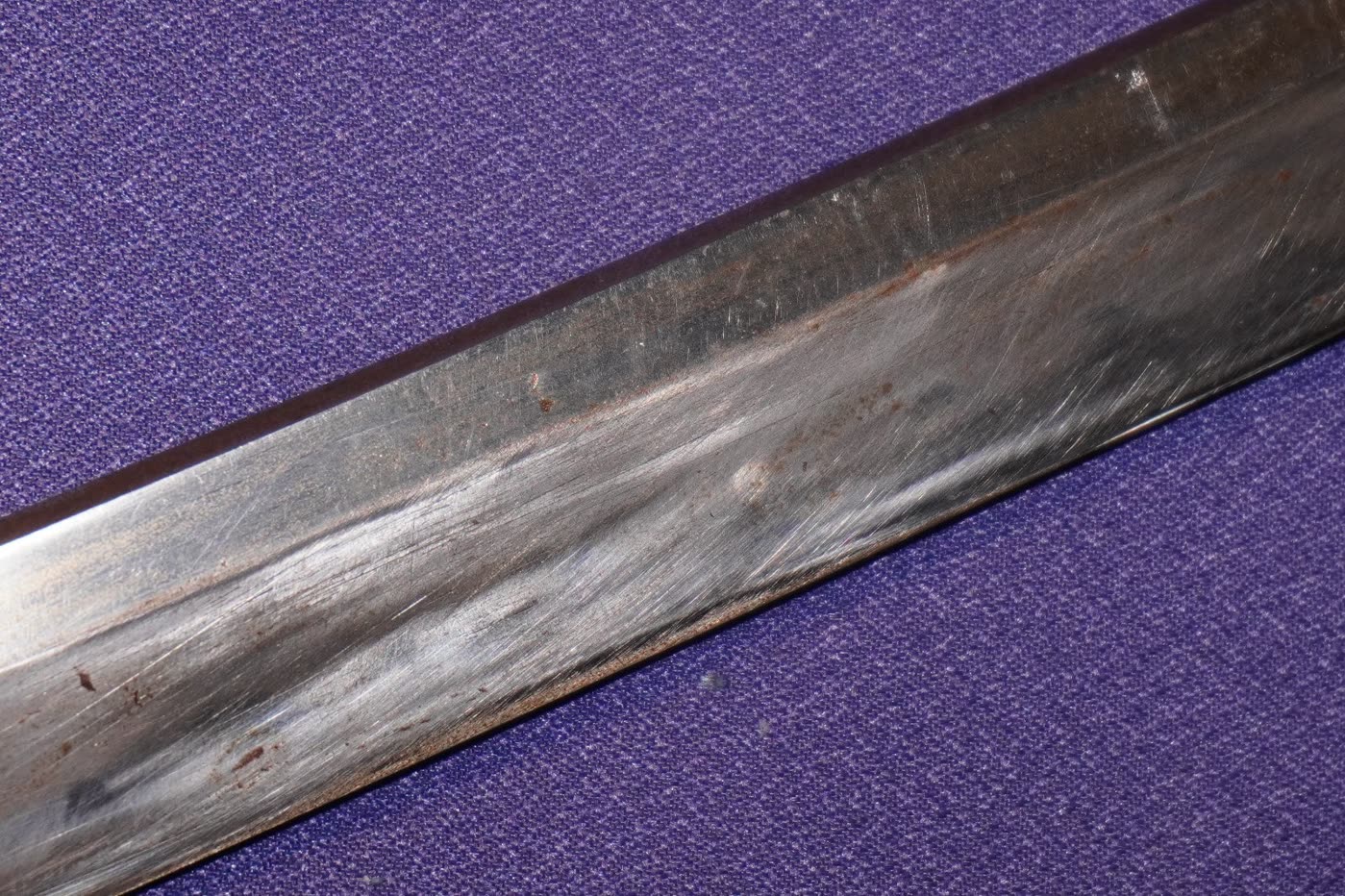
Plate II.6 · 地刃
Surface · lower mid-blade
Lower mid-blade. Dark staining crosses the -ji and a lighter band runs along the ha; whether that band is a temper line or polish haze cannot be settled from the photograph.
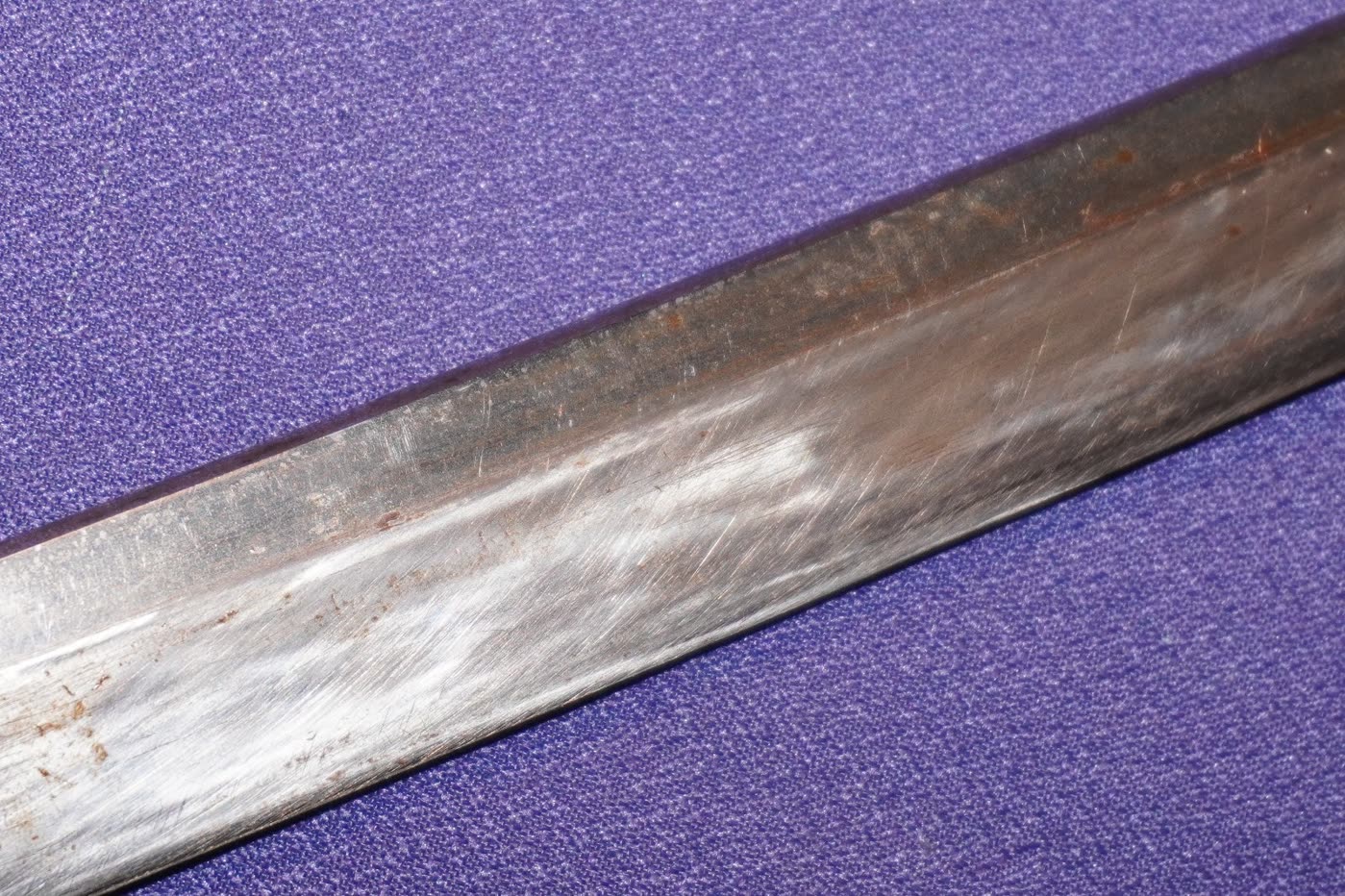
Plate II.7 · 地刃
Surface · mid-blade
Mid-blade. Clouding is heaviest here, with rust points concentrated toward the edge. No grain pattern is legible anywhere along the recorded length.
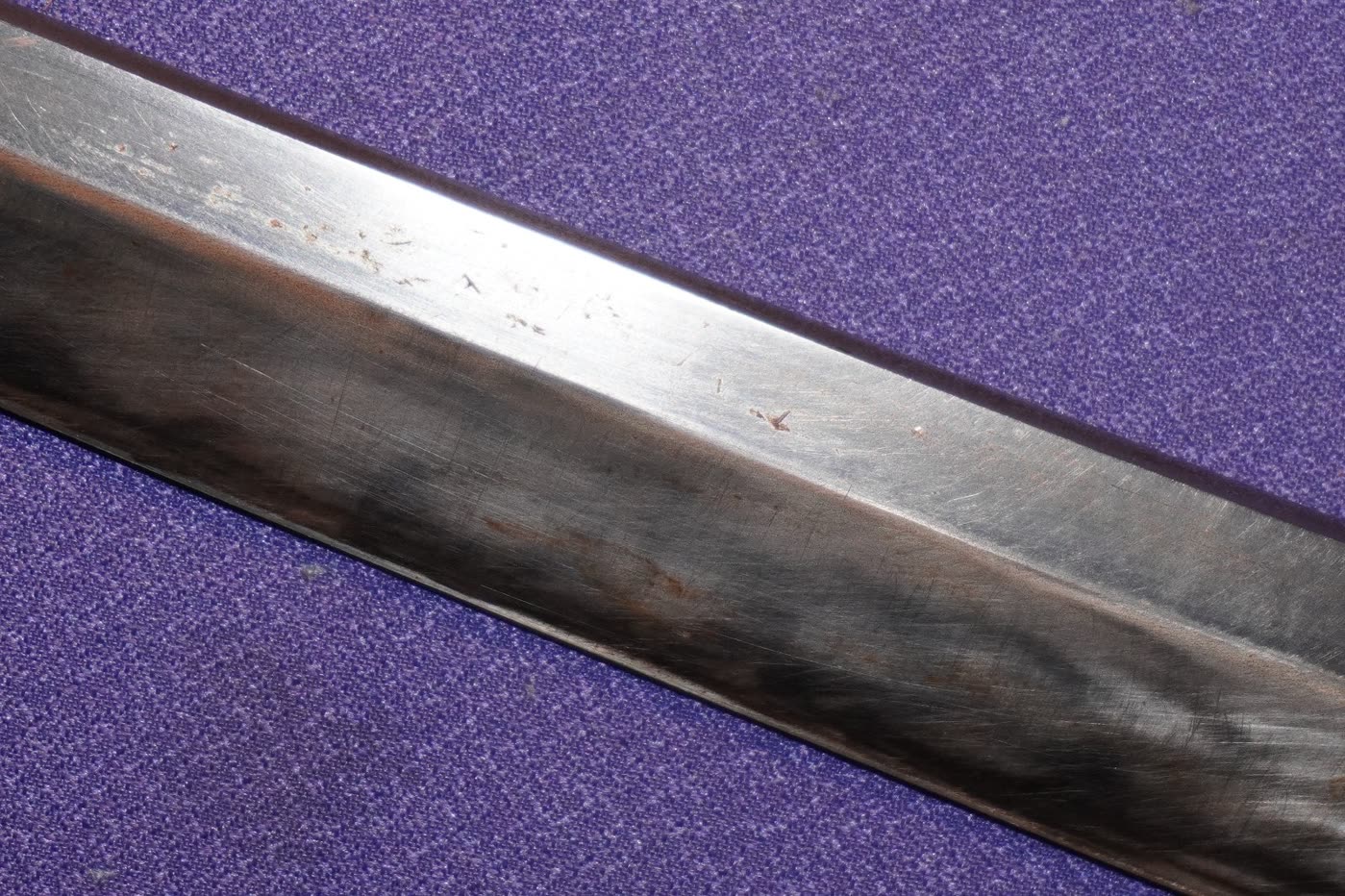
Plate II.8 · 地刃
Surface · upper mid-blade
Upper mid-blade. The -ji reflects brightly while the ji below stays dark and matte — the uneven light return of a spent polish rather than a surface feature.
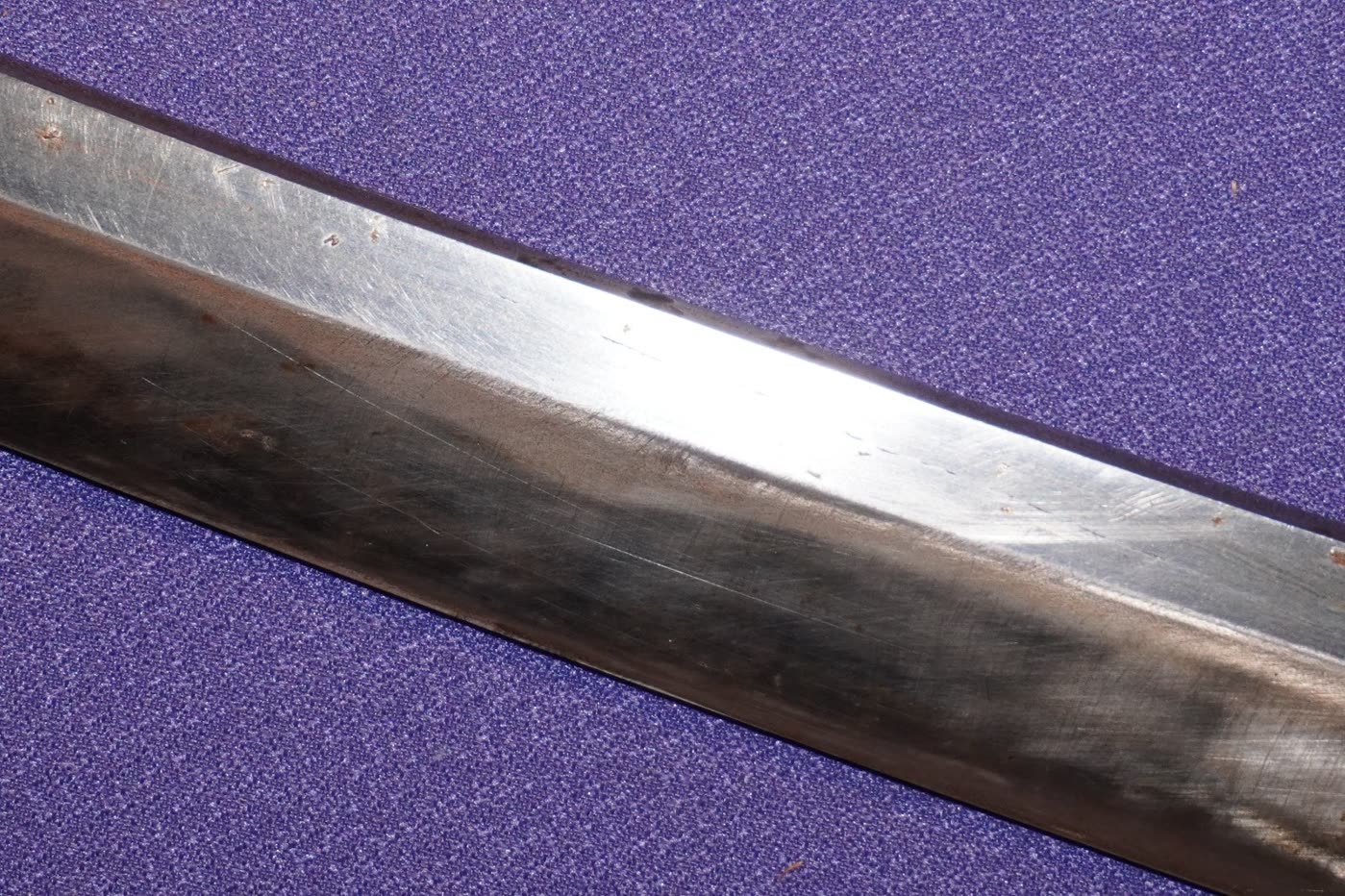
Plate II.9 · 地刃
Surface · upper blade
Upper blade. Scratches cross the ridge at a shallow angle and continue into the ji; several are long enough to read as handling damage rather than polishing marks.
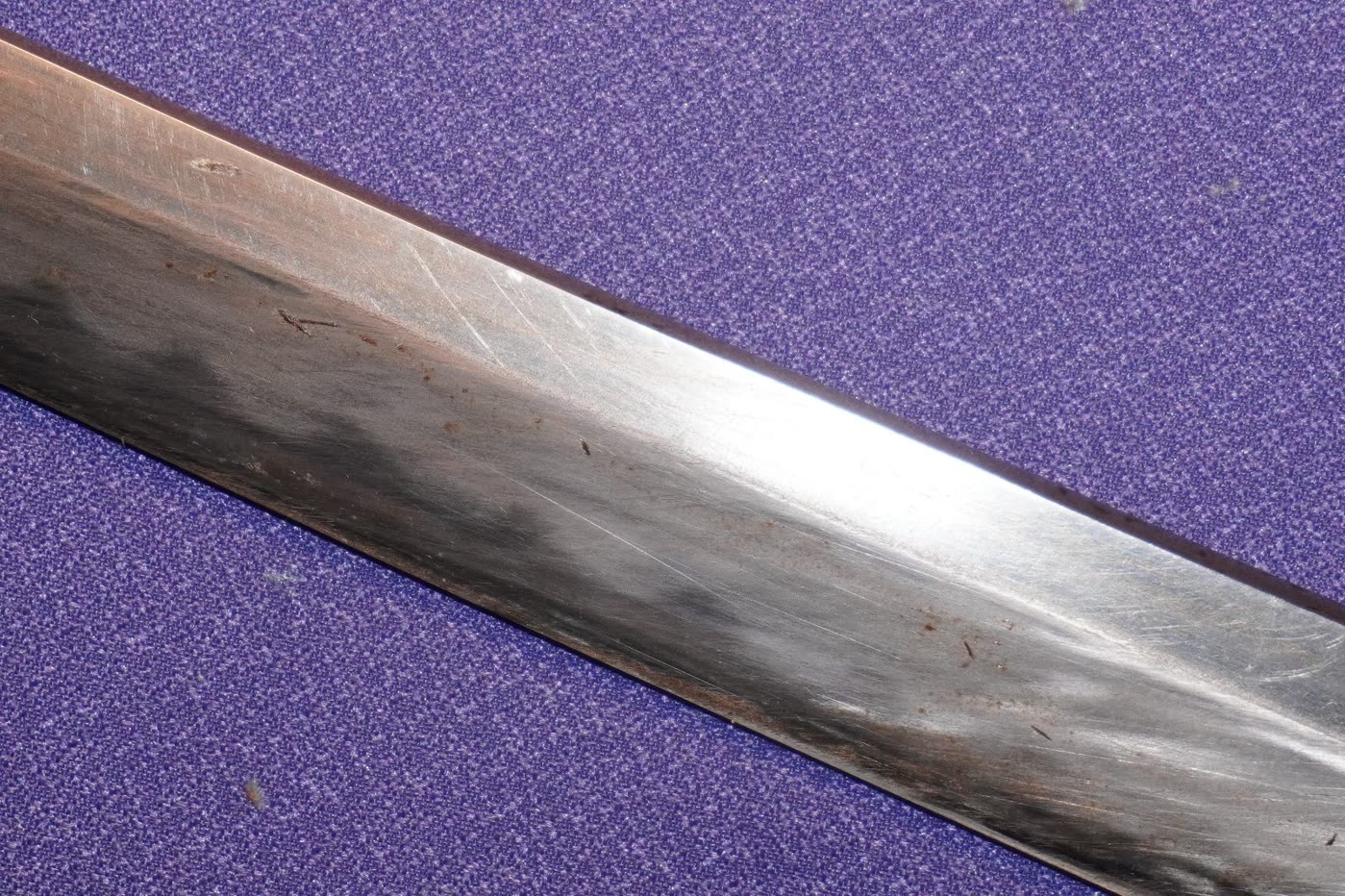
Plate II.10 · 地刃
Surface · below the point
The stretch below the point. Mottling continues to the area with a small rust cluster near the edge.
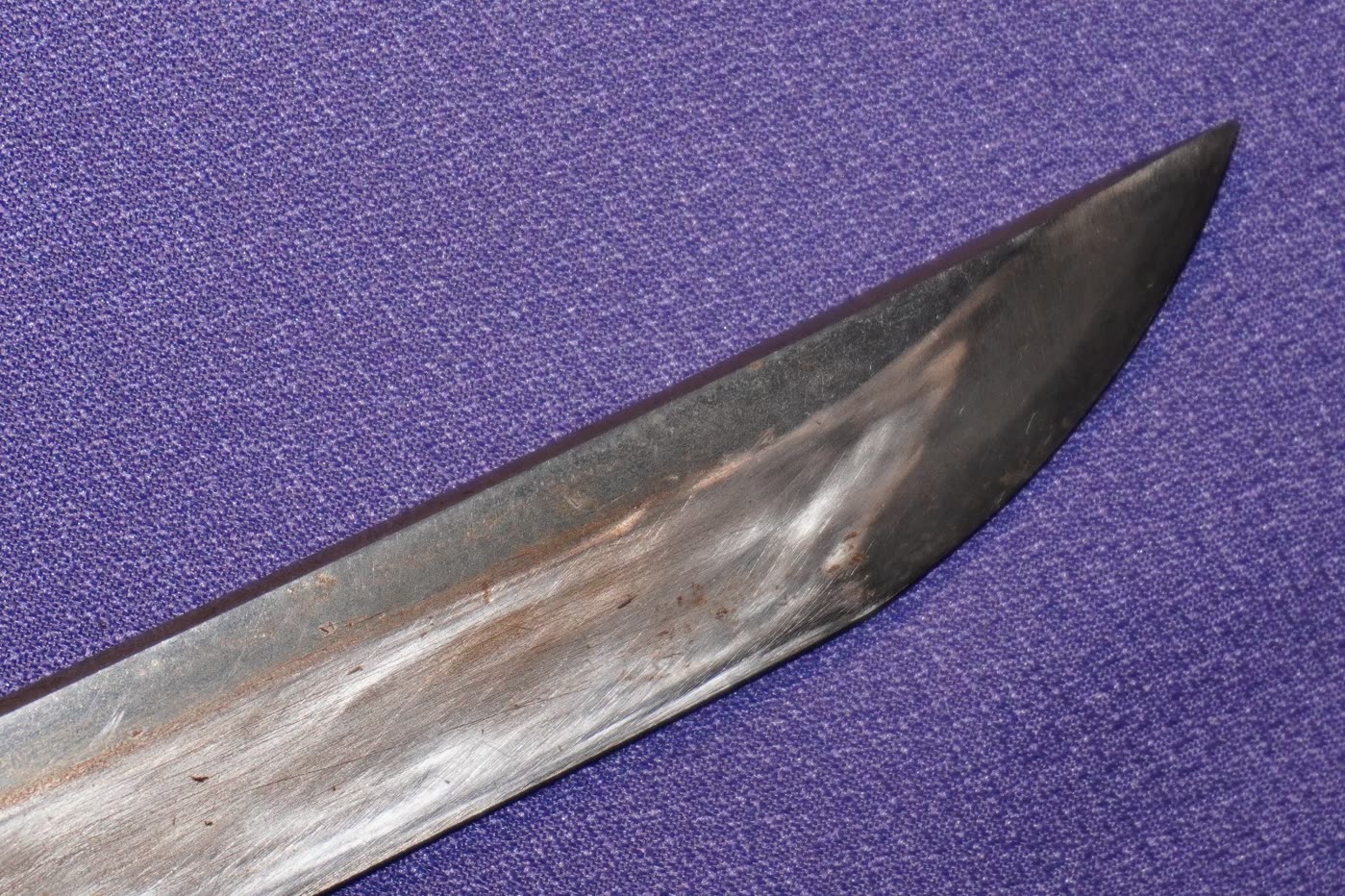
Plate II.11 · 地刃
· first face
The point on the first face. The is intact and the outline unbroken; heavy dark staining covers the tip area and no can be read.
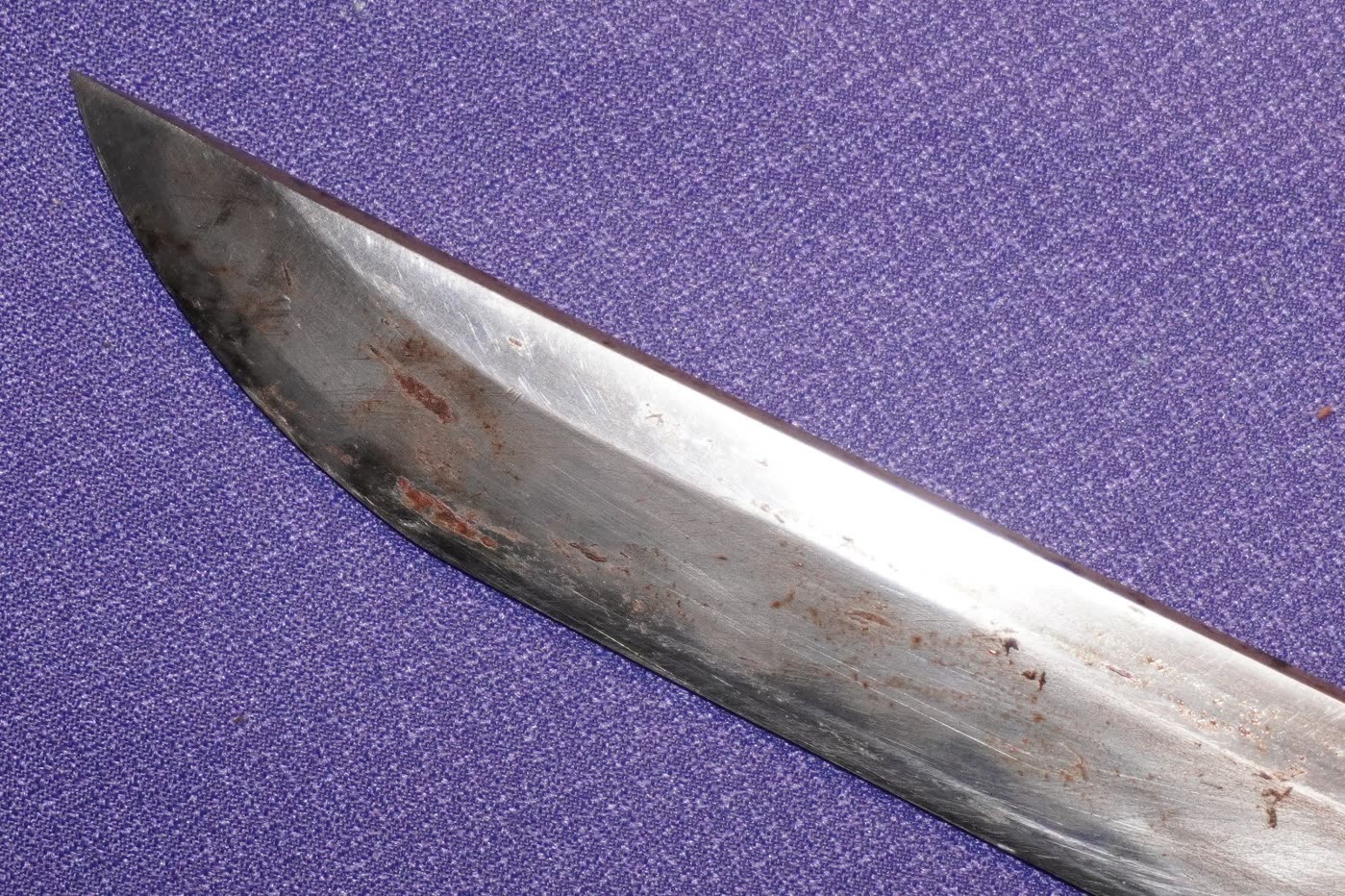
Plate II.12 · 地刃
· second face
The point on the second face, with rust freckles across the tip and along the edge. The is compact in proportion to the 3.3 cm motohaba.
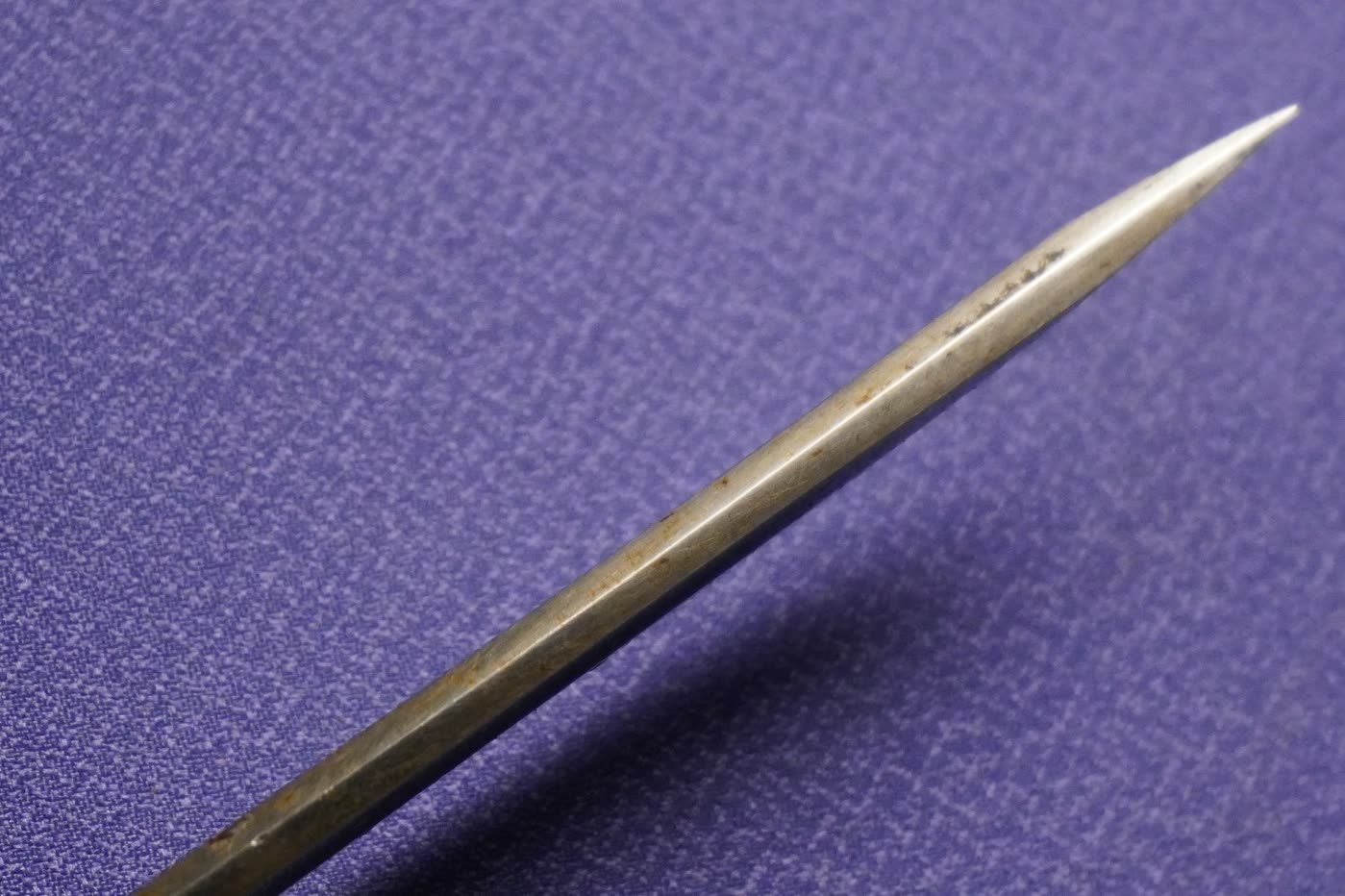
Plate II.13 · 地刃
Near-edge-on view to the point
A near-edge-on record: the polished steel narrows evenly to a fine point with a ridge running unbroken beside it. The frame is retained as part of the complete gallery record.
III
Koshirae Fittings
拵金具
4 plates
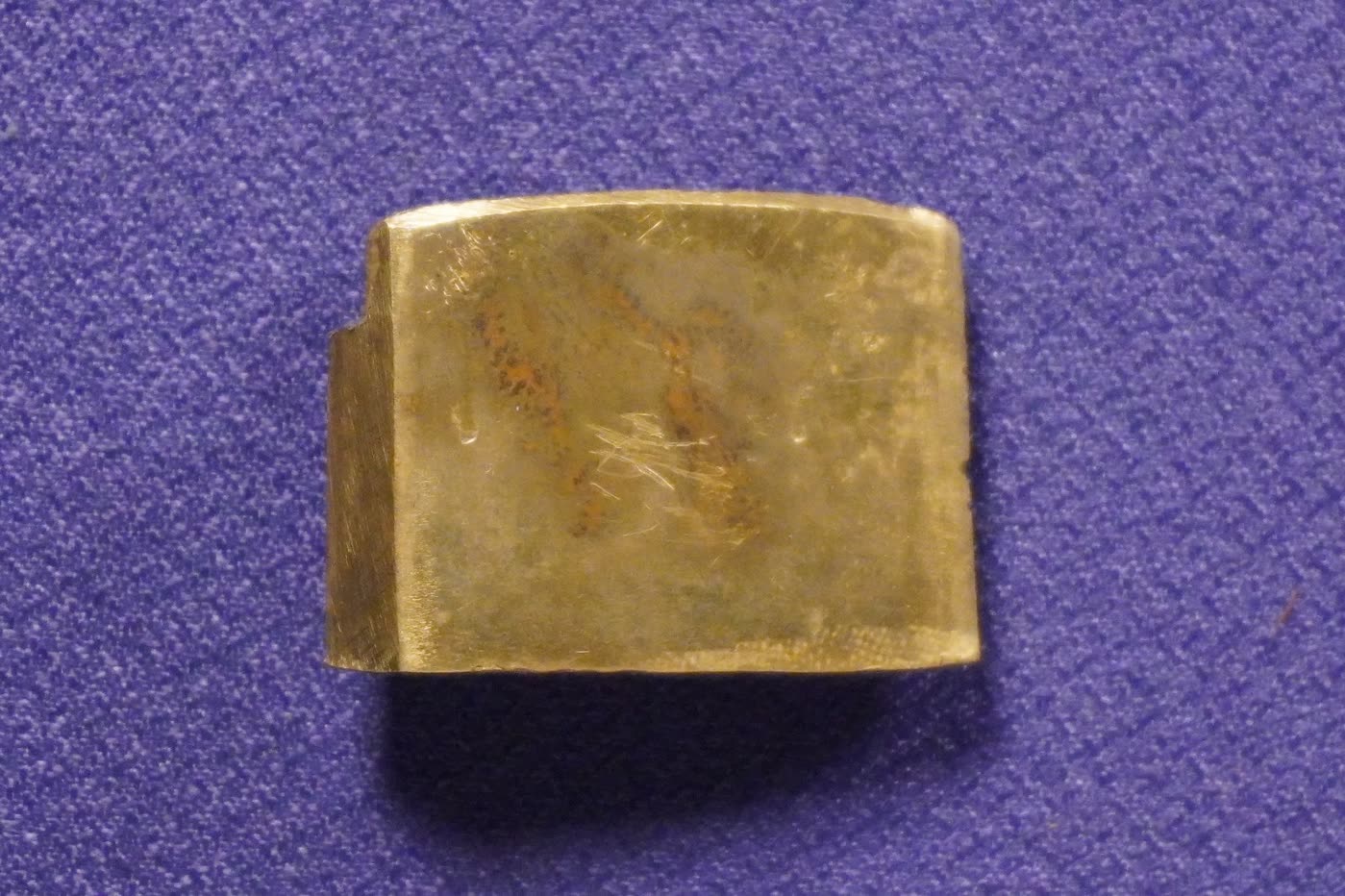
Plate III.1 · 拵金具
· first face
The off the blade: one piece of gilt copper alloy, plain, with rust transfer printed across the face where it sat against the blade.
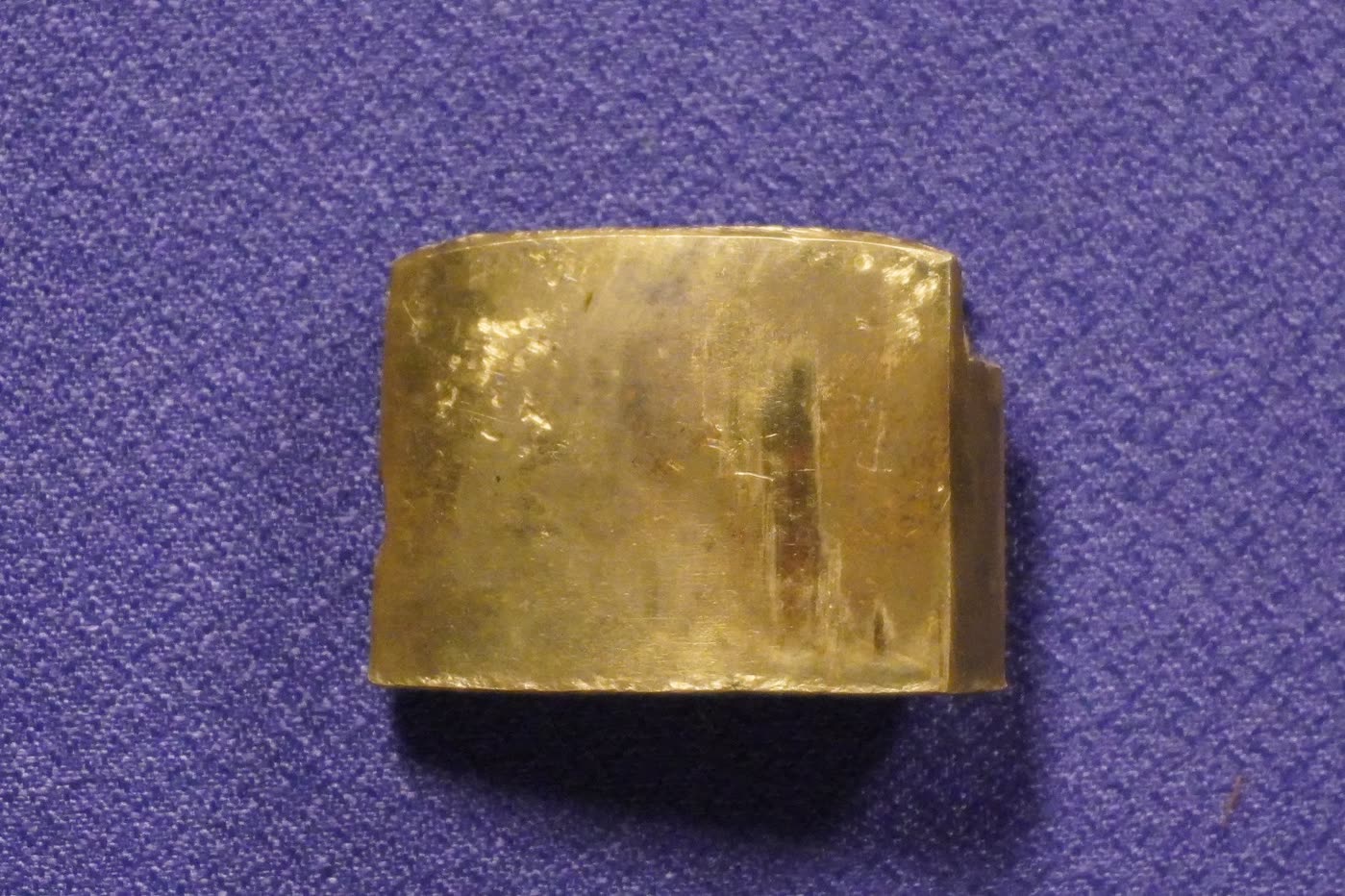
Plate III.2 · 拵金具
· second face
The reverse of the , showing the stepped rear edge and the same plain gilt finish, scratched but undecorated.
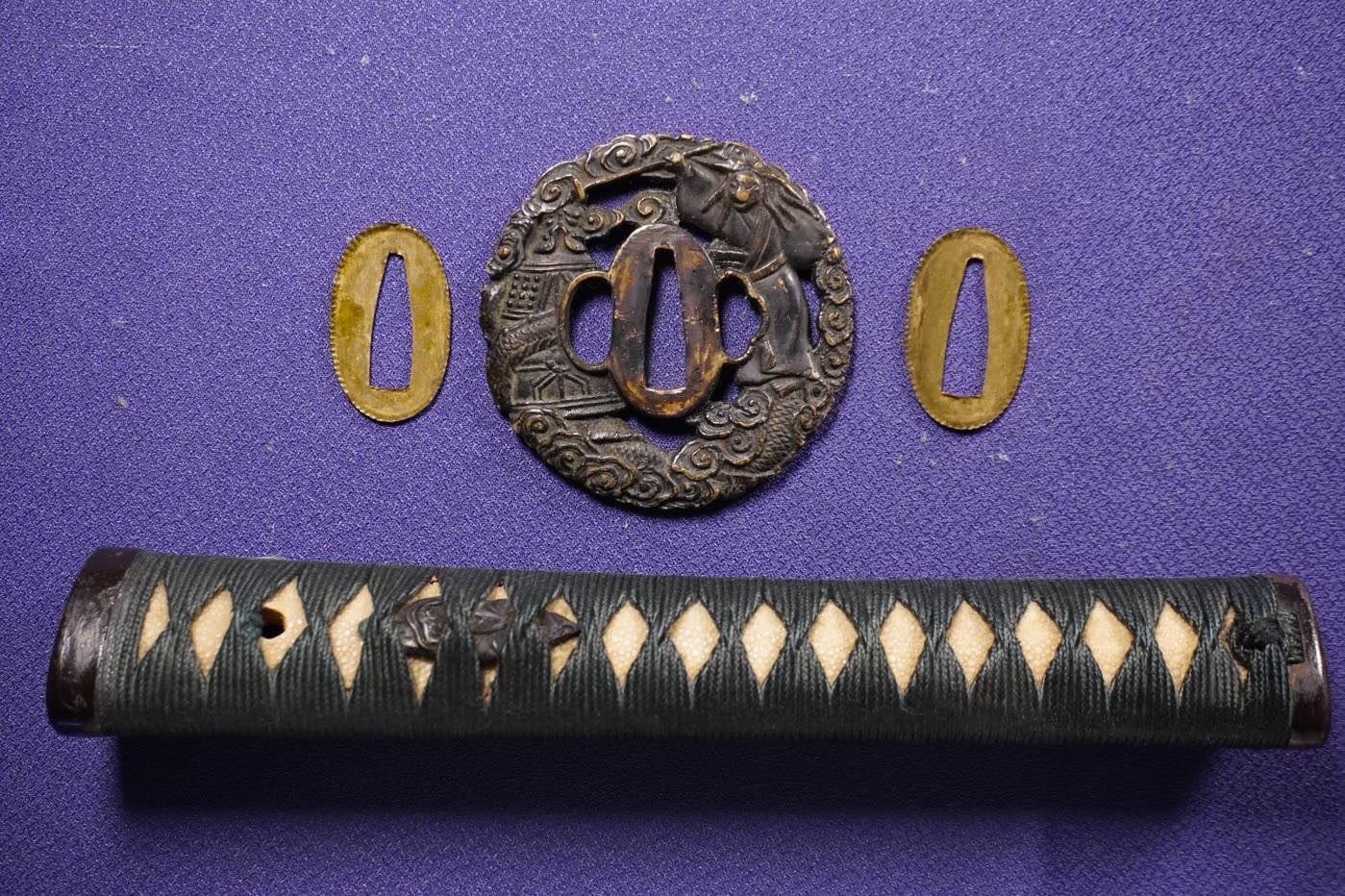
Plate III.3 · 拵金具
, &
The dismounted fittings: a round dark iron worked in high relief with a standing figure, a tiered structure, rolling cloud bands around the rim and a dragon form below, with traces of gold on the raised edges; two plain brass ; and the with dark green ito over pale same. Both and apertures are cut through the plate.
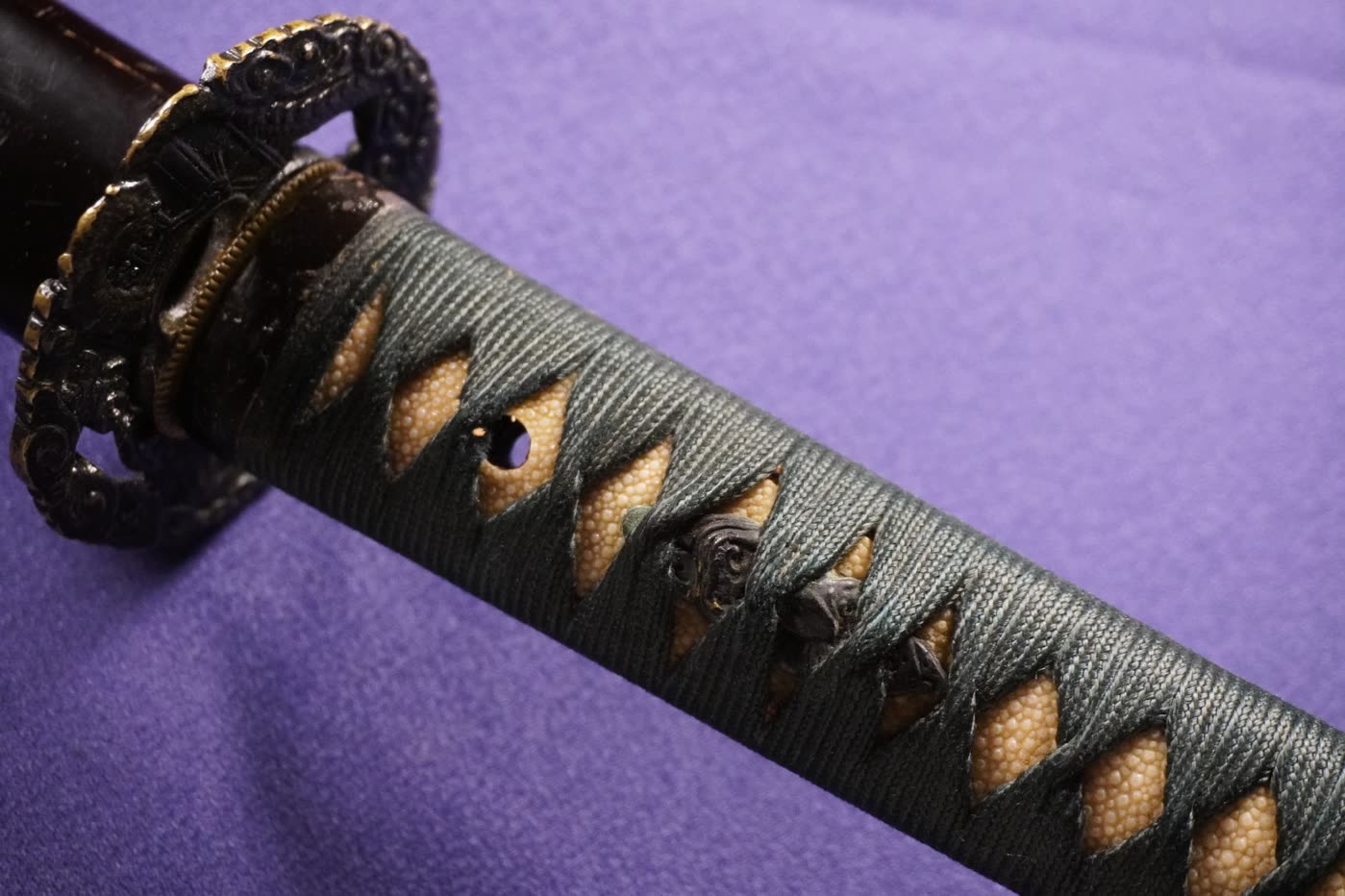
Plate III.4 · 拵金具
& , mounted
The fittings in place: a worked with the same cloud and dragon motif as the rim, dark green ito over pale same, and dark set under the wrap. The reads as open in this view — no peg is seated in it.
Photographs courtesy of GN-1-Japan, used with permission.
Revision history
- Published with the struck mark still unidentified; the record is to be revised once the mark is read in hand.
- Catalogue record established from the ended listing and its 19 gallery photographs; a struck mark on the nakago is recorded as observed and left unidentified.