NA 2026.005
Last revised
Nihontō · Wakizashi · Shirasaya
Mumei Wakizashi Study II
無銘脇差 · 白鞘
Period unrecorded
A long, slender 51.6 cm mumei wakizashi in shirasaya, notable for pronounced taper, a one-hole nakago, a worn nijū-habaki, and surface condition that limits a reliable hamon reading.
AttributionMumei · 無銘No appraisal paper; both nakago faces photographed
- Nagasa
- 51.6 cm
- Sori
- 1.3 cm
- Profile
- Pronounced taper
Object record
Overview
Object record
- Item
- Wakizashi (脇指) in plain wooden shirasaya (白鞘)
- Attribution
- Mumei / unsigned · photographic record
無銘 - Nagasa
- 51.6 cm
- Sori
- 1.3 cm
- Width
- Motohaba 2.8 cm · sakihaba 1.5 cm
- Kasane
- Motogasane 0.7 cm · sakigasane 0.4 cm
- Mekugi-ana
- One · both nakago faces photographed
- Period
- Unrecorded · no appraisal paper supplied
Condition record
- Photographs
- Sixteen archival photographs · no video
- Documents
- No registration card, NBTHK/NTHK paper, or other certificate shown
Photographic record
Plates · 16
Available views arranged as a comparative object study; descriptions distinguish observation from documentary attribution.
Click underlined specialist terms for concise notes and construction diagrams.
I
Shirasaya & Object
白鞘・全体
2 plates
Plate I.1 · 白鞘・全体
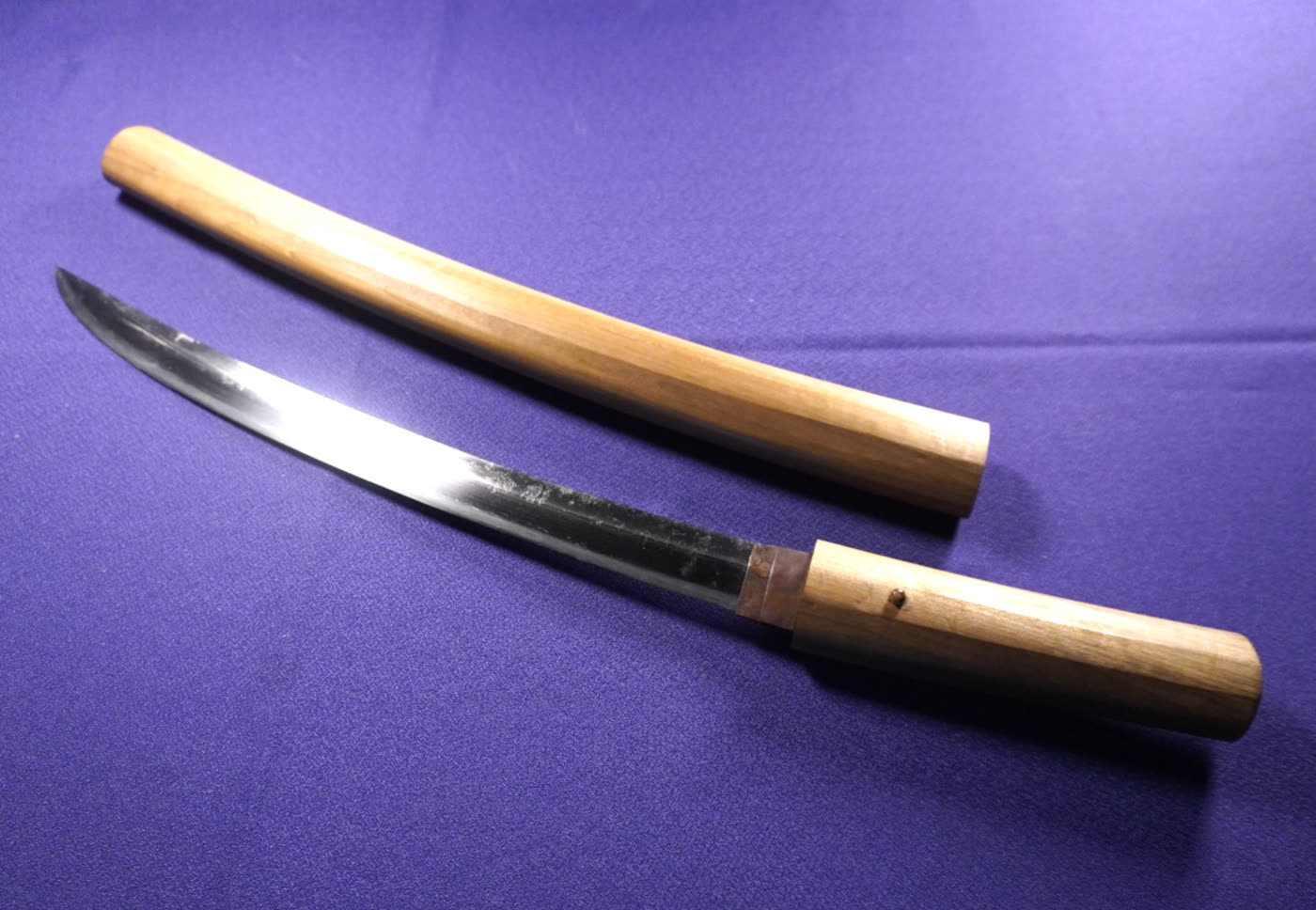
Drawn presentation
Blade drawn from its plain wooden , with the storage mounting aligned beside it.
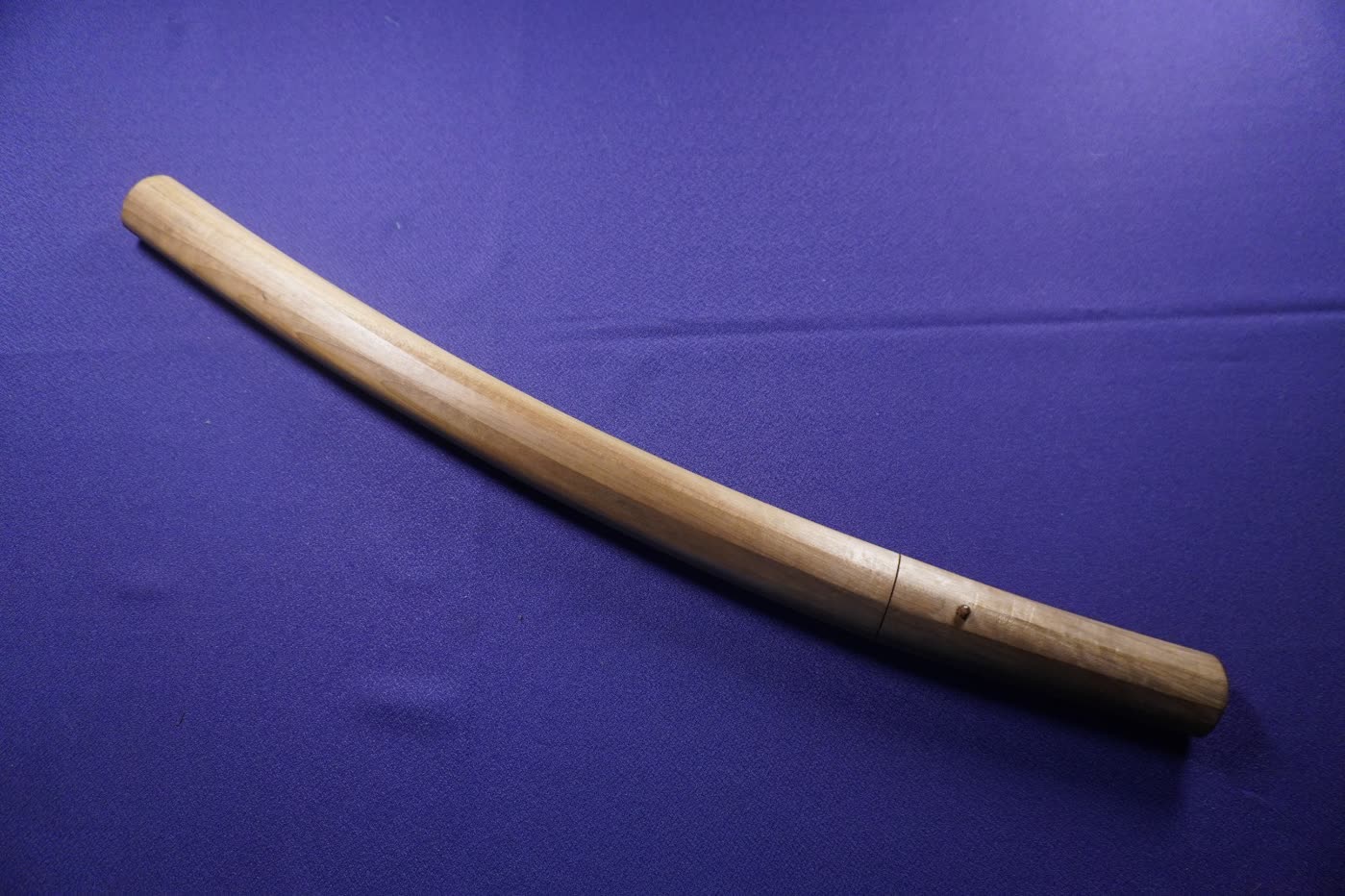
Plate I.2 · 白鞘・全体
Closed
Closed plain wooden , documenting the complete storage mounting.
II
Sugata & Nakago
姿・茎
4 plates
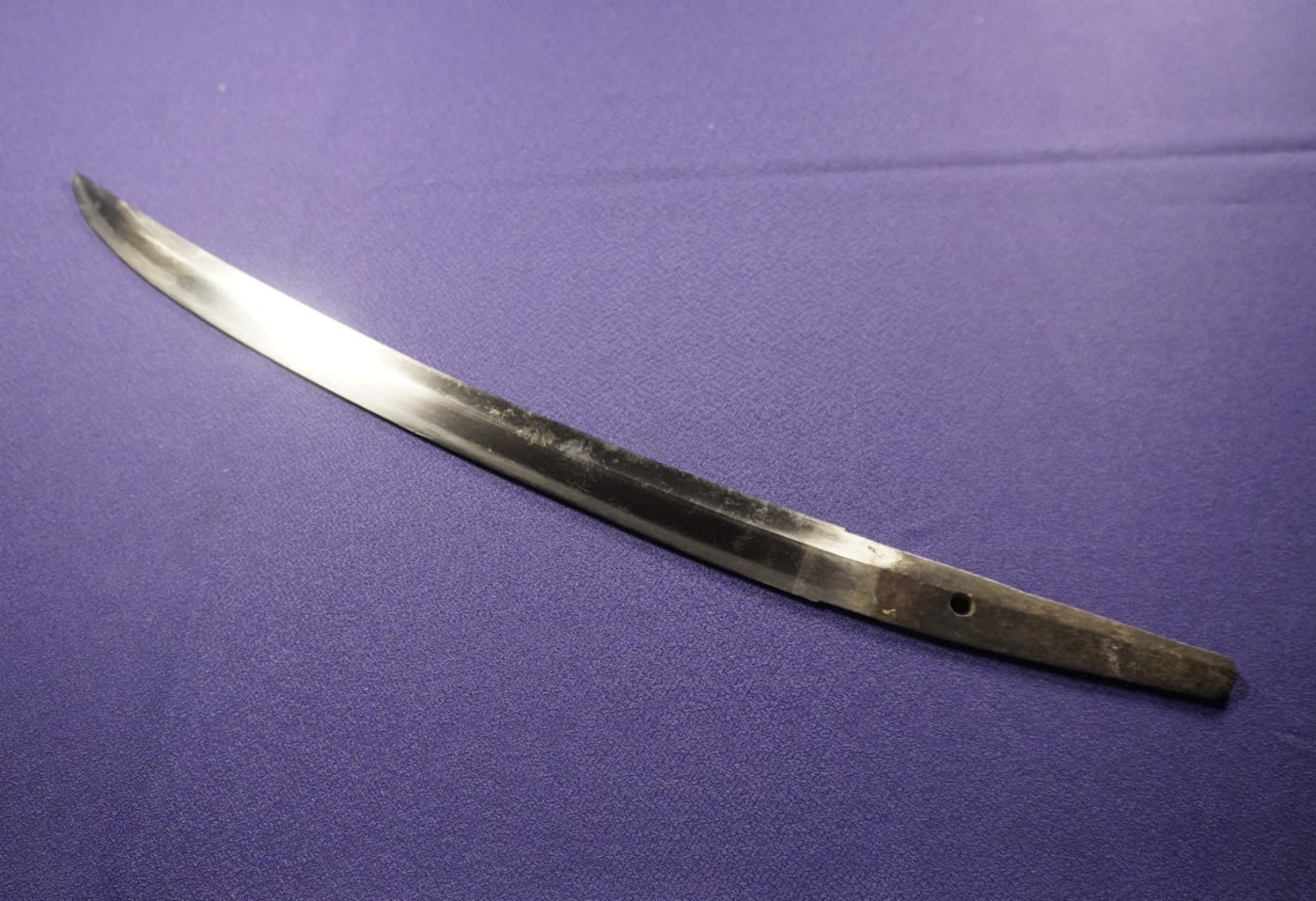
Plate II.1 · 姿・茎
Full ·
Full , . At 51.6 cm nagasa with 1.3 cm , the blade presents a long, slender profile and pronounced taper from 2.8 cm motohaba to 1.5 cm sakihaba.
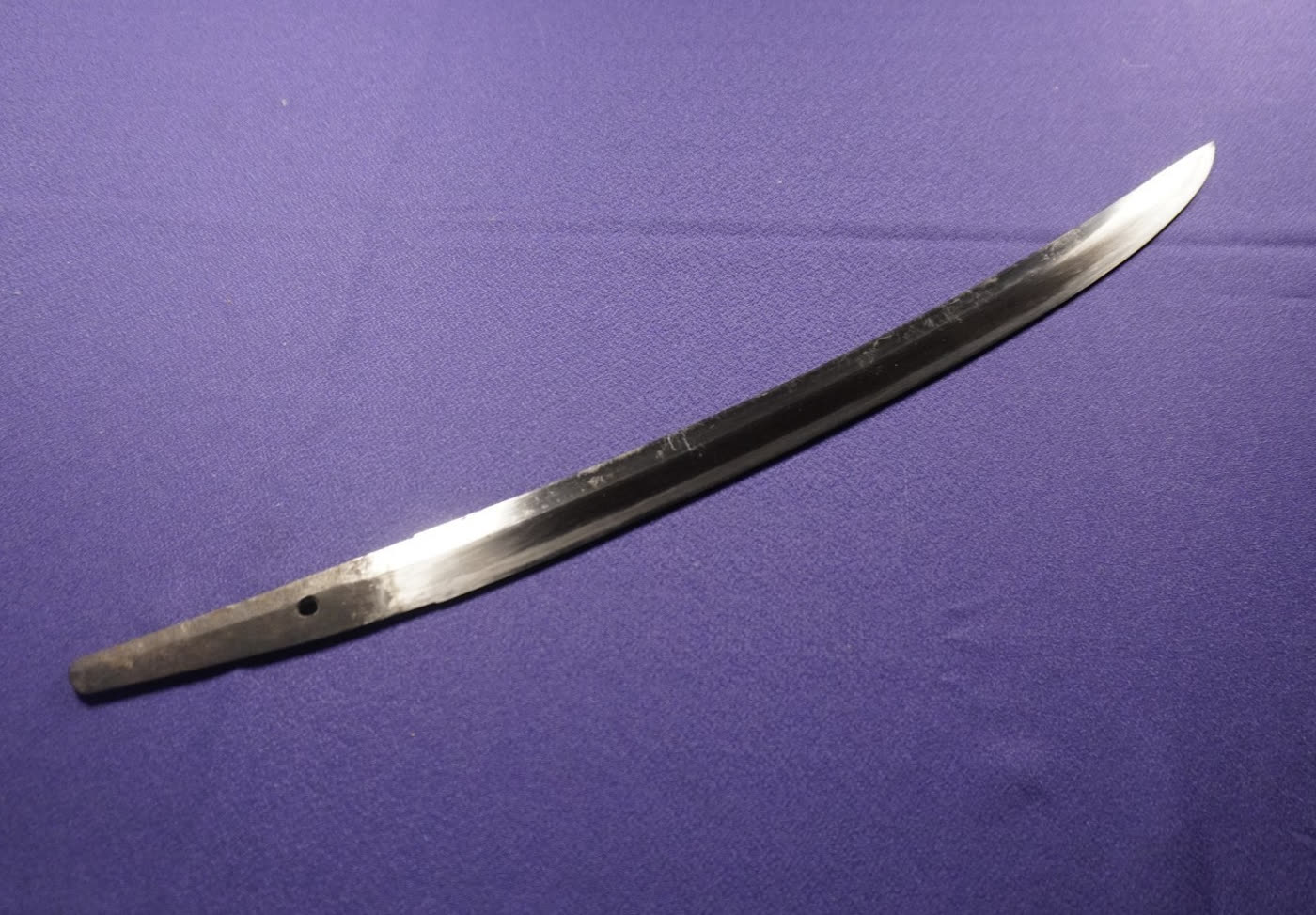
Plate II.2 · 姿・茎
Full ·
The full-length view confirms the strong taper and relatively narrow point.
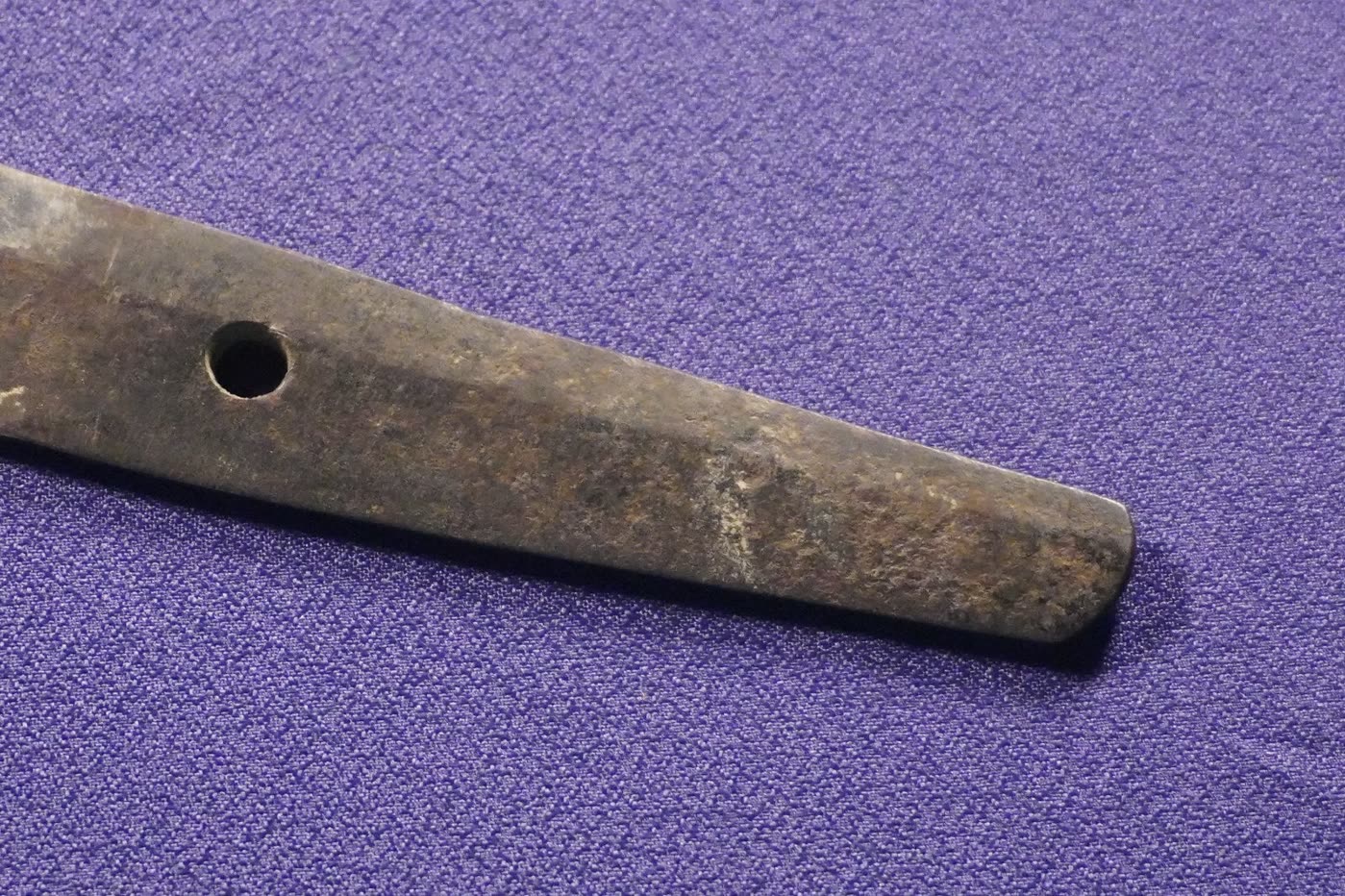
Plate II.3 · 姿・茎
·
, . One , a rounded , and mottled brown patina are visible; no is present.
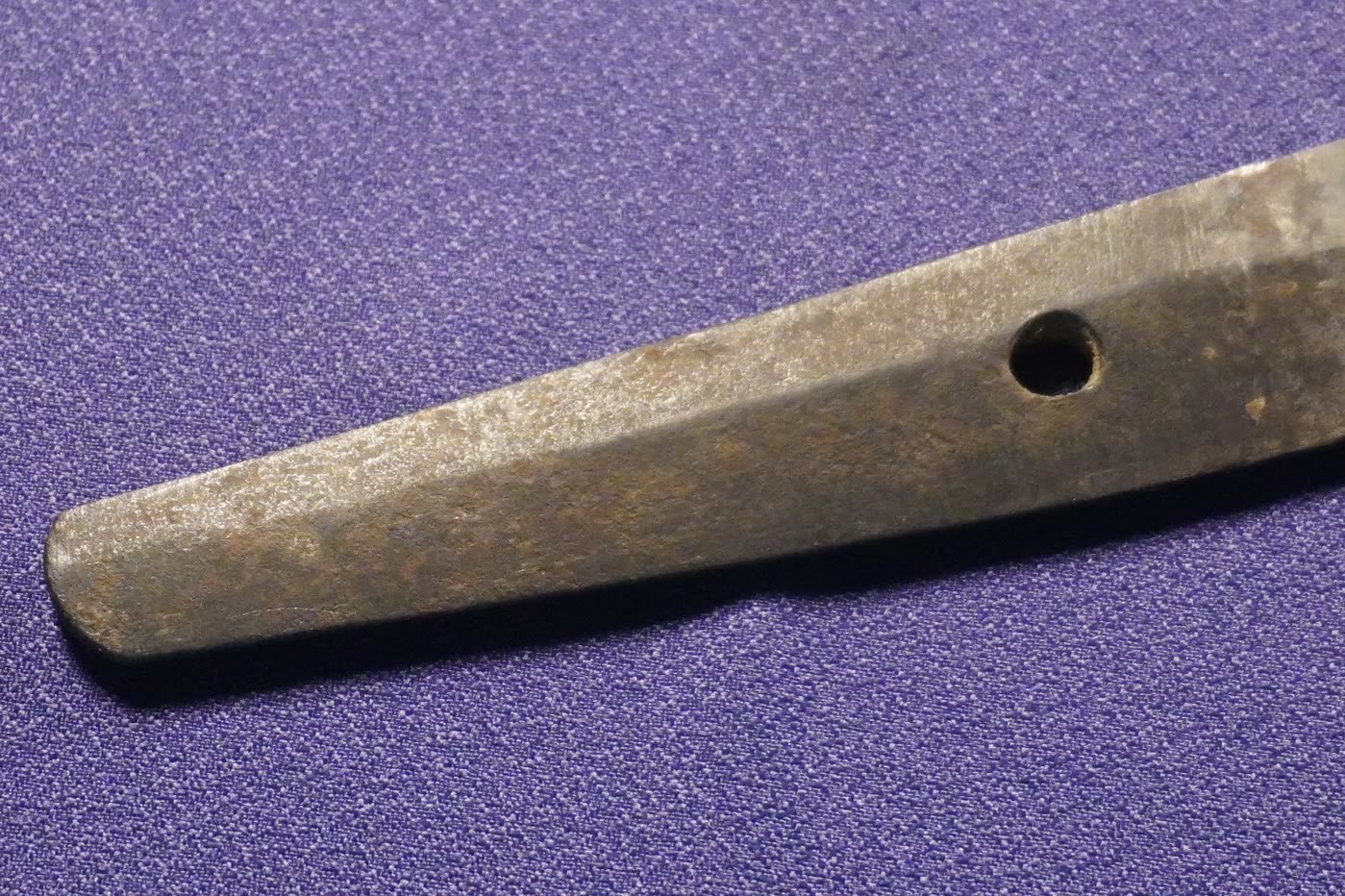
Plate II.4 · 姿・茎
·
, . The single and worn surface are recorded, but the photographed texture does not support a confident classification.
III
Habaki & Profile
鎺・断面観察
4 plates
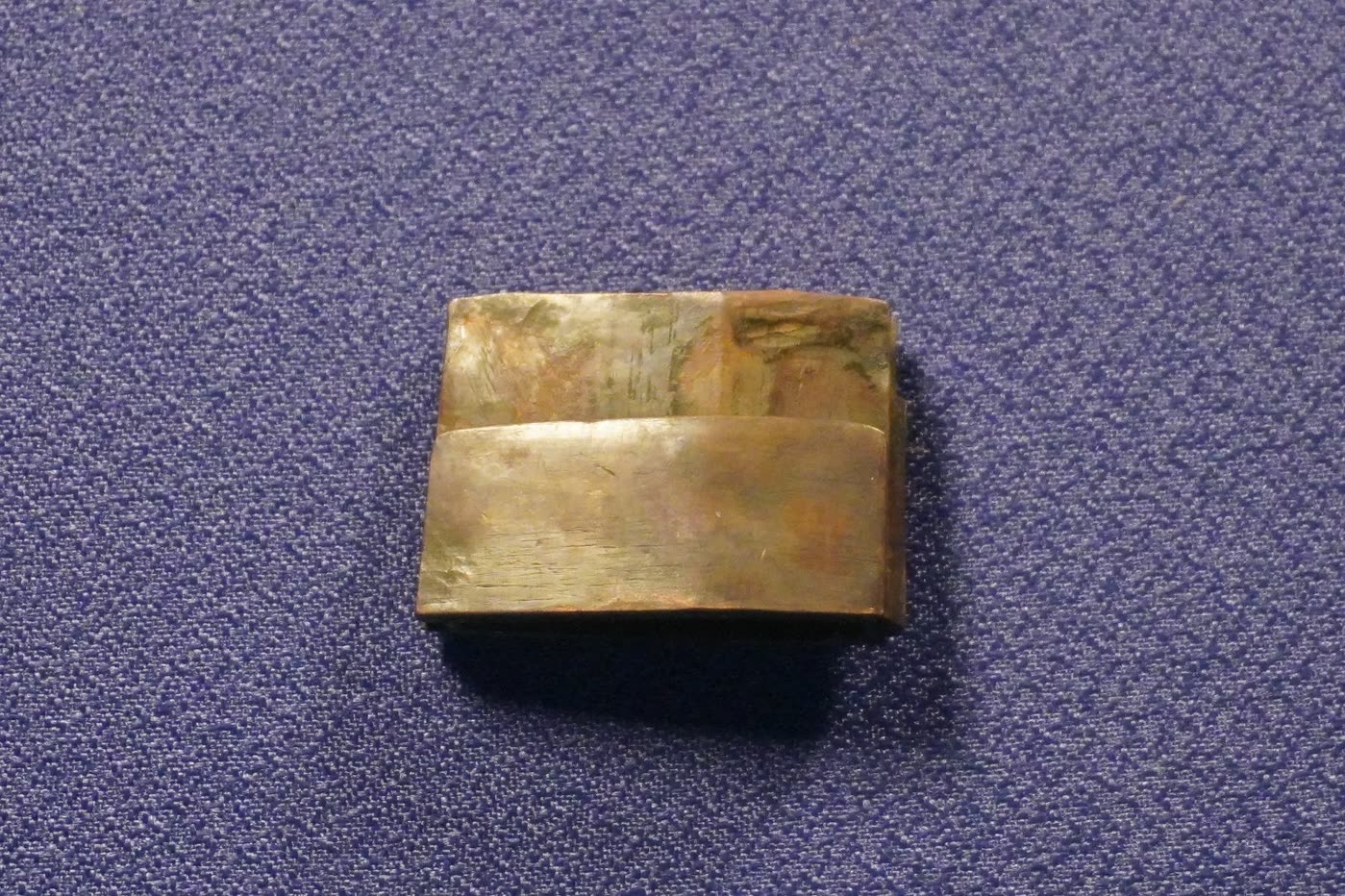
Plate III.1 · 鎺・断面観察
·
One face of a worn yellow-metal nijū-. The upper jacket rises behind a lower overlapping piece, and the stepped construction line remains legible despite discoloration.
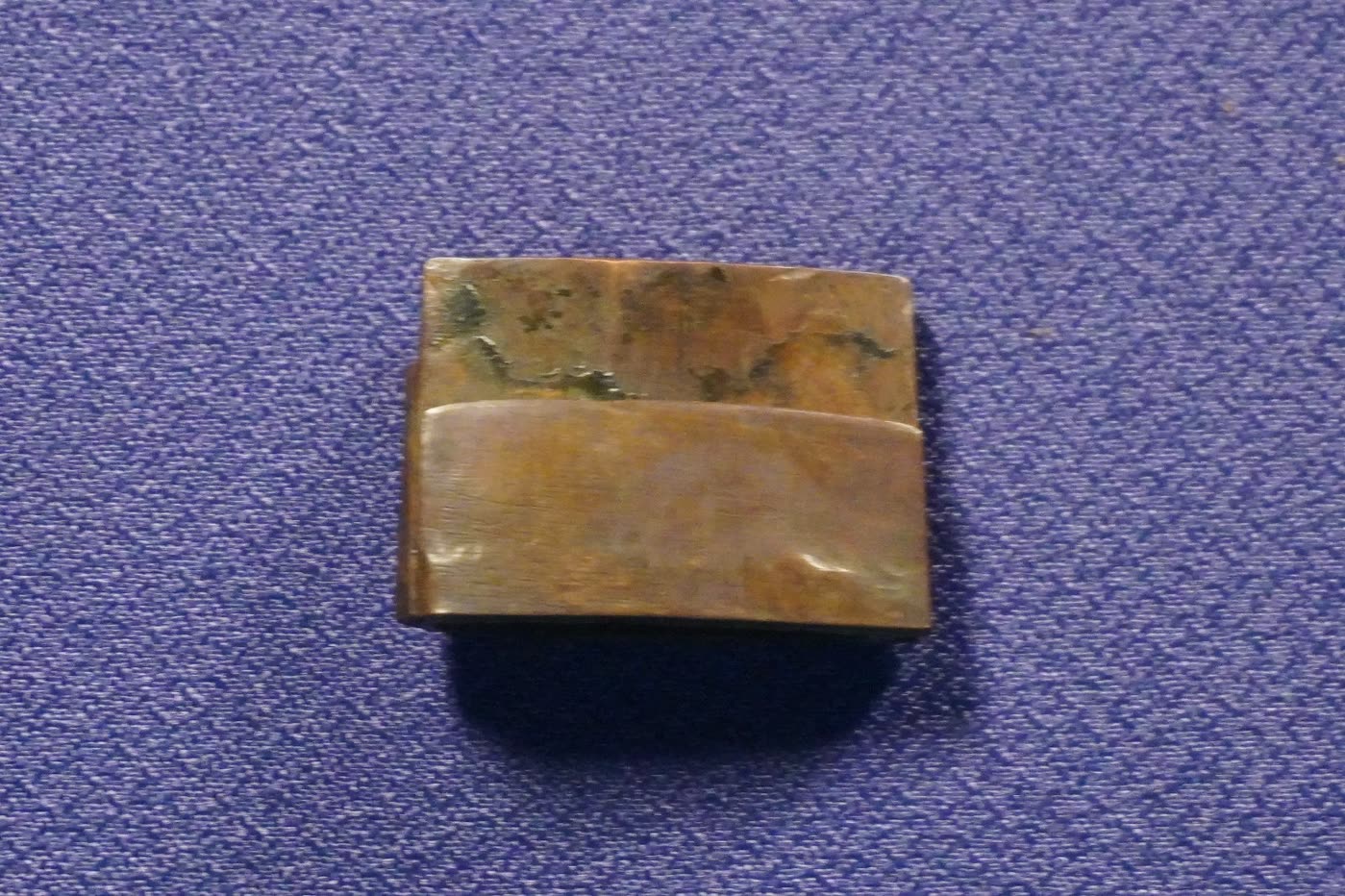
Plate III.2 · 鎺・断面観察
·
Opposing face of the nijū-, showing the same nested two-piece construction and uneven surface oxidation. Exact alloy is not assigned from color alone.
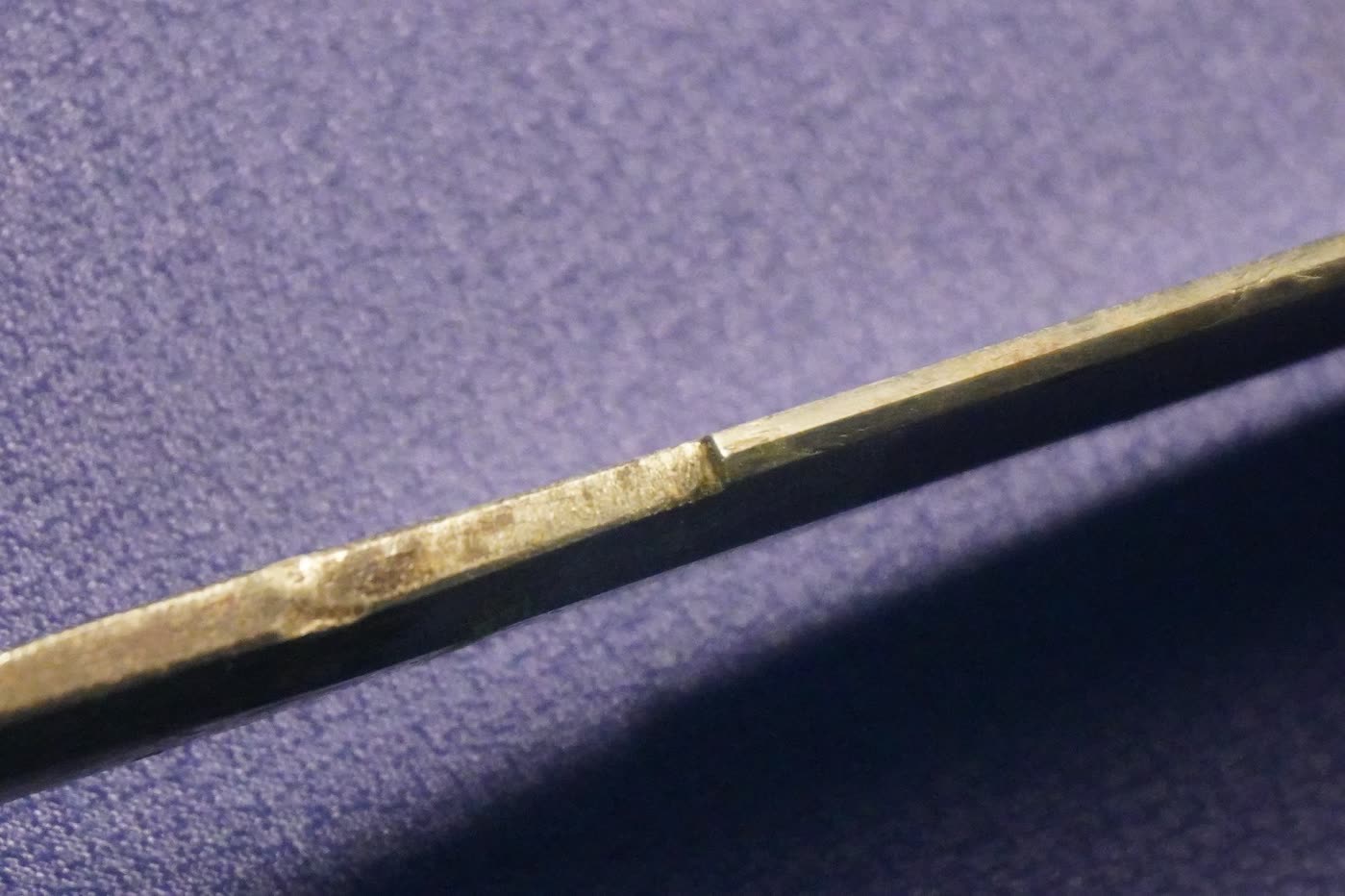
Plate III.3 · 鎺・断面観察
transition
Edge-on view across the and -to-blade transition, recording the step at the and the change from patinated to polished blade.
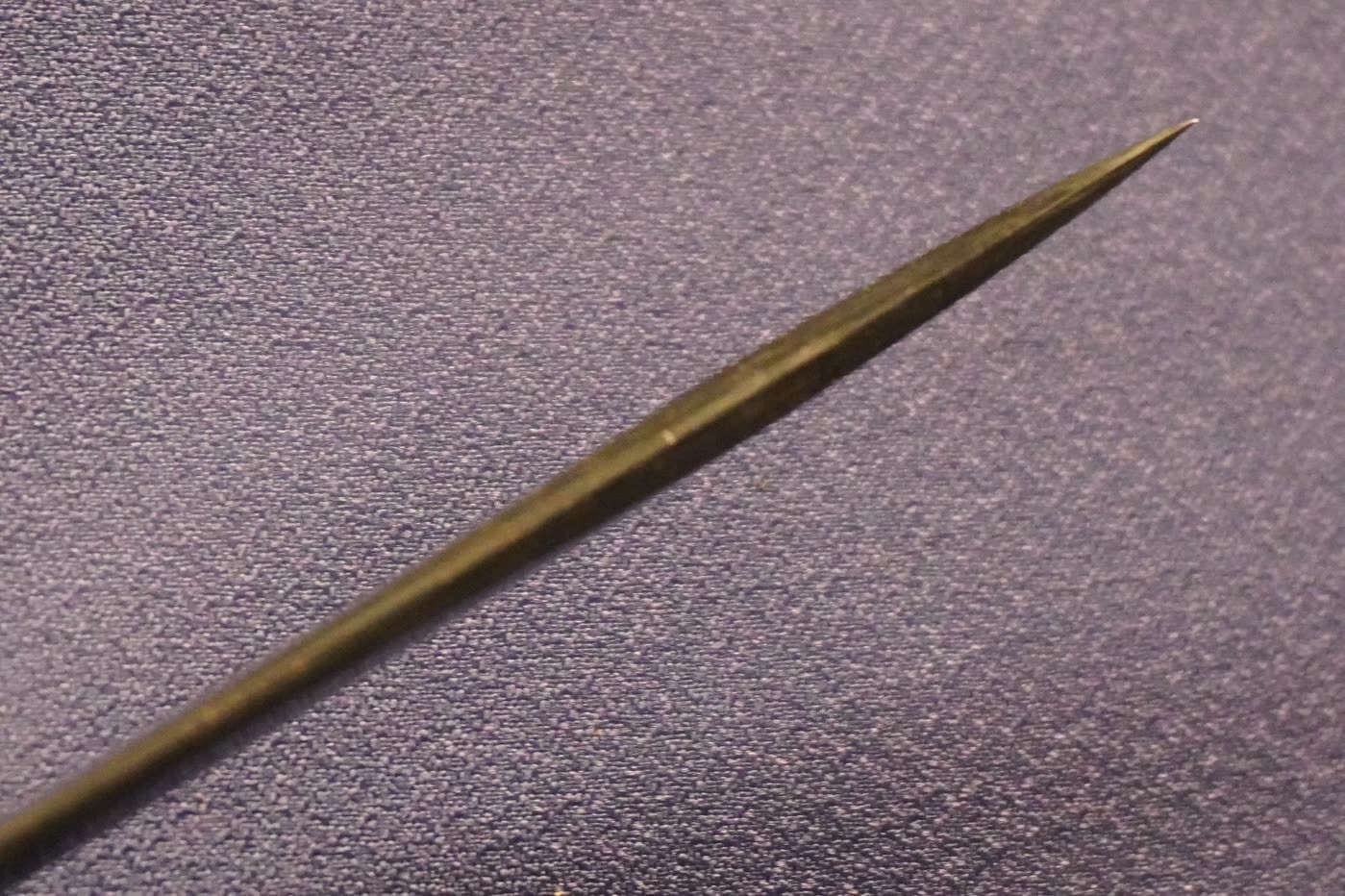
Plate III.4 · 鎺・断面観察
Blade profile
Long edge-on view toward the , documenting the blade’s thin, tapering section without using perspective distortion as a measurement.
IV
Surface Condition
地鉄・鋒
6 plates
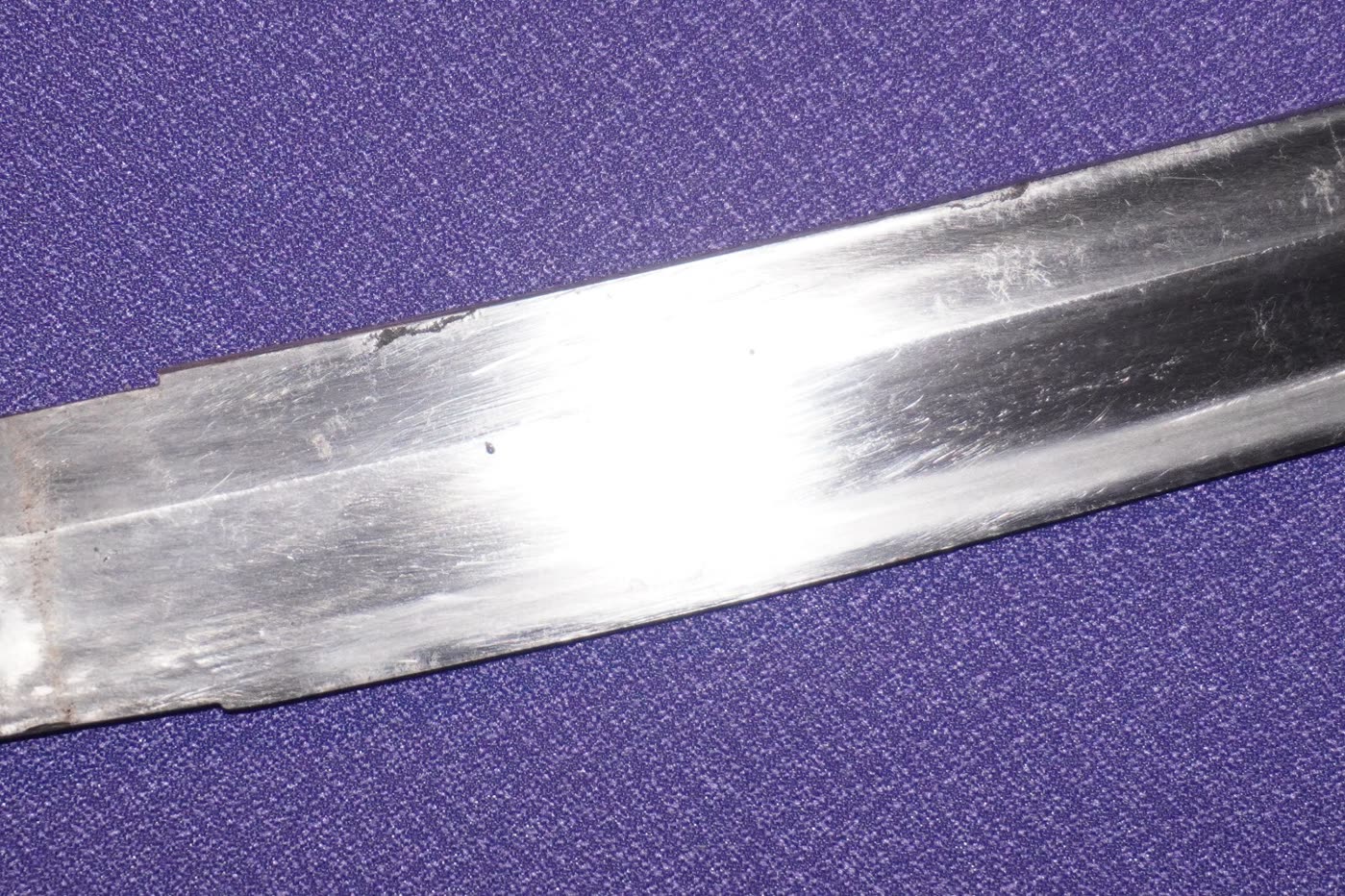
Plate IV.1 · 地鉄・鋒
Blade surface ·
Blade-surface close-up, . Linear scratches, patches of haze, and strong flash reflection obscure the ji; the is only intermittently readable and is not classified from this image.
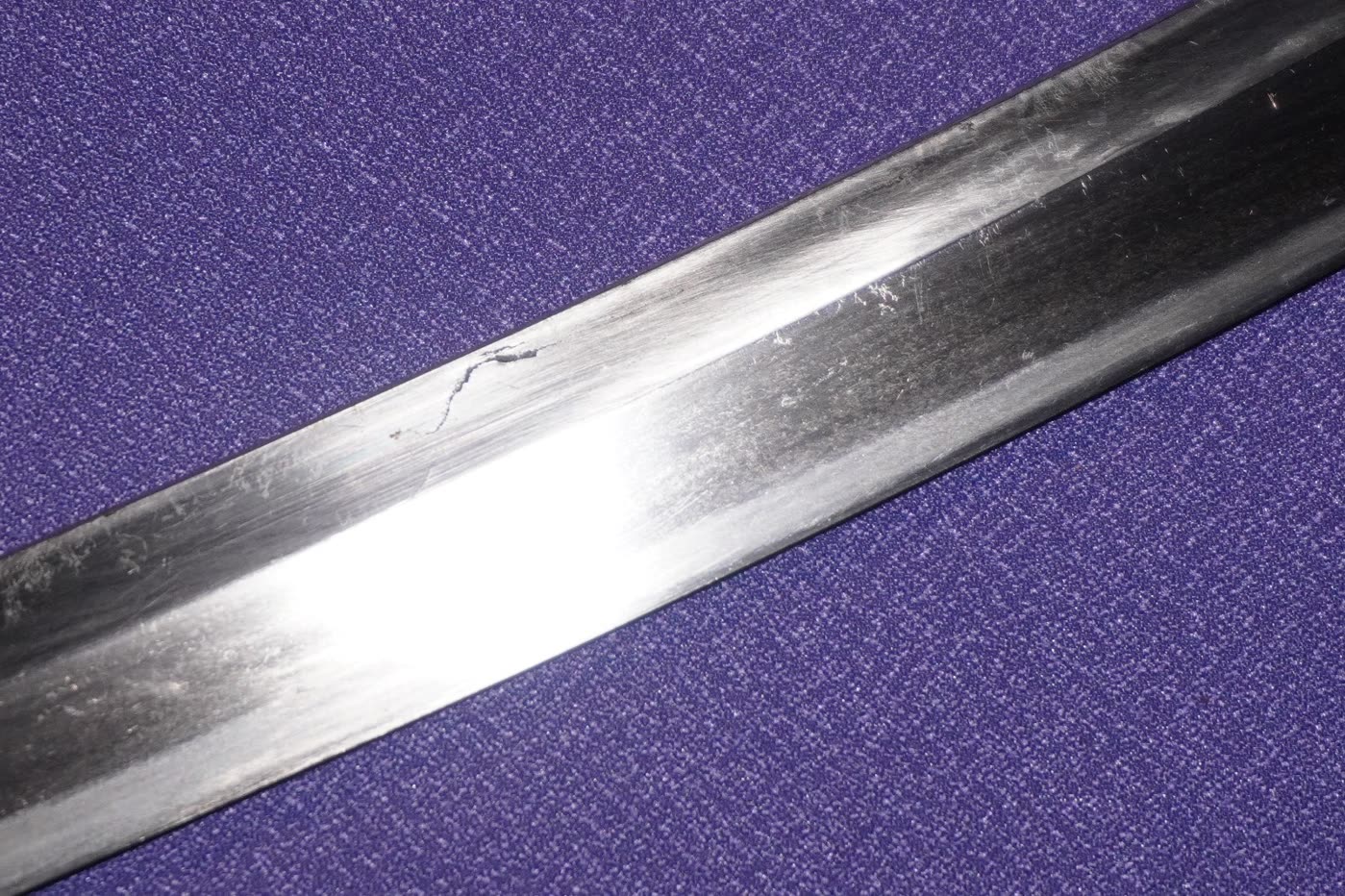
Plate IV.2 · 地鉄・鋒
Blade surface ·
Blade-surface close-up, . Scratches, reflections, and current polish condition remain visible.
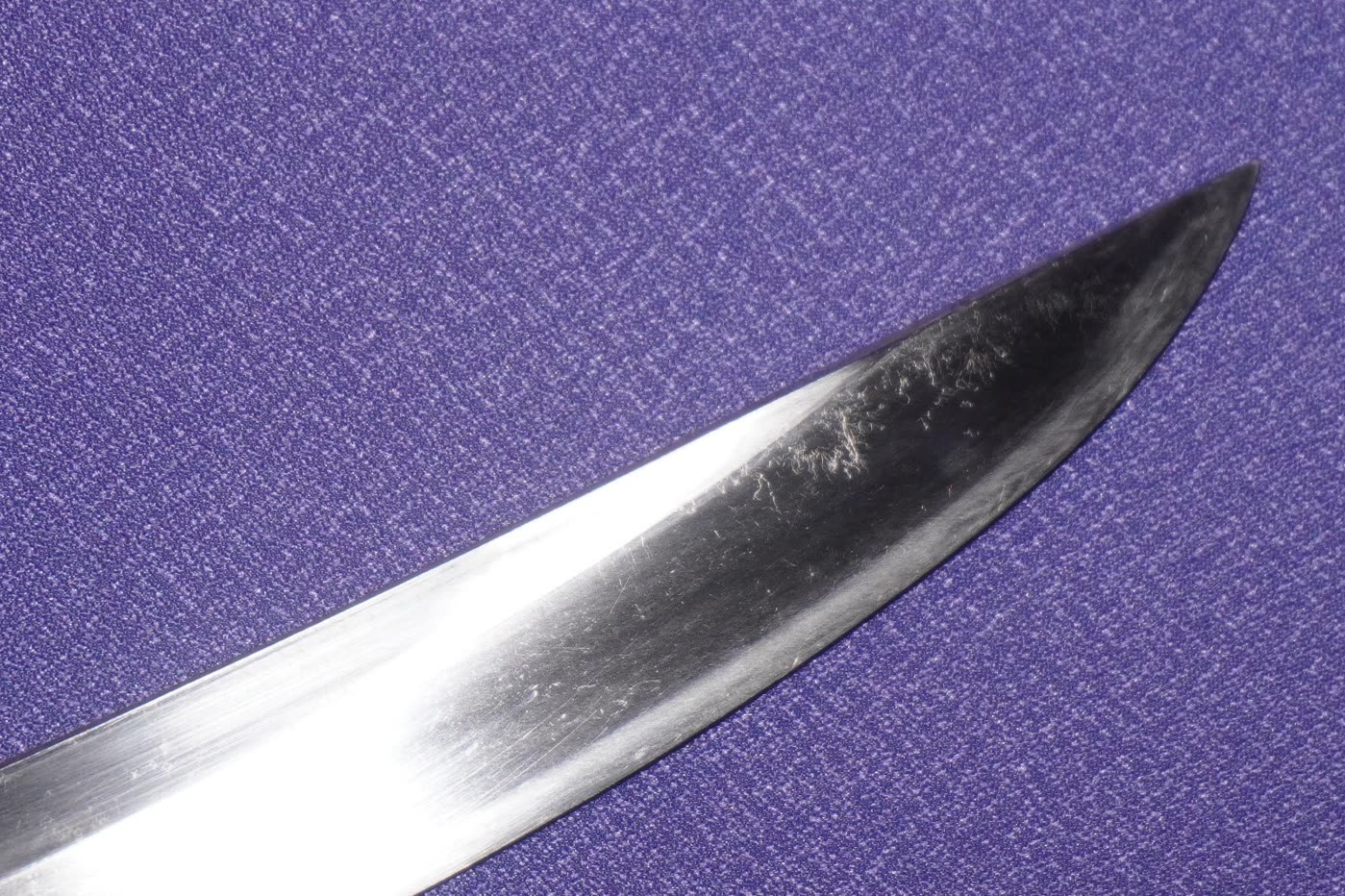
Plate IV.3 · 地鉄・鋒
·
, . The point is slender, while dense surface scratching and uneven polish obscure the and sufficiently to prevent a technical reading.
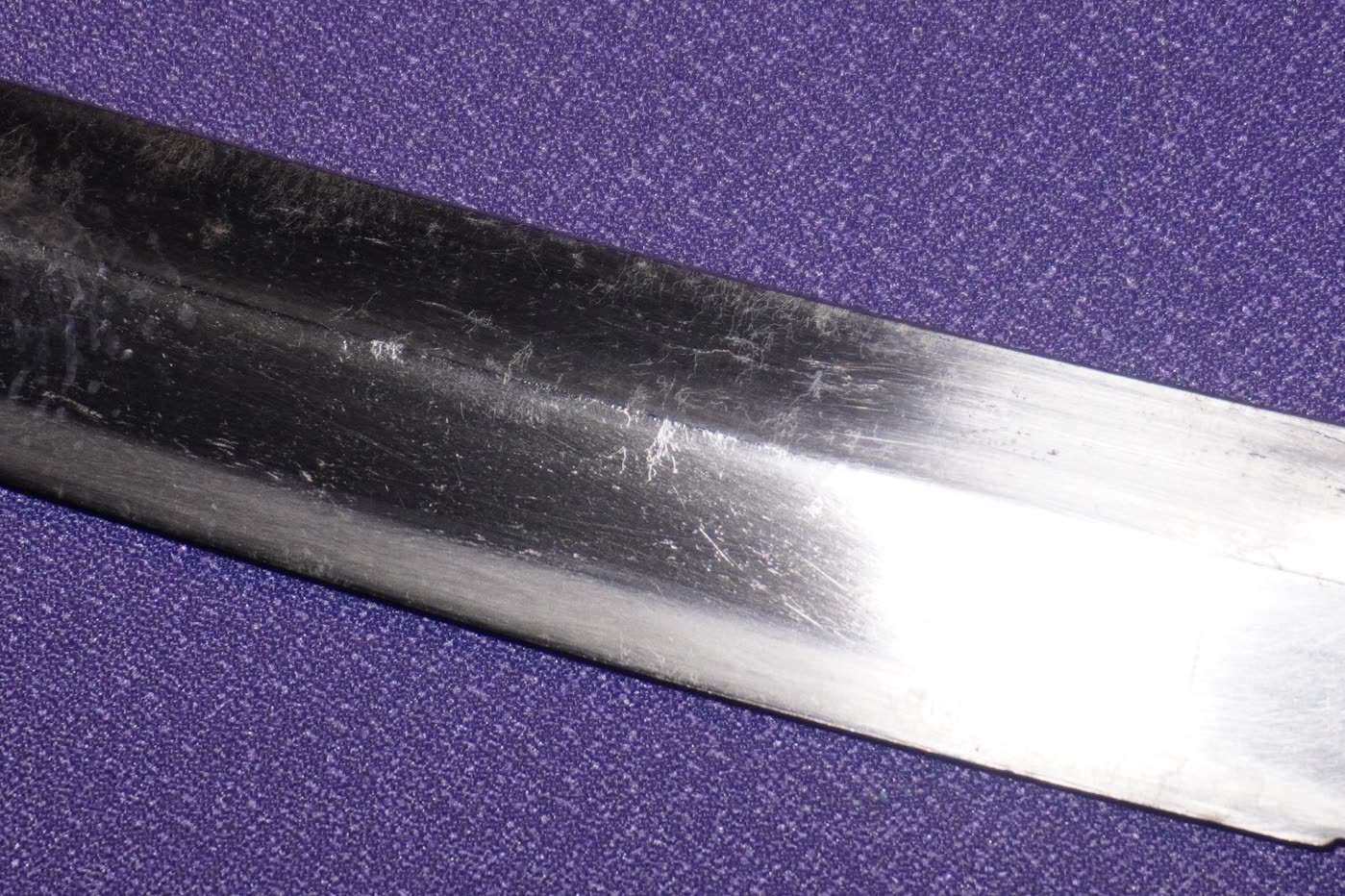
Plate IV.4 · 地鉄・鋒
Condition detail ·
Additional condition record. No restoration or defect diagnosis is inferred from the photograph alone.
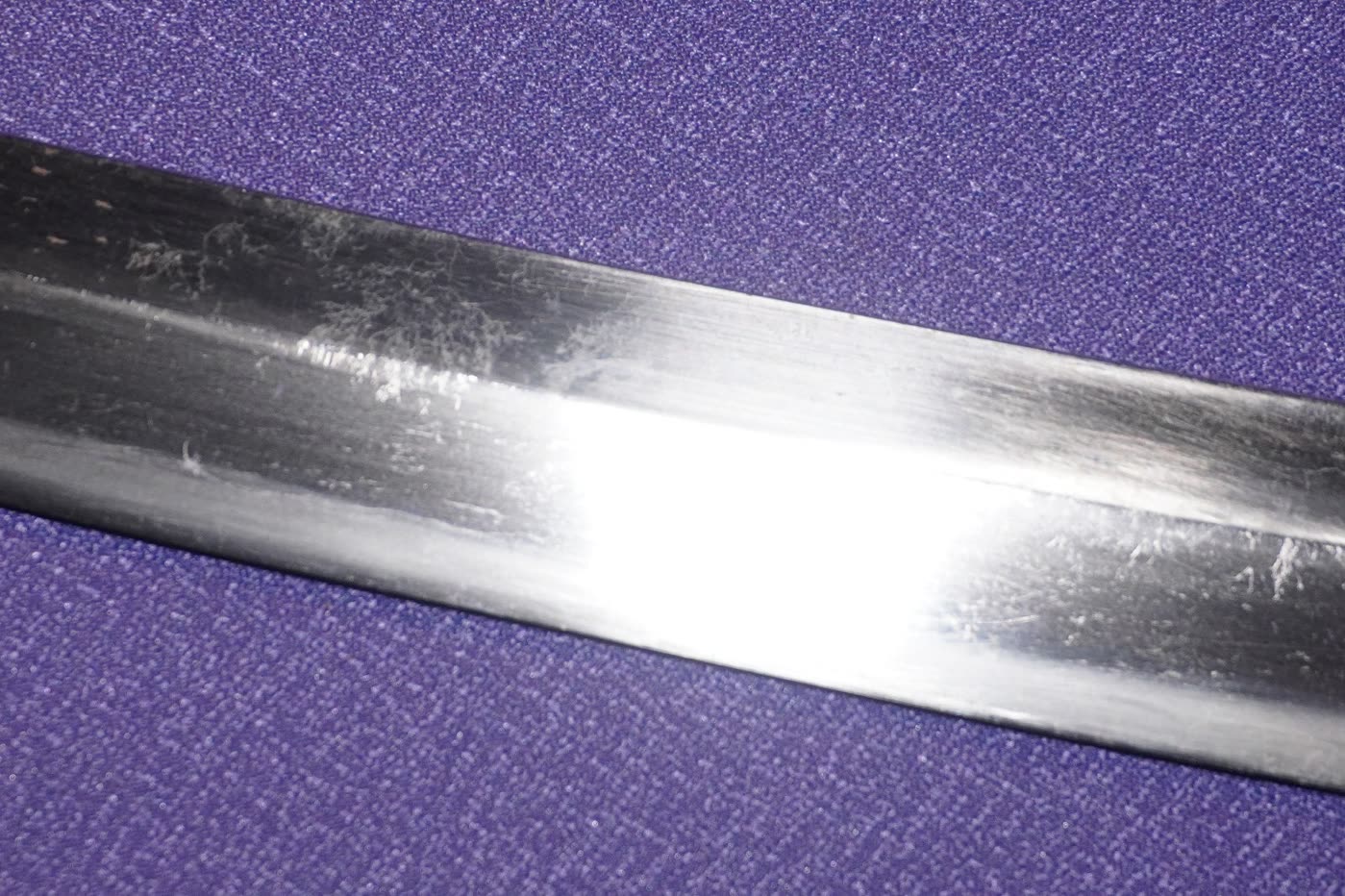
Plate IV.5 · 地鉄・鋒
Condition detail ·
Additional condition record. Bright reflection and scratches are visible, but no named flaw or restoration prognosis is inferred from the photograph alone.
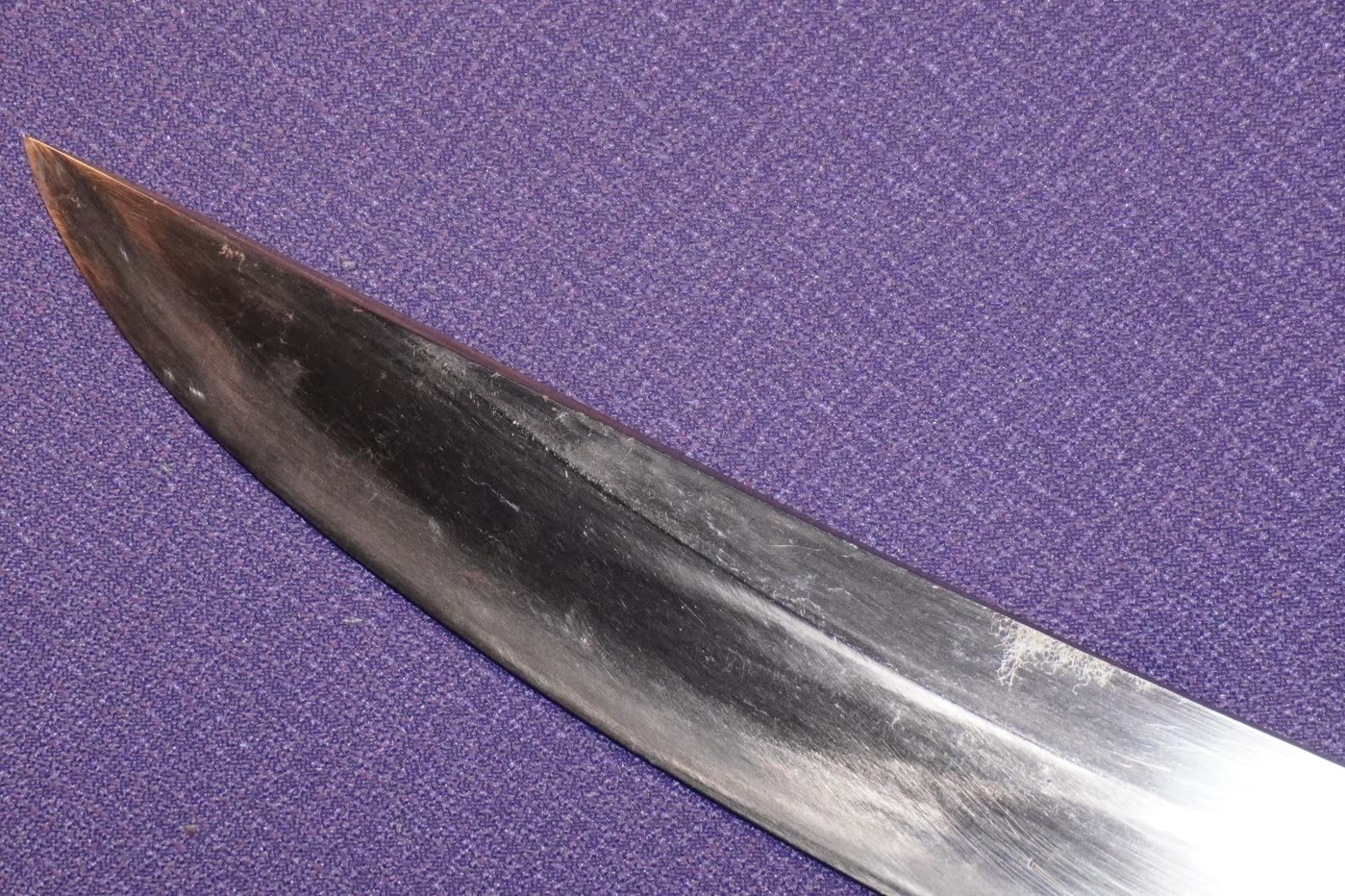
Plate IV.6 · 地鉄・鋒
·
, . No sharpening, flaw classification, or restoration recommendation is made from this image.
Photographs courtesy of GN-1-Japan, used with permission.
Revision history
- Public metadata and terminology reviewed.
- Public catalogue record established.