NA 2026.003
Last revised
Nihontō · Wakizashi · Koshirae
Nozarashi Wakizashi
因州兼先 · 野晒し
Edo · pre-1800
A mumei Edo-period wakizashi attributed on a 1971 NBTHK Kichō paper to Inshū Kanesaki, in an eclectic koshirae centered on skull-and-bone fuchi-kashira, shallow gold-colored menuki of uncertain subject, a dragon kozuka, and textured red lacquer with dark linear figuring and gold maki-e quail and millet.
AttributionInshū Kanesaki · 因州兼先Mumei; attribution recorded on a 1971 Kichō-era paper
- Nagasa
- 46.0 cm
- Sori
- 0.9 cm
- NBTHK paper
- Kichō Tōken · 1971
Object record
Overview
Catalogue record
- Item
- Wakizashi (脇指), full koshirae; mumei blade
- Attribution
- Inshū Kanesaki · 因州兼先
Recorded on the 1971 NBTHK Kichō paper - Nagasa
- 46.0 cm · Hyōgo registration record
- Sori
- 0.9 cm · motohaba 29.0 mm · motokasane 6.6 mm
- Overall
- 64.5 cm · sakihaba 21.7 mm · sakikasane 4.6 mm
- Period
- Edo · documented as pre-1800
- Mekugi-ana
- One · tang unsigned (無銘)
Certification
- NBTHK
- Kichō Tōken (‘Precious Sword’; 貴重刀剣) recognition paper
Printed document number 206249 - Issued
- 14 March 1971 · Shōwa 46
Photographic record
Plates · 21
Available views arranged as a comparative object study; descriptions distinguish observation from documentary attribution.
Click underlined specialist terms for concise notes and construction diagrams.
I
Documents
認定書
1 plate
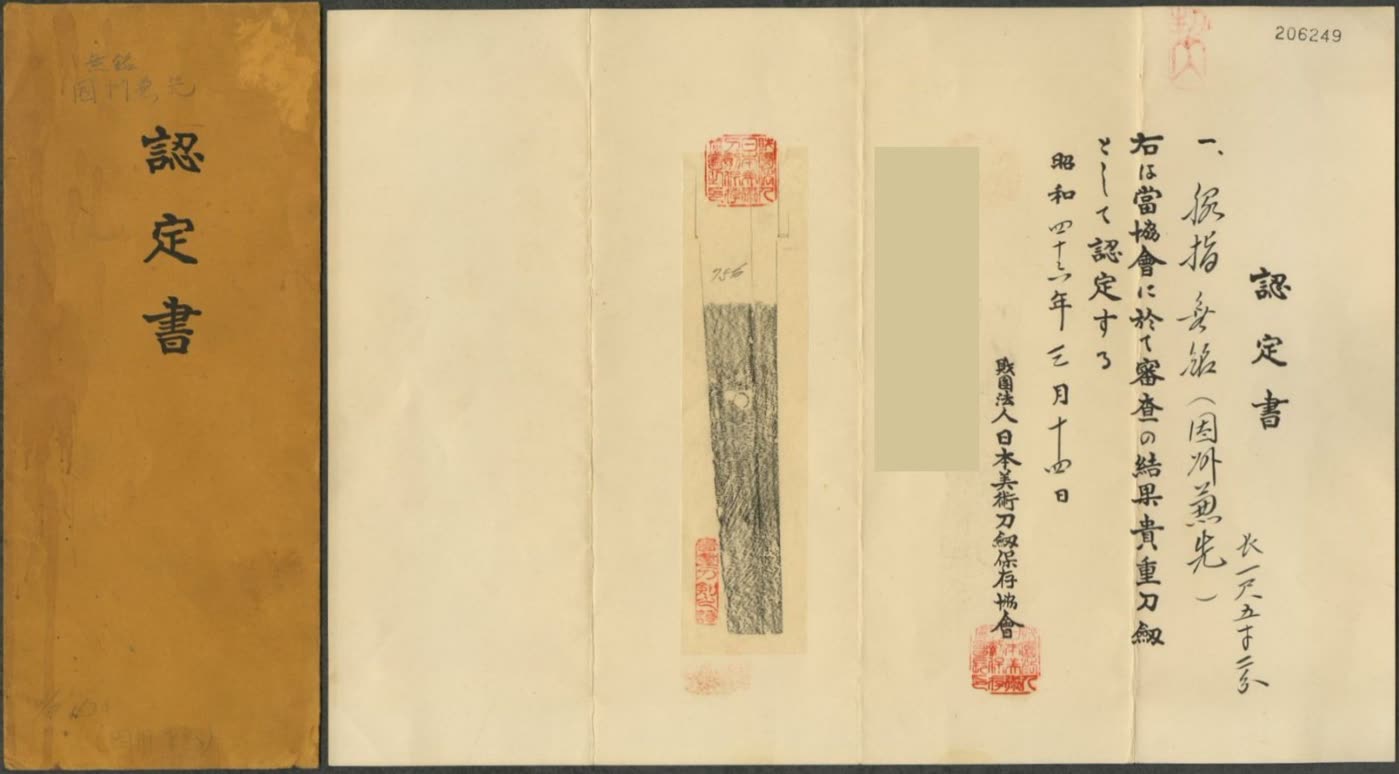
Plate I.1 · 認定書
NBTHK recognition paper, printed document no. 206249.
Issued on the fourteenth day of the third month of Shōwa 46—14 March 1971—by the Society for the Preservation of Japanese Art Swords (日本美術刀剣保存協会; NBTHK). The paper records a wakizashi (脇差) as unsigned (無銘), with a parenthetical attribution to Inshū Kanesaki (因州兼先), and gives a nagasa of one shaku, five sun, and two bu (一尺五寸二分). It recognizes the blade under the designation (‘Precious Sword’; 貴重刀剣). The printed number is recorded here as a document number because the photographed form does not label its administrative function. The named addressee is redacted in the public reproduction.
II
Blade
刀身
8 plates
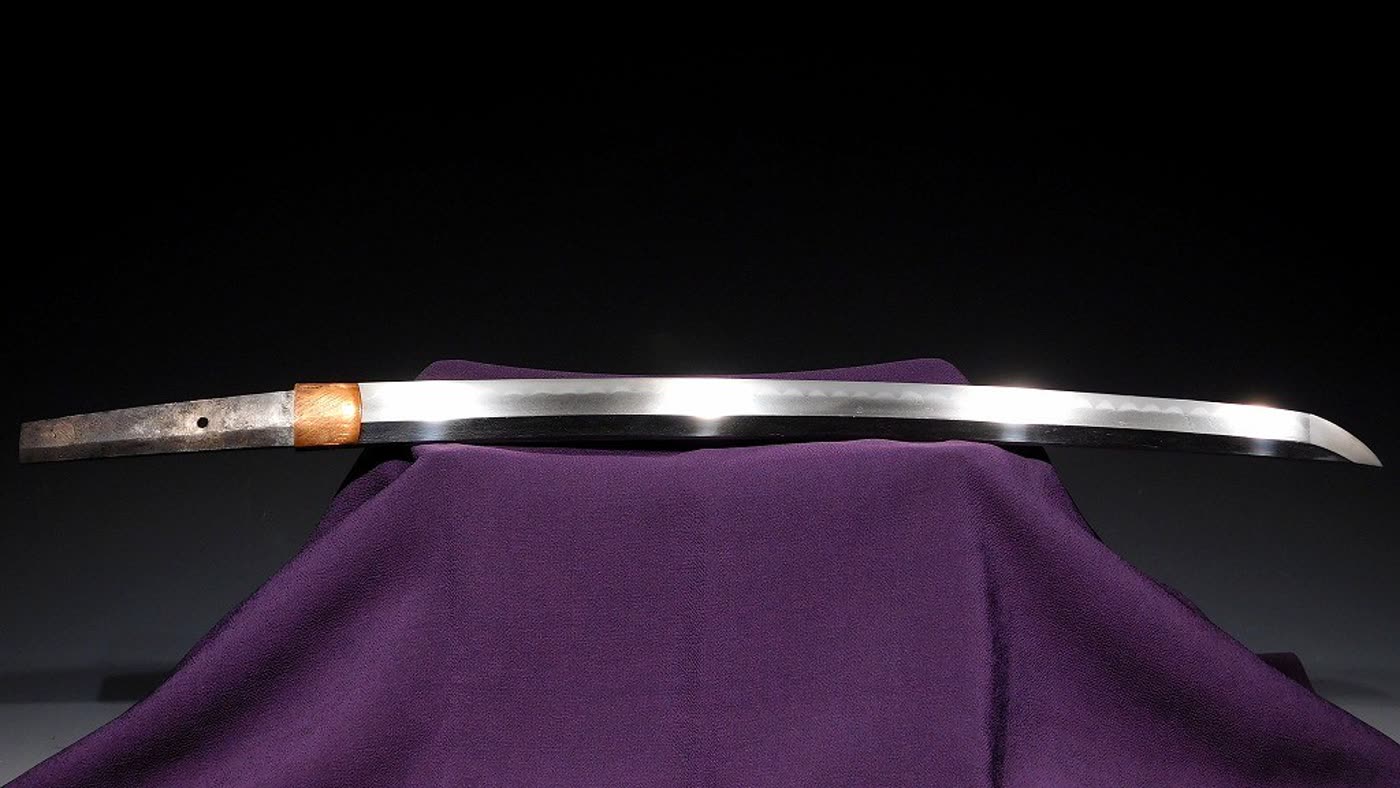
Plate II.1 · 刀身
Bare blade, full-length view · .
The 46.0 cm blade is shown from through with the copper-colored in place. The tang carries one and no readable inscription, consistent with the documentary 無銘 entry.
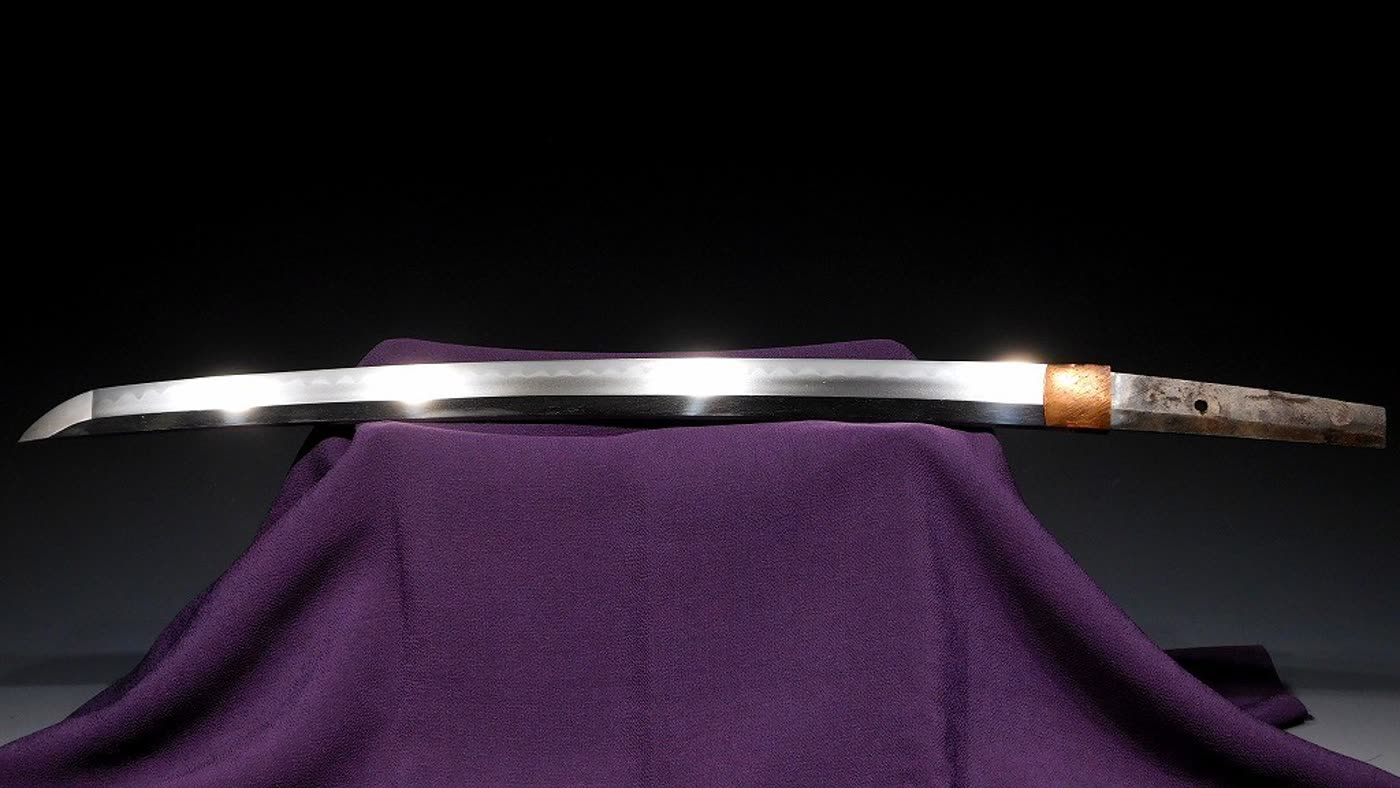
Plate II.2 · 刀身
Bare blade, full-length view · .
The survey shows the same shallow curvature, polished ji and ha, and unsigned .
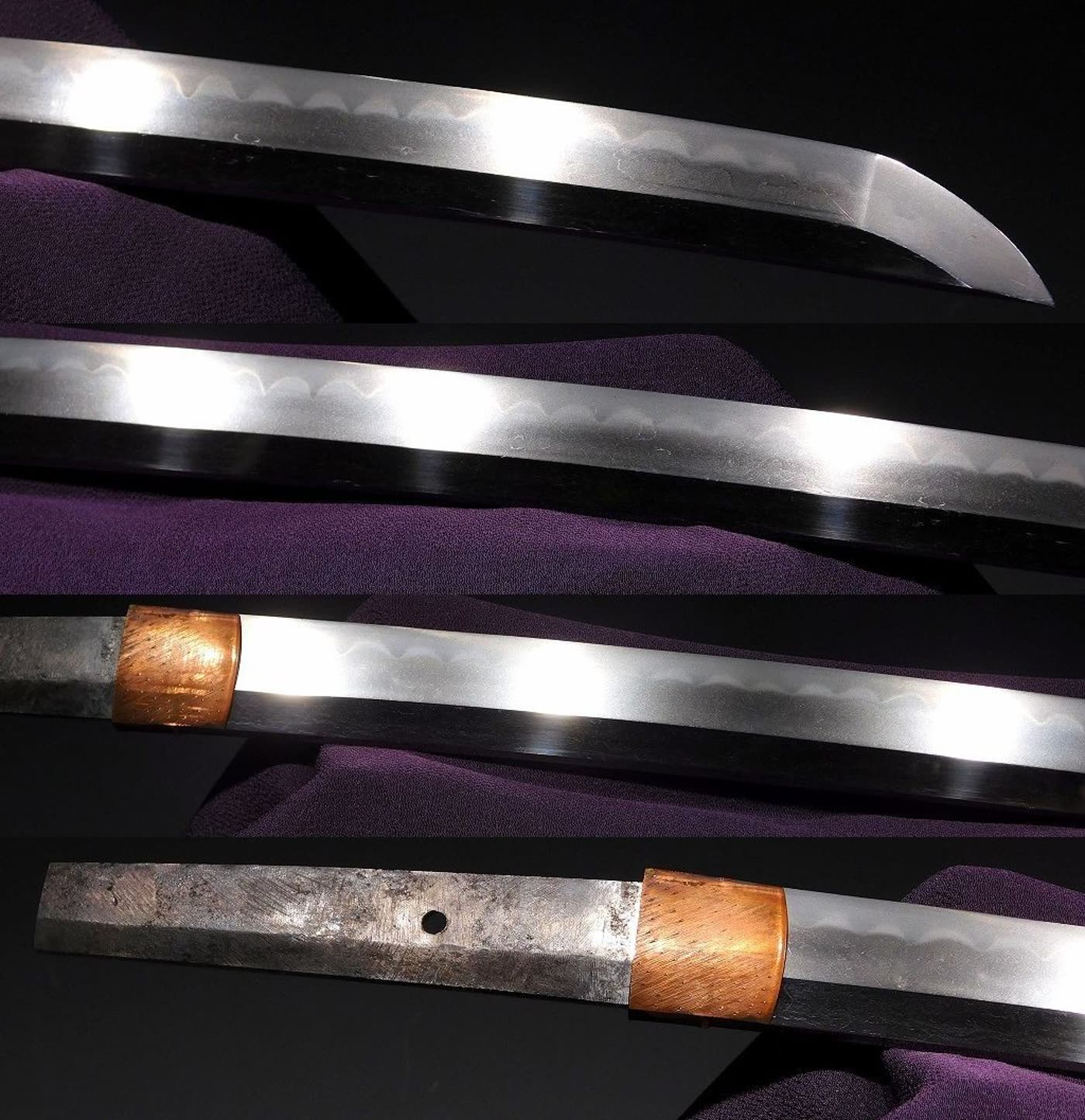
Plate II.3 · 刃文
Blade detail montage · .
Successive details follow the blade from through the visible to the and . Directional light makes the temper line more legible while also recording surface condition.
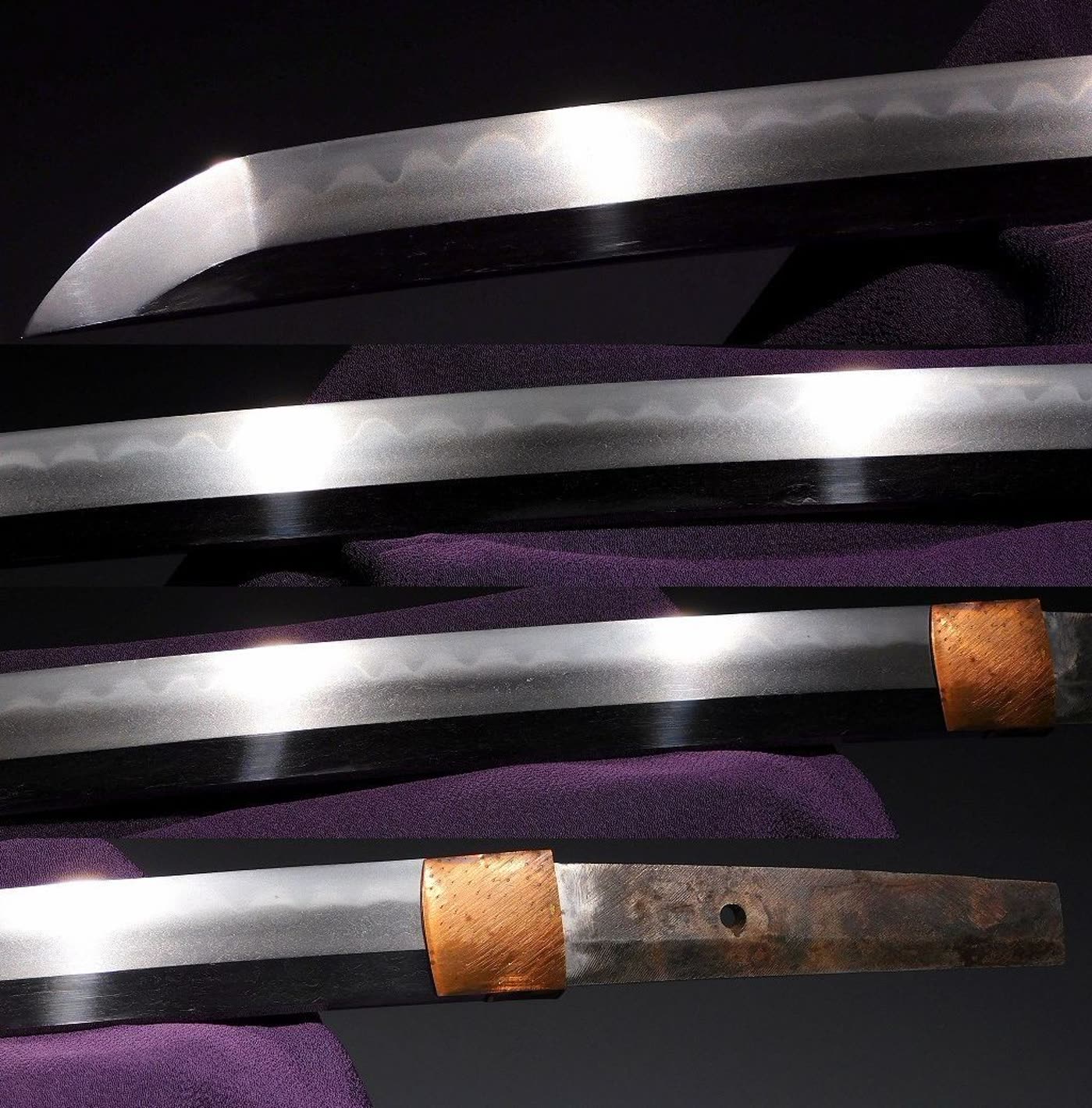
Plate II.4 · 刃文
Blade detail montage · .
The opposing face is documented through , mid-blade, / transition, and . Together Plates II.3–II.4 form a comparative survey of the blade surfaces.
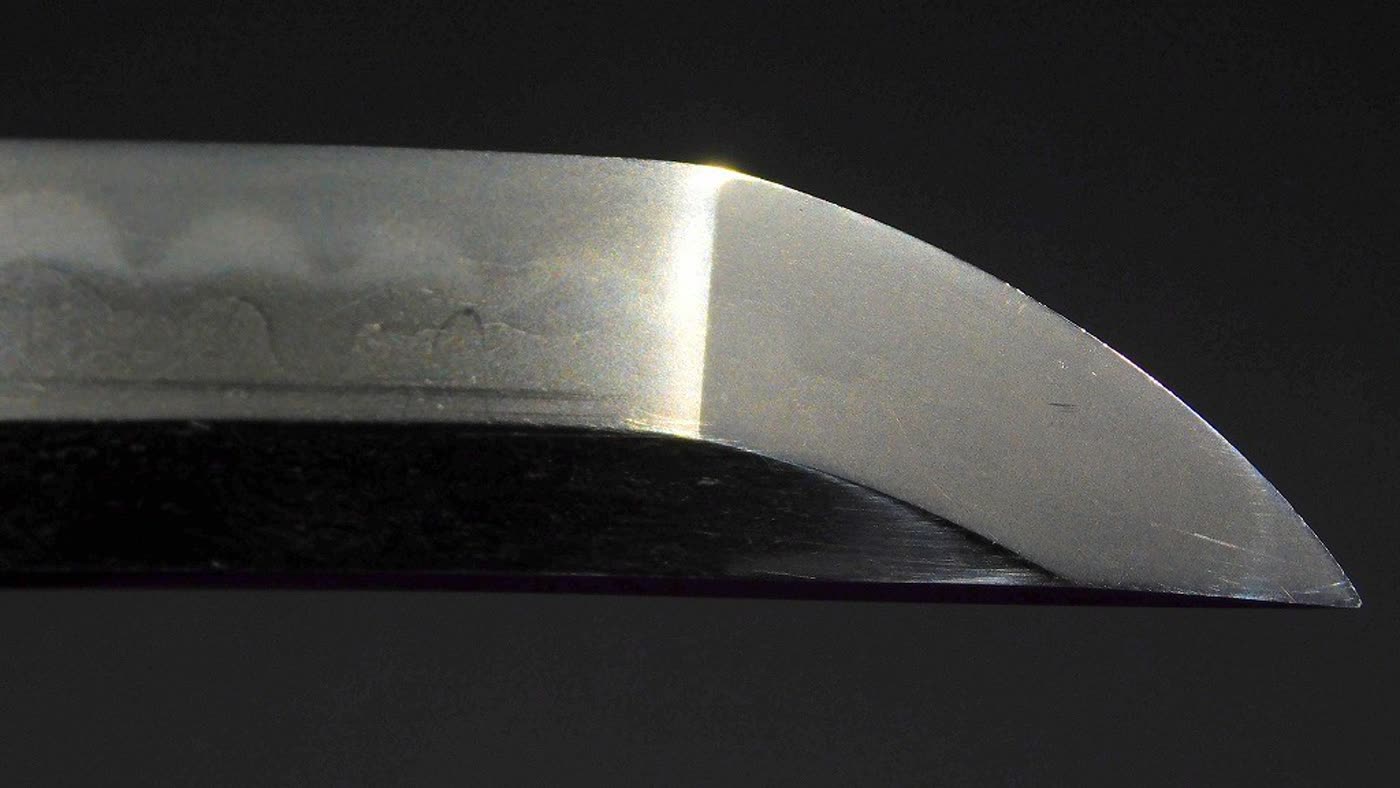
Plate II.5 · 鋒
detail · .
Close framing records the point profile, , and visible continuation of the hardened edge into the area. No restoration or contrast enhancement has been applied.
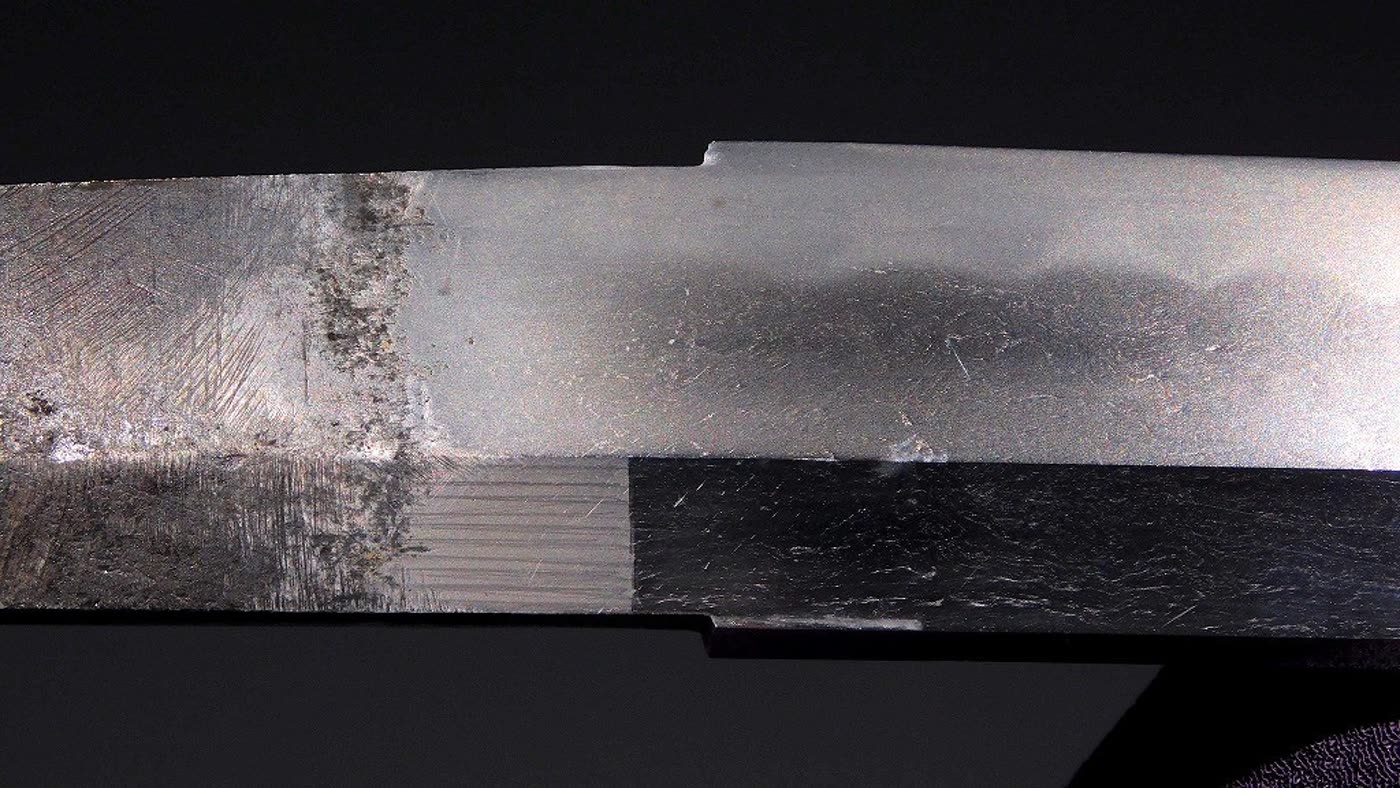
Plate II.6 · 茎
Blade-base and detail · .
The close view records the area, tang surface and file marks, and the transition from polished blade to patinated . No is visible.
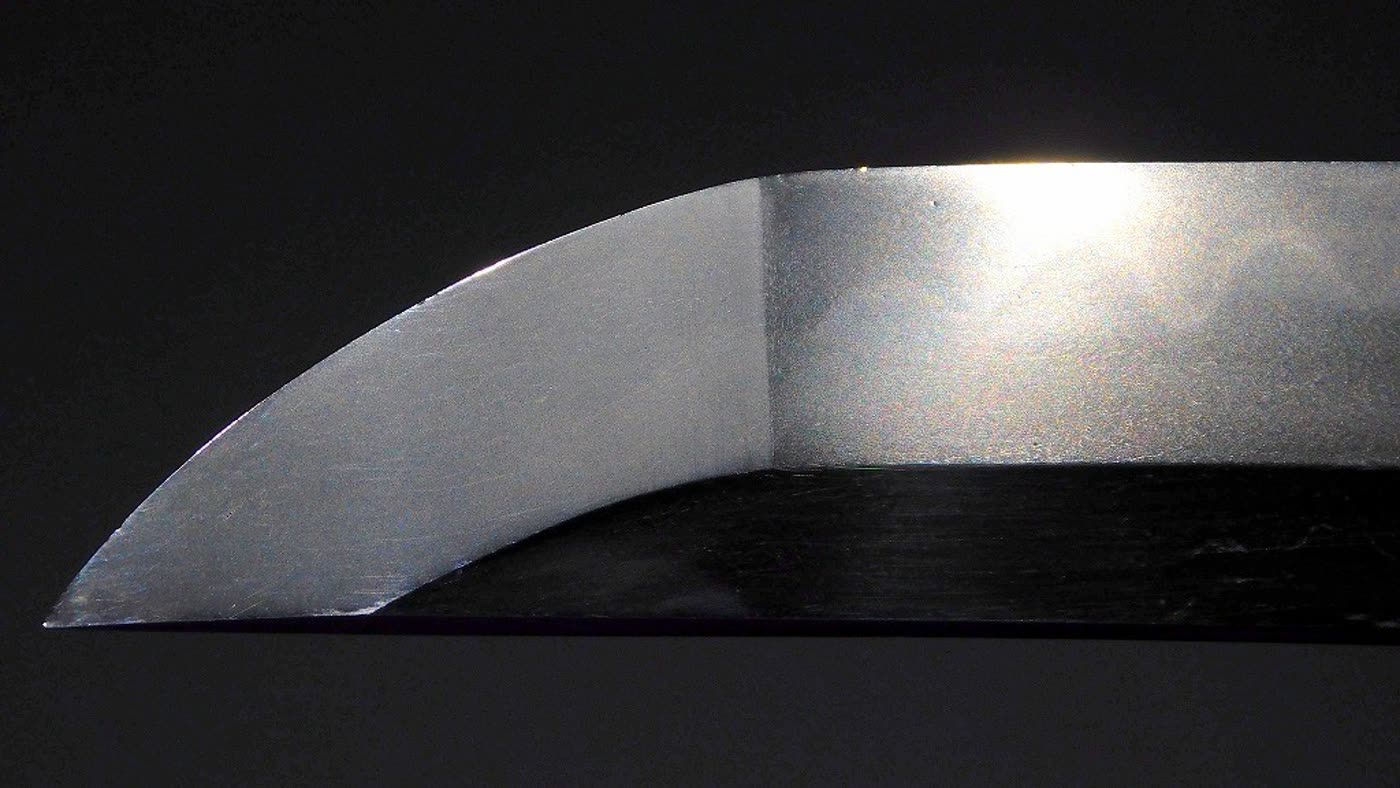
Plate II.7 · 鋒
detail · .
The opposing face records the point geometry and polished surface under directional light. The image is descriptive rather than a technical photograph.
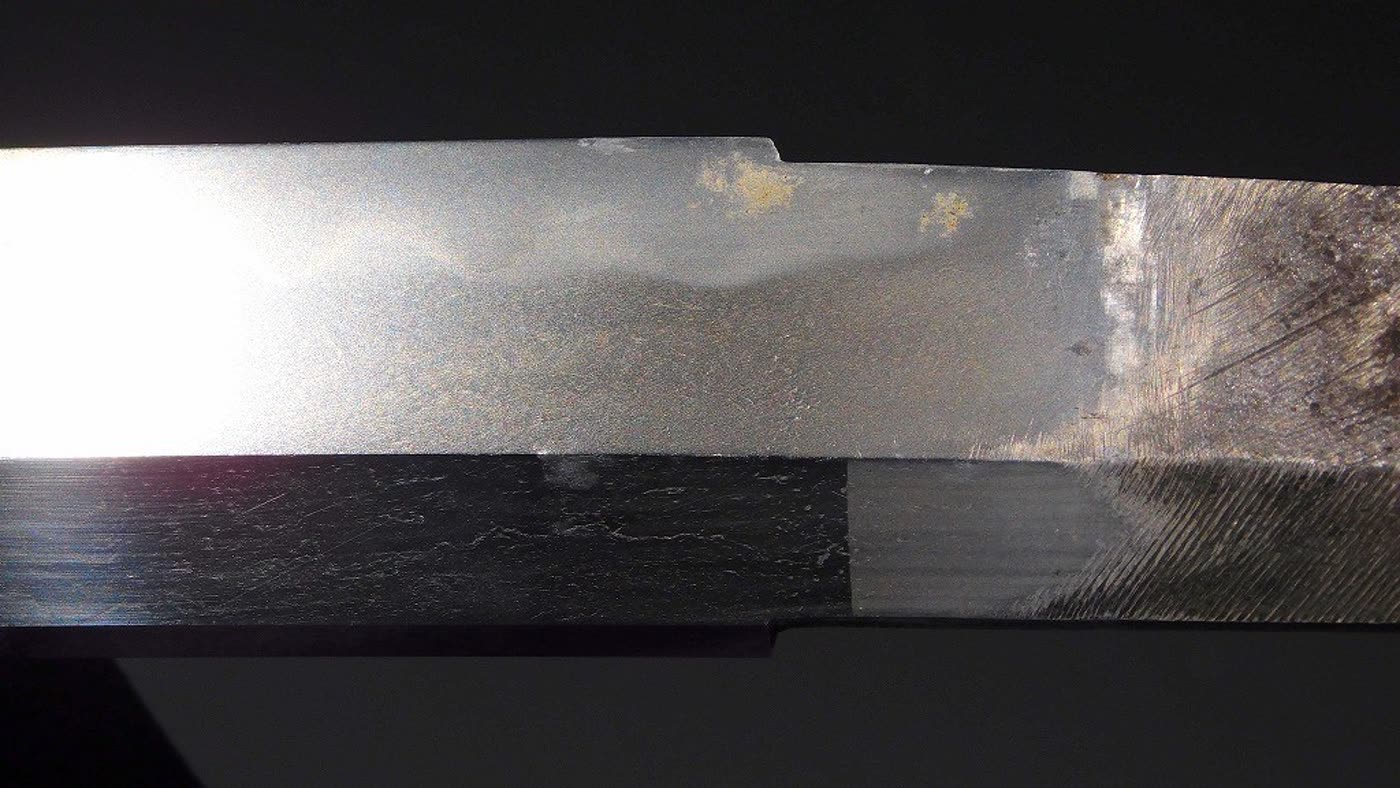
Plate II.8 · 茎
Blade-base and detail · .
The close view records the area, tang surface and file marks, and the transition from polished blade to patinated . It complements Plate II.6 and confirms the absence of a visible inscription on either photographed face.
III
Koshirae & fittings
拵
8 plates
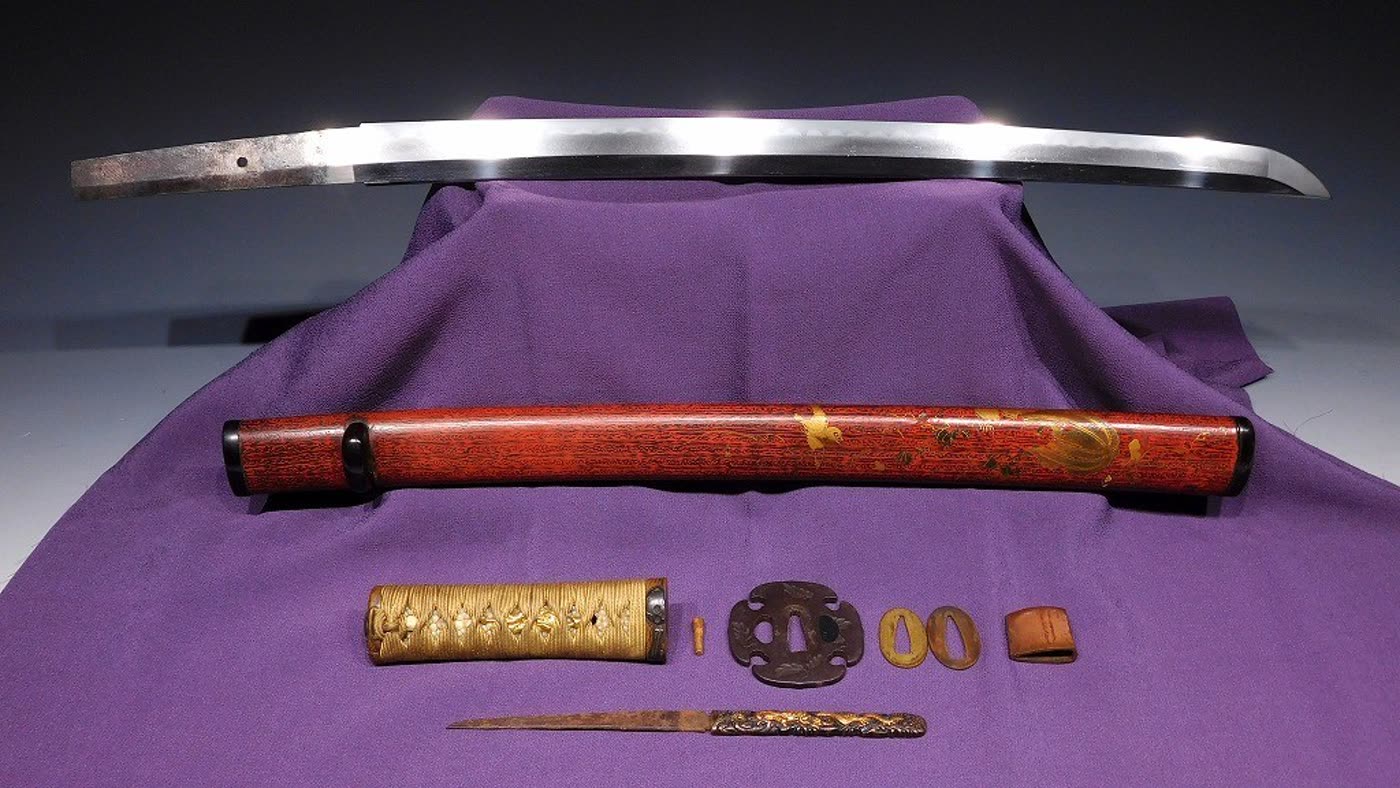
Plate III.1 · 拵
Disassembled ensemble.
The mounting is laid out with blade, , , , , and the removed with beside the red textured-lacquer , whose dark linear figuring is punctuated by gold maki-e uzura ni awa (鶉に粟), quail and millet.
Plate III.2 · 頭
with skull-and-bone motif.
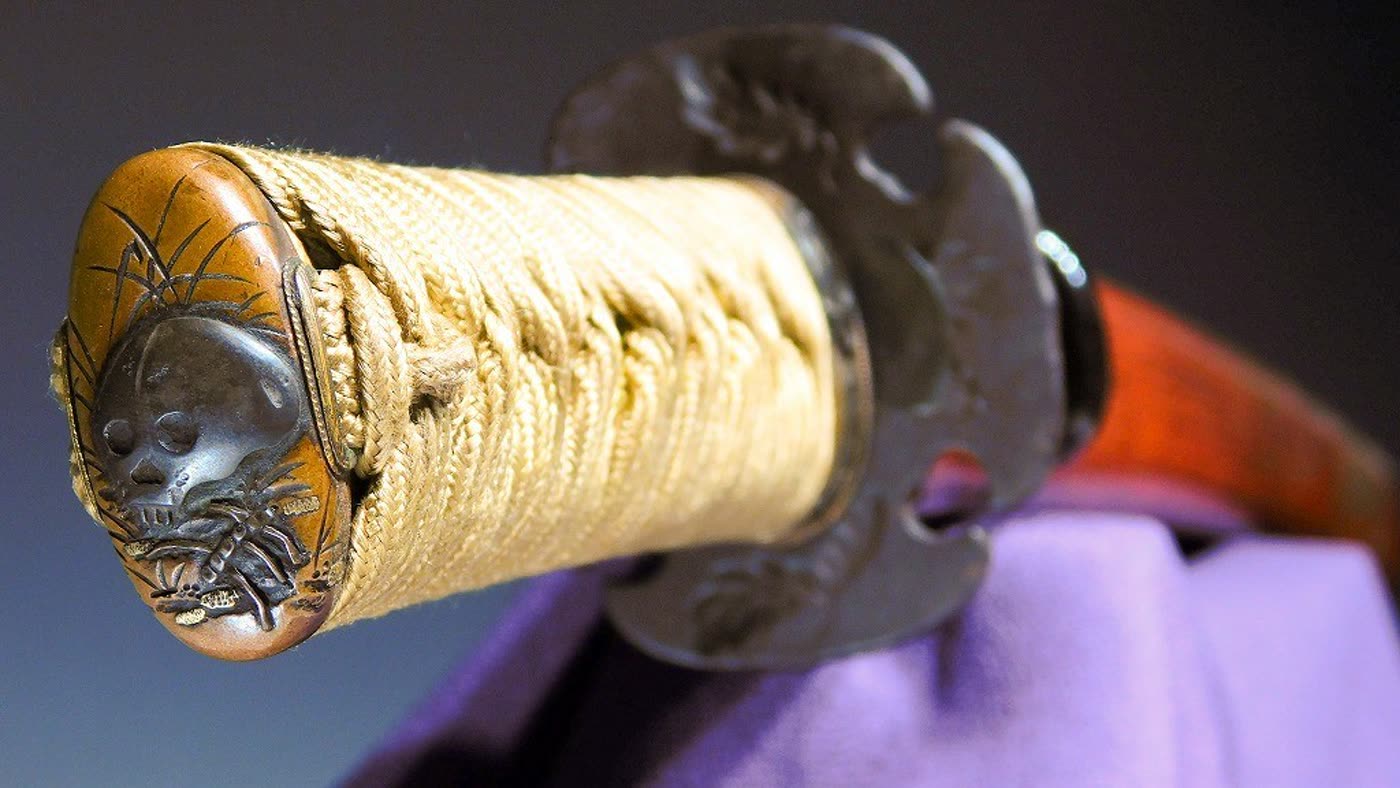
A dark skull and scattered bones are worked in raised relief against a warm yellow-metal ground; fine linear carving suggests grasses around the remains. The field setting gives the nozarashi (野晒し) designation its visual basis, while the exact alloys and school remain unassigned.
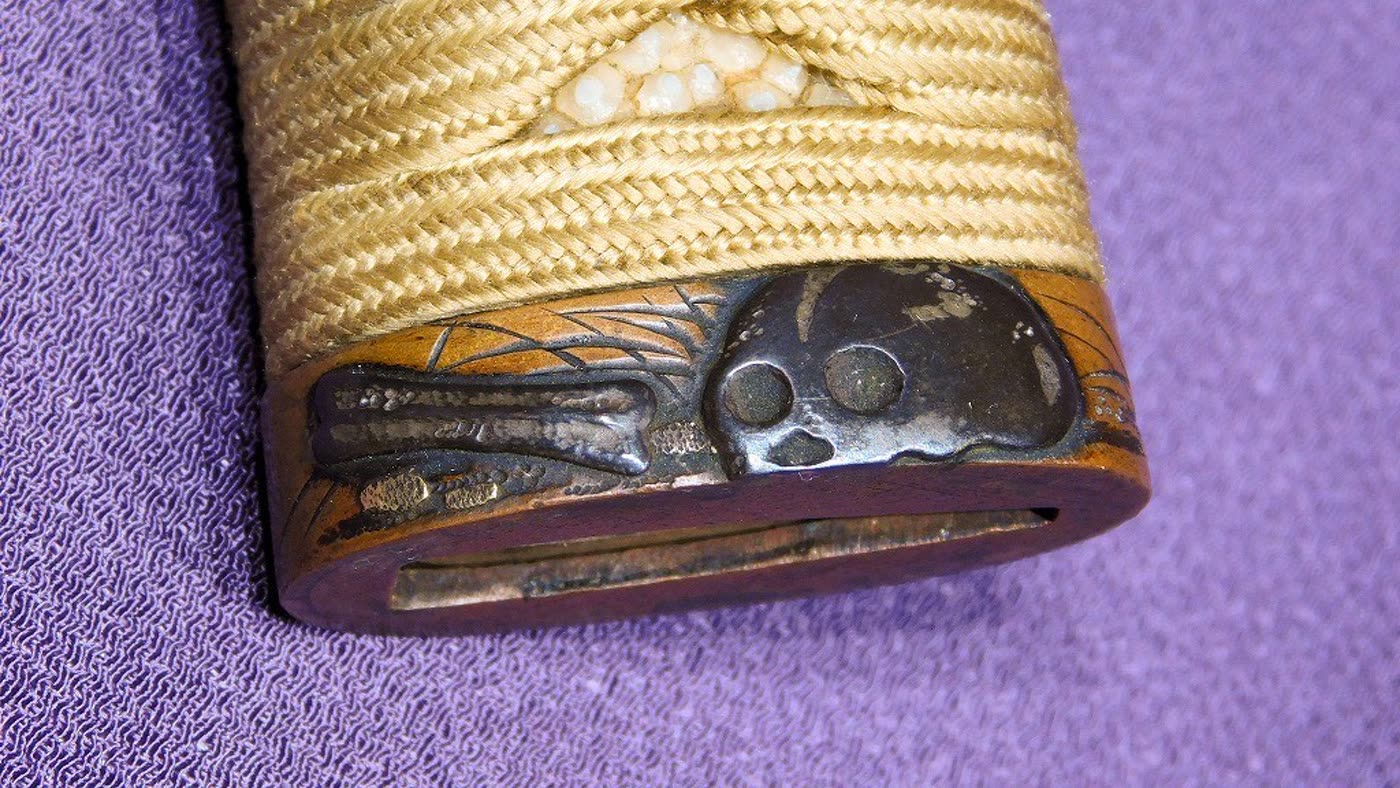
Plate III.3 · 縁
with skull-and-bone motif.
The companion repeats a dark skull and long bones in relief against a warm metal ground, with fine incised grasses linking it compositionally to the . Pale and tightly wrapped yellow-gold ito remain visible above.
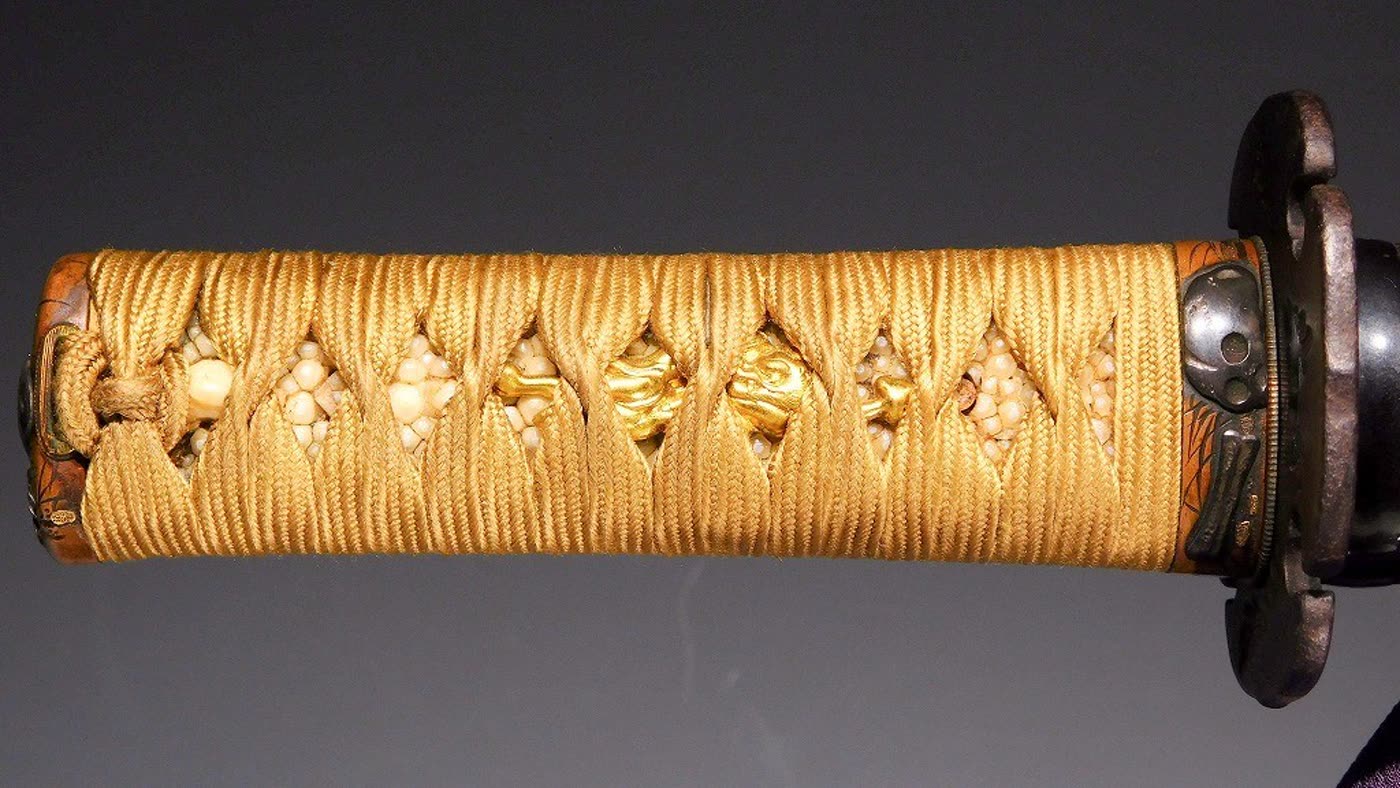
Plate III.4 · 柄
, , and .
Yellow-gold lies broad and flat over pale panels, forming regular diamond-shaped openings; the strands remain flat through the crossings. The gold-colored are comparatively shallow in relief and may depict a dragon, but the wrap prevents a secure reading of their complete subjects; they should not be treated as part of the skull-and-bone theme without further evidence.
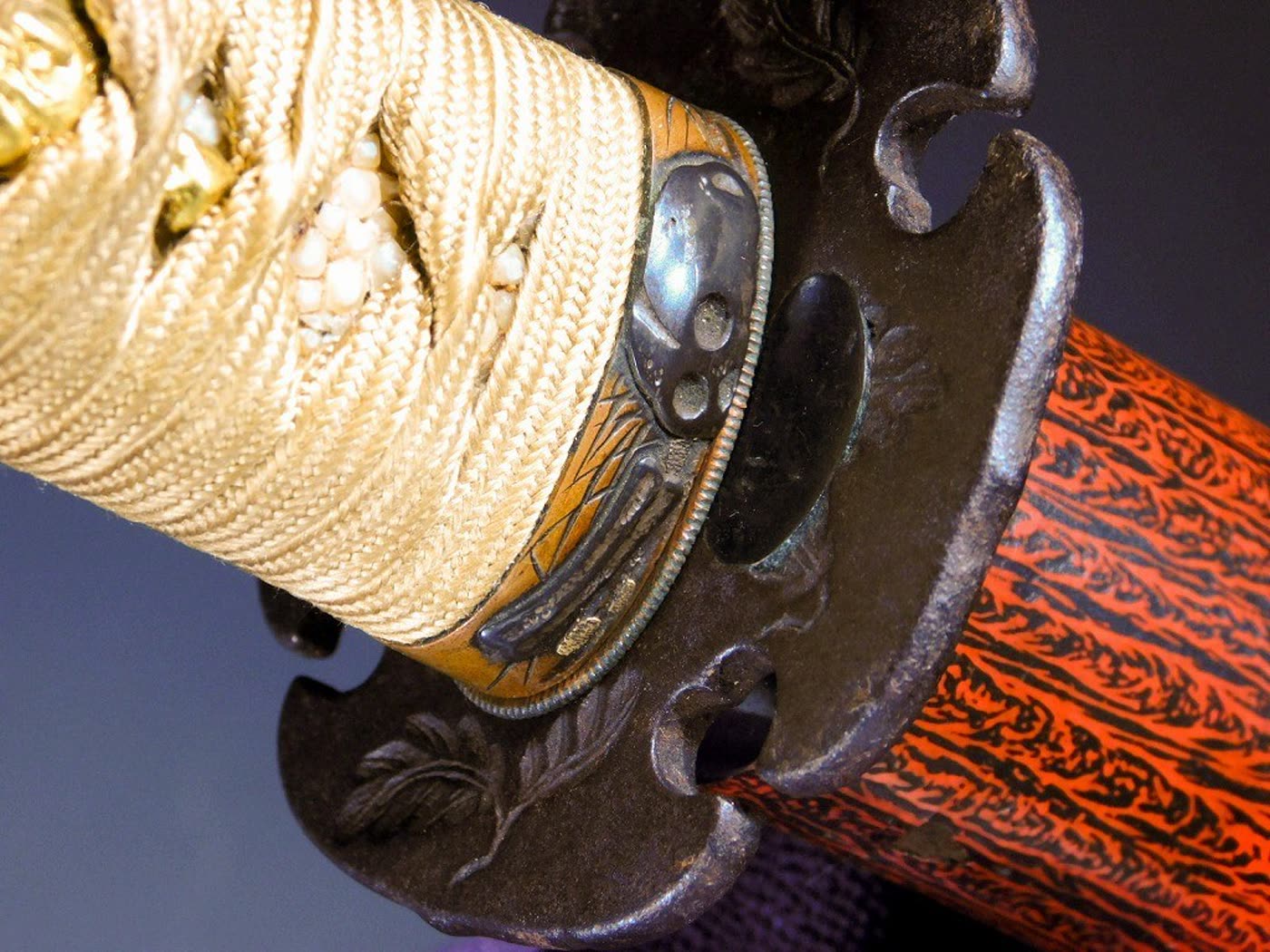
Plate III.5 · 鍔
–– junction.
The iron is , with paired and scattered incised plant sprigs across the ji. One is closed by a blue-black , probably by colour; copper-colored tighten the . The skull-motif is visible immediately behind it.
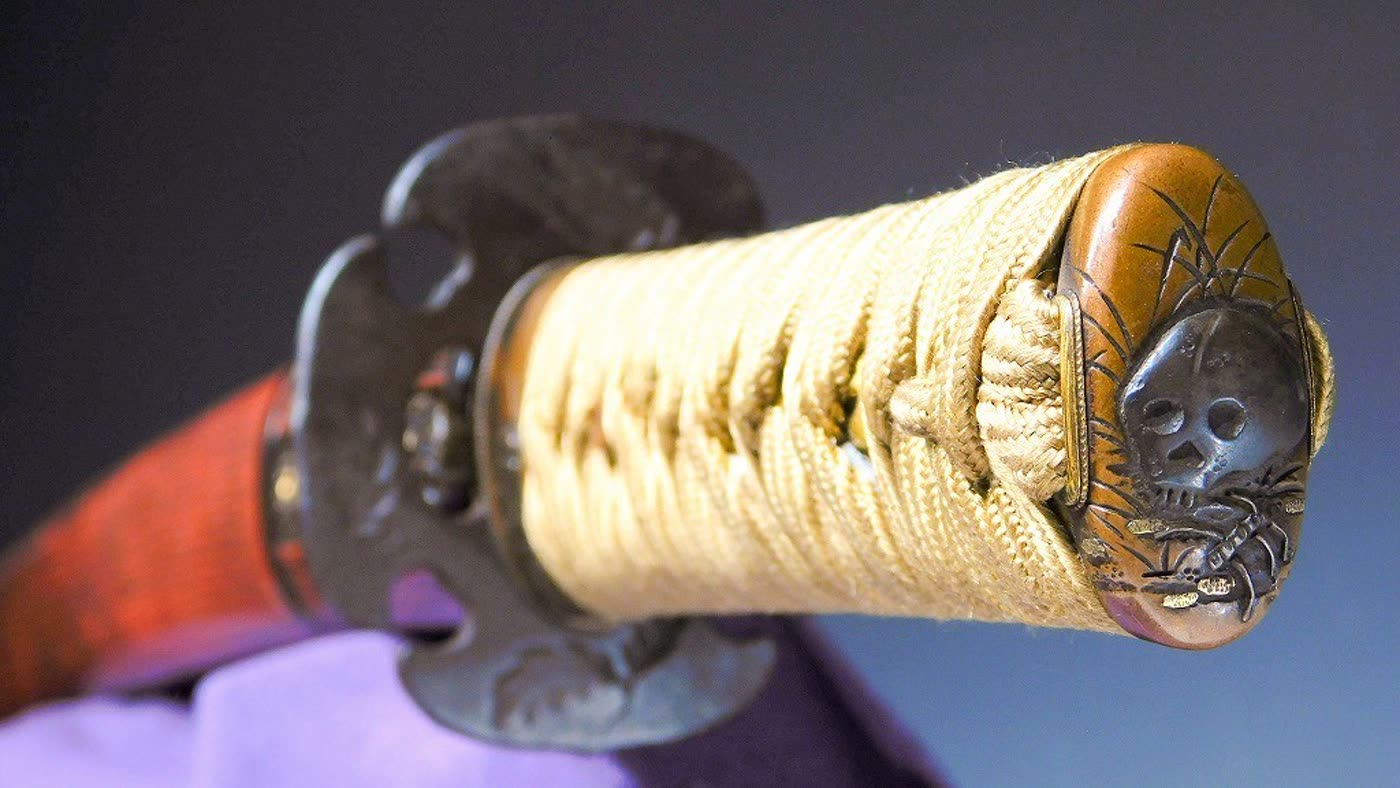
Plate III.6 · 頭
, alternate view.
The second angle clarifies the skull’s relief, eye sockets, nasal opening, and adjacent bone forms, while recording wear and surface variation around the end.
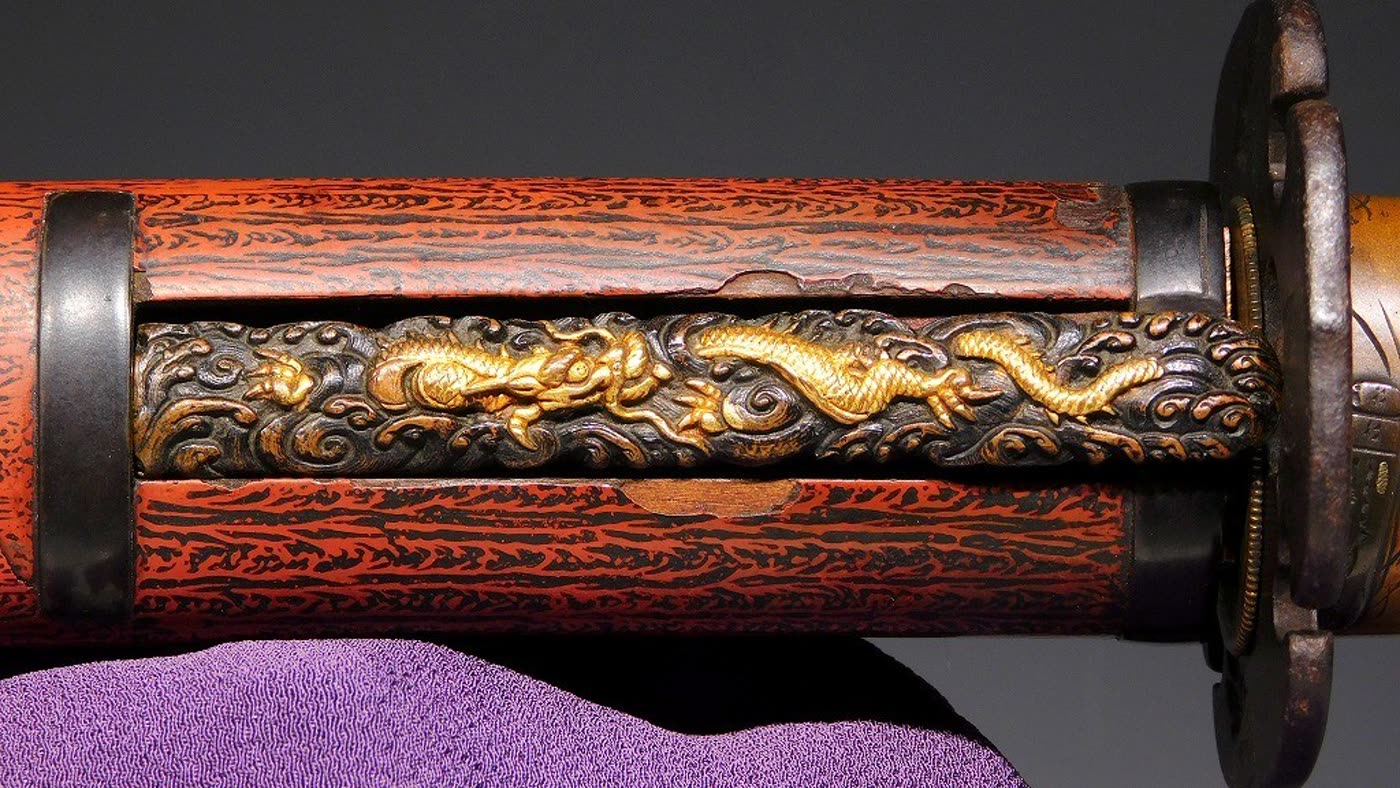
Plate III.7 · 小柄
Dragon-decorated .
A gold-colored dragon is modelled in high relief against a dark field of wave-like carving on the . The fitting remains seated in its pocket beside the , preserving its mounted relationship to the .
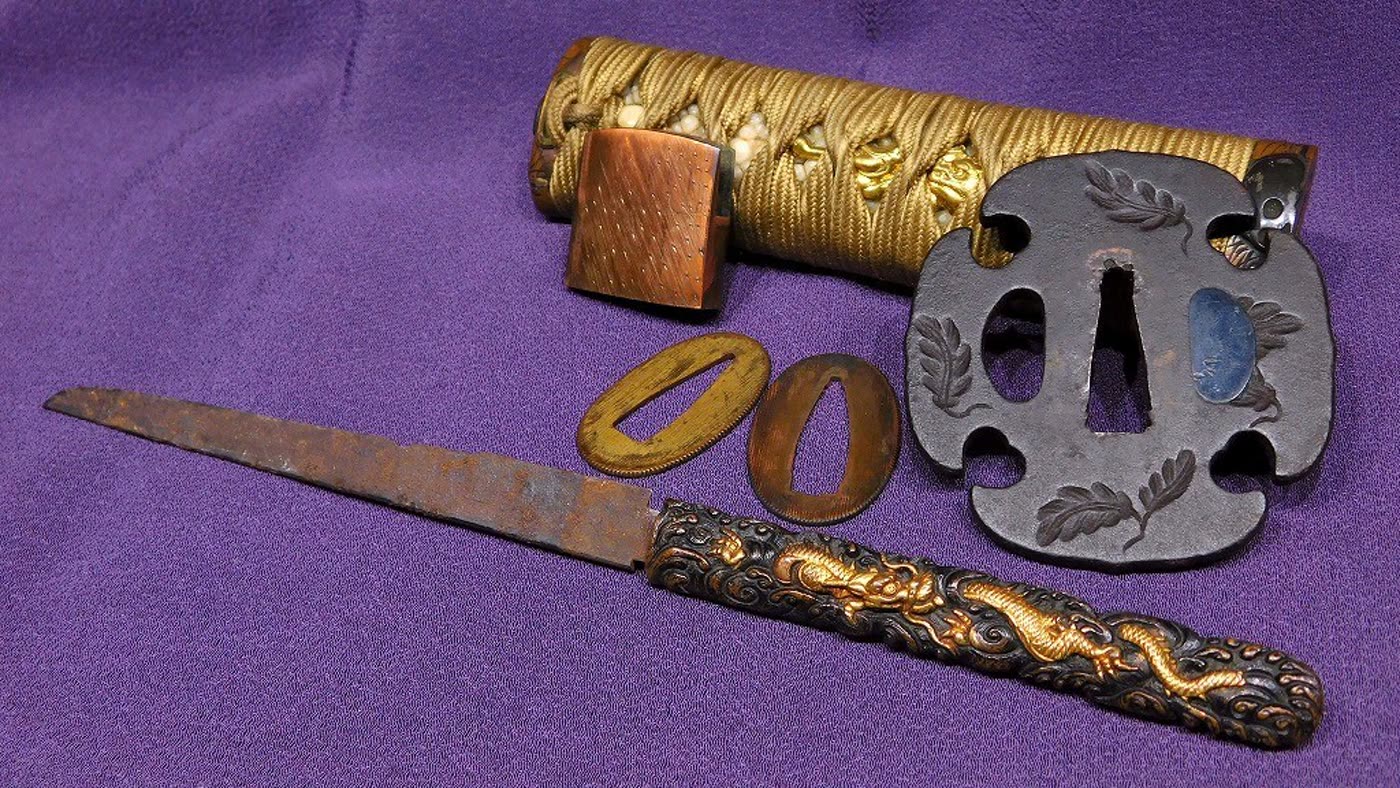
Plate III.8 · 小刀
Fittings and auxiliary knife laid out.
, , , and the dragon-decorated are shown with its removed, patinated . This angle clarifies the paired , one closed by a blue-black probably made of , and the copper-colored at the ; no signature is legible.
IV
Mounted & storage
拵姿
4 plates
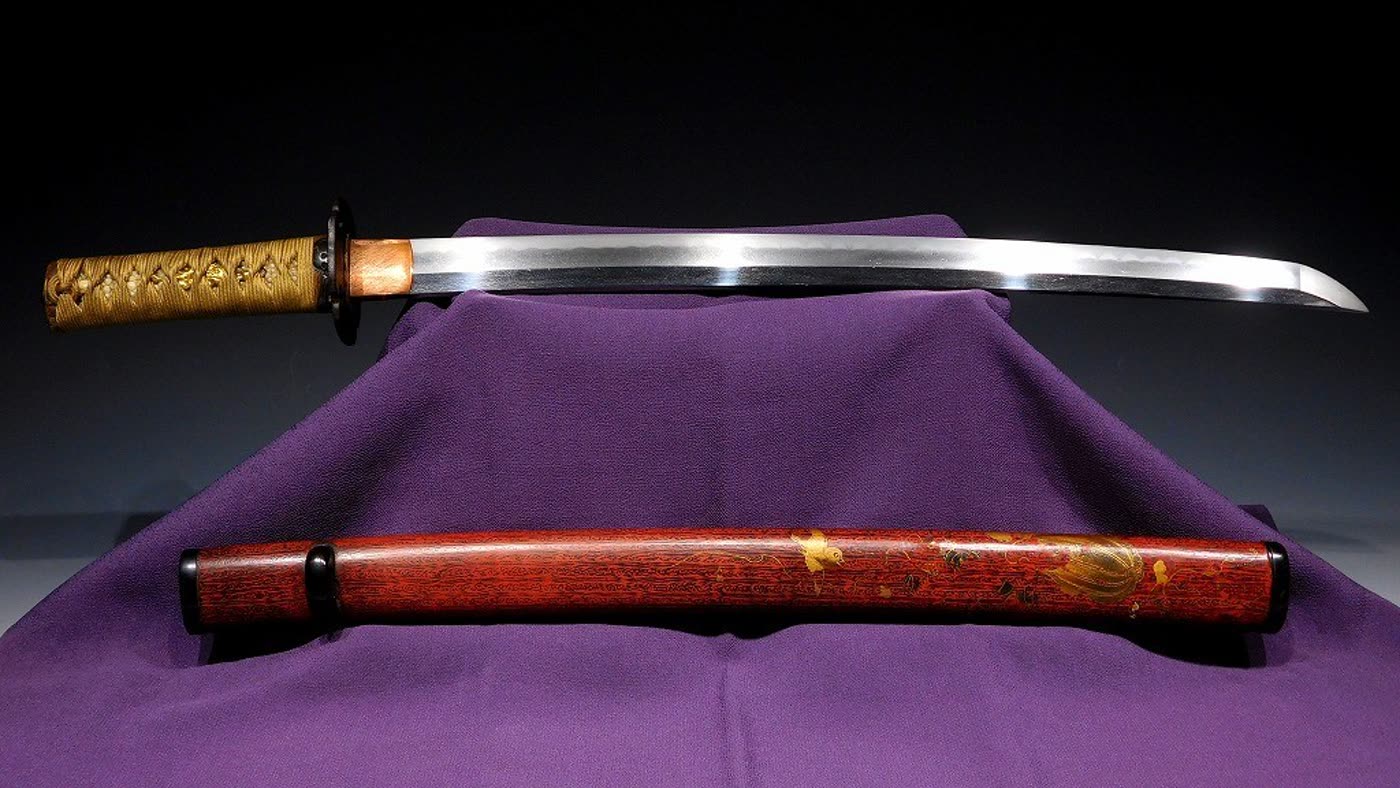
Plate IV.1 · 拵姿
Mounted and drawn.
The blade remains fitted to the while the complete is placed below. The view records the yellow-gold , dark guard, and red textured-lacquer with dark linear figuring and gold maki-e quail-and-millet decoration as a single ensemble.
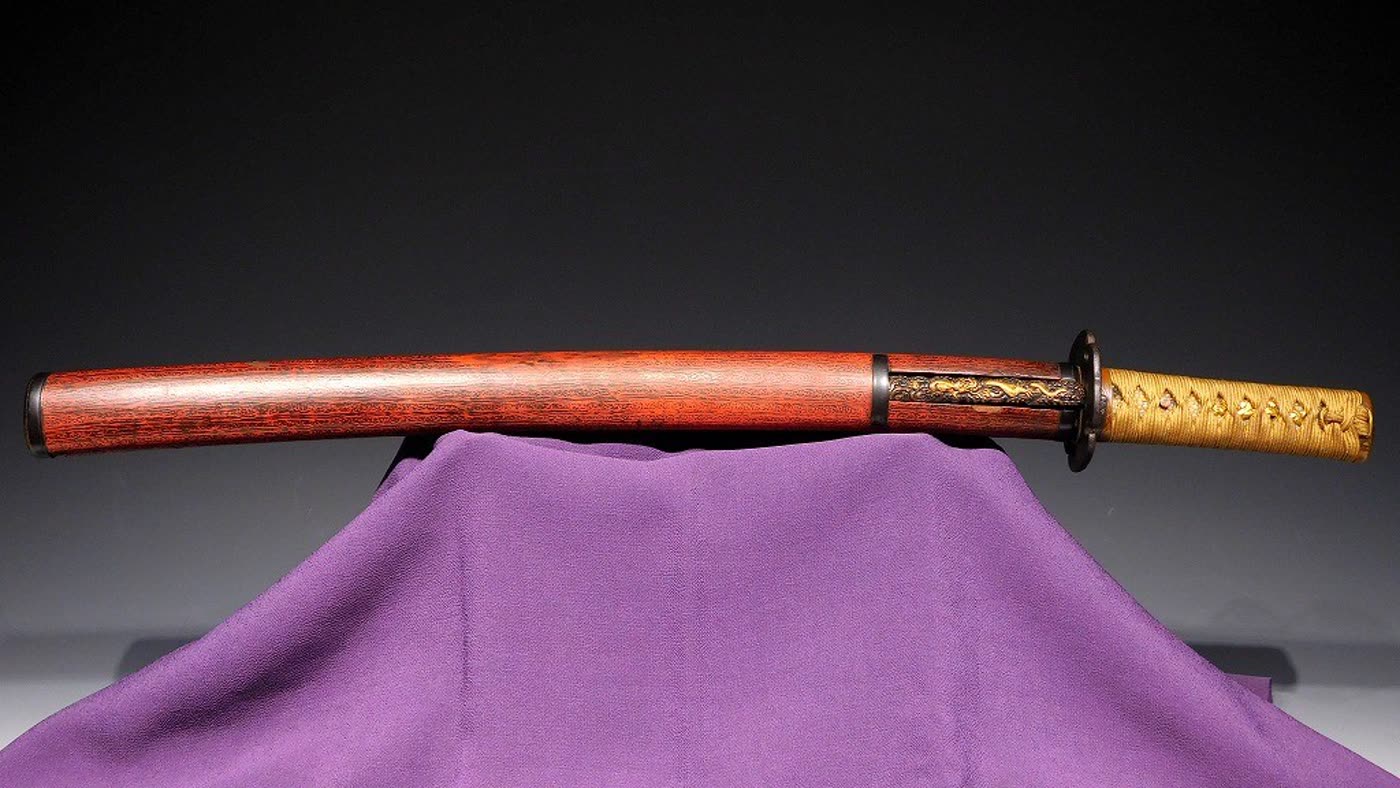
Plate IV.2 · 納刀
Fully sheathed wakizashi.
The complete is shown horizontally, including , , pocket, and the full length of the figured . The associated measurement card records an overall length of 64.5 cm.
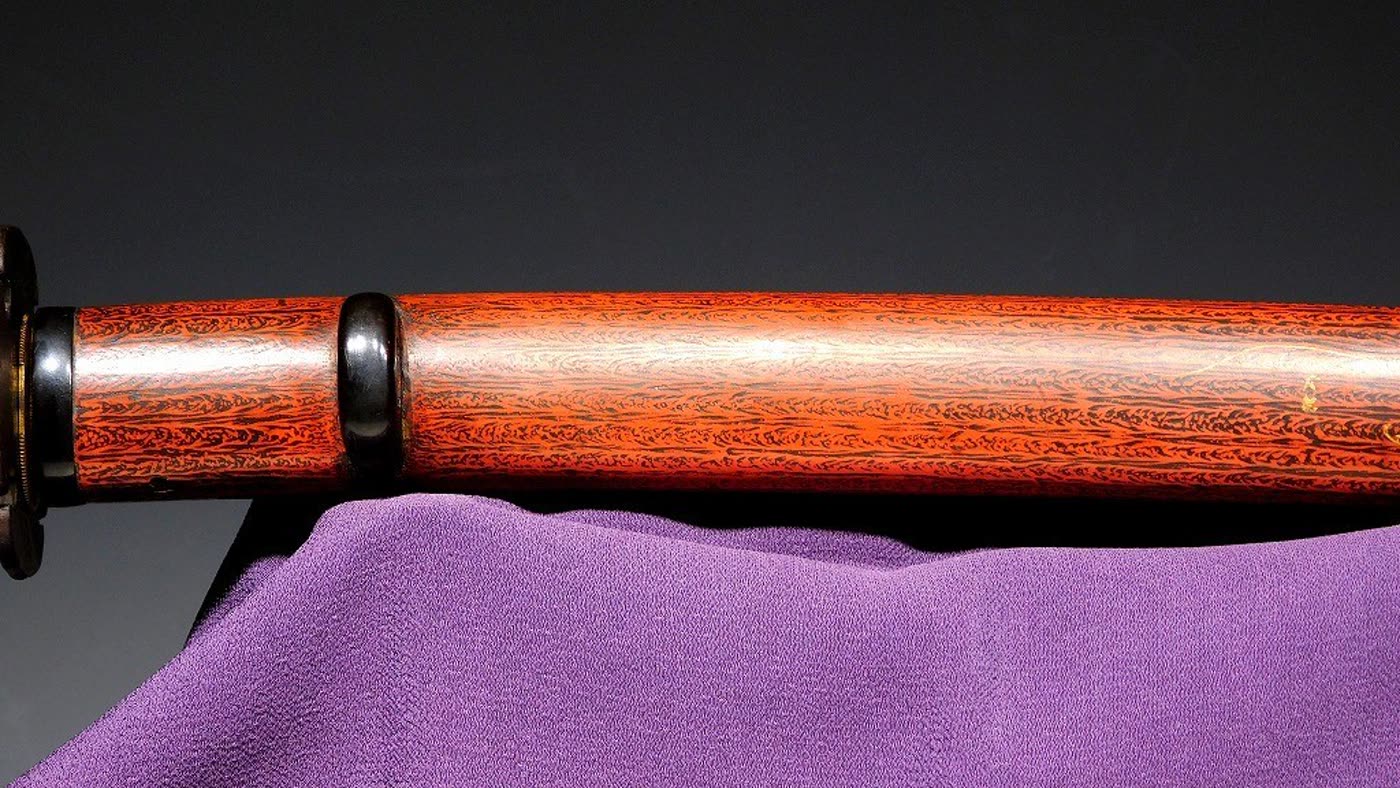
Plate IV.3 · 鞘塗
with textured lacquer and maki-e.
Dark linear figuring runs through the textured red lacquer ground. The gold maki-e subject is uzura ni awa (鶉に粟), quail and millet, integrating the small birds and bowed grain into the length of the .
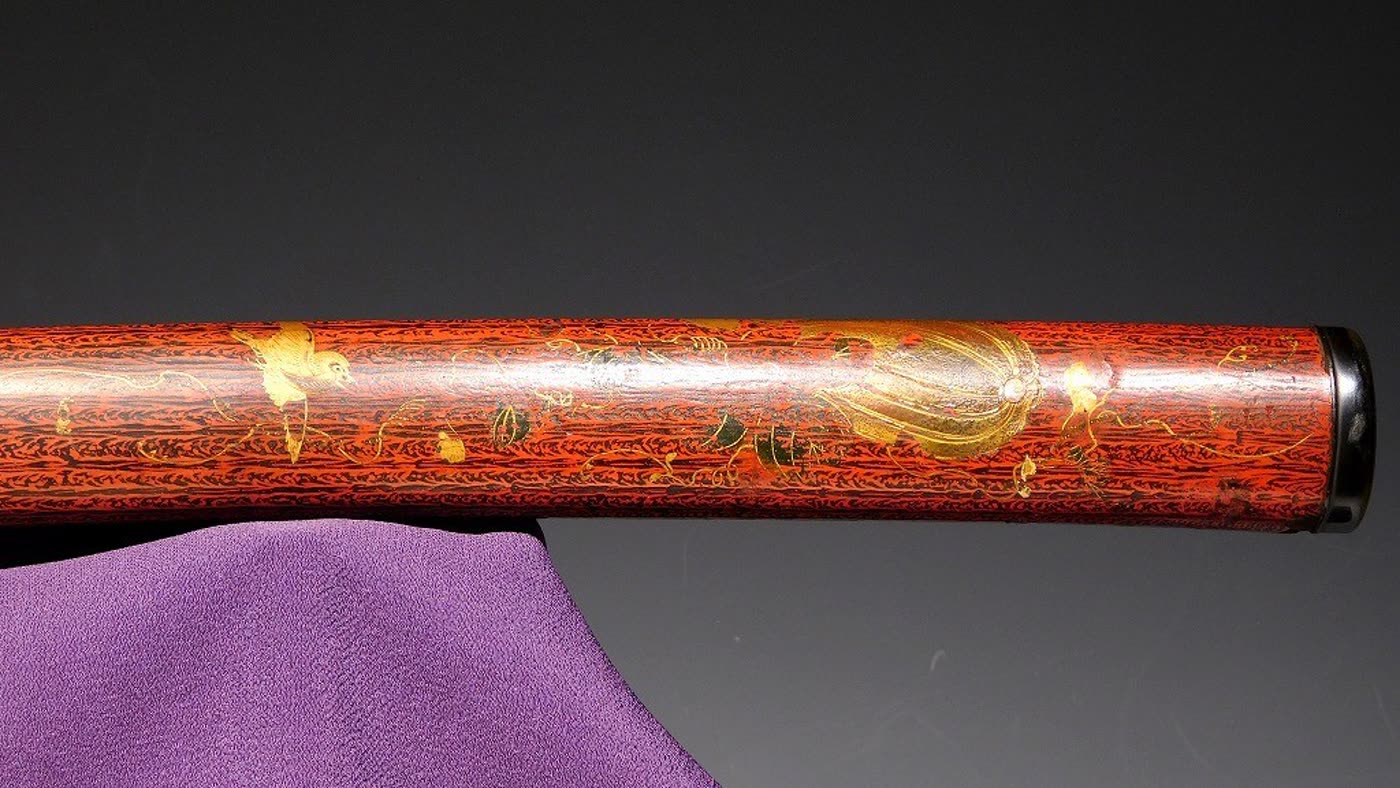
Plate IV.4 · 鞘絵
ornament detail.
The gold maki-e subject is uzura ni awa (鶉に粟), quail and millet: small ground birds beside a bowed sheaf of grain. Dark linear figuring crosses the surrounding textured red lacquer.
Photographs courtesy of matsu-kaze.japan, used with permission.
Revision history
- Added the redacted Kichō Tōken paper to the public photographic record.
- Public catalogue record established.