NA 2026.015
Last revised
Nihontō · Wakizashi · Bare
Hidemune Blade, Heisei 8
関住秀宗作 · 平成八年
Heisei 8 · November 1996 · dated on the nakago
A bare 31.2 cm blade signed 関住秀宗作 and dated Heisei 8 (1996), sold as an incomplete lot with a split lacquered scabbard made for a longer sword. The signature and date are crisp and fully legible.
AttributionSeki jū Hidemune saku · signed and dated · 関住秀宗作 · 平成八年十一月日Signature and date are legible and mutually consistent; a dated modern blade, recorded as read rather than attributed
- Nagasa
- 31.2 cm
- Mei
- 関住秀宗作 · dated Heisei 8
- Condition
- Bright polish · incomplete lot
Object record
Overview
Object record
- Item
- Bare blade (残欠) with a separate lacquered saya
- Mei
- 関住秀宗作 · Seki jū Hidemune saku
- Date
- 平成八年十一月日 · Heisei 8, eleventh month — November 1996
- Nagasa
- 31.2 cm
- Sori
- 0.3 cm
- Width
- Motohaba 3.3 cm
- Kasane
- Motogasane 0.7 cm
- Mekugi-ana
- One · both nakago faces photographed
- Fittings
- None · no tsuka, tsuba, seppa or habaki in the lot
Condition record
- Photographs
- Eighteen archival photographs · no video
- Documents
- No registration card, NBTHK/NTHK paper, or other certificate shown
- Saya
- Split at the koiguchi; brass band with suspension ring, verdigris present
Photographic record
Plates · 18
Available views arranged as a comparative object study; descriptions distinguish observation from documentary attribution.
Click underlined specialist terms for concise notes and construction diagrams.
IV
Lot Contents
残欠・全体
5 plates
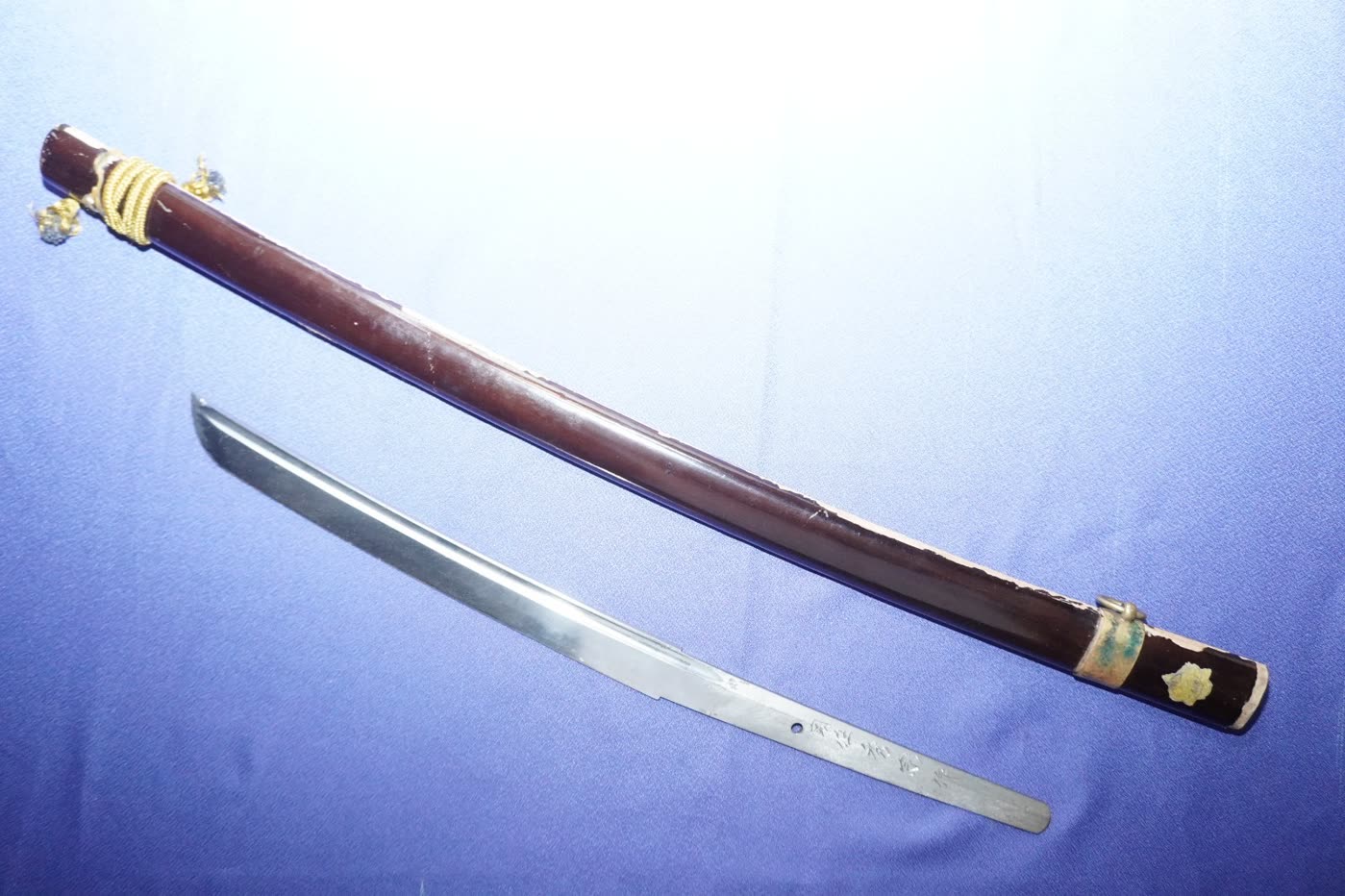
Plate IV.1 · 残欠・全体
Lot as received
The two components together. The scabbard is dark red-brown lacquer with a gold braided cord and tassels tied near one end and a brass band at the other; it is plainly longer than the 31.2 cm blade laid beneath it.
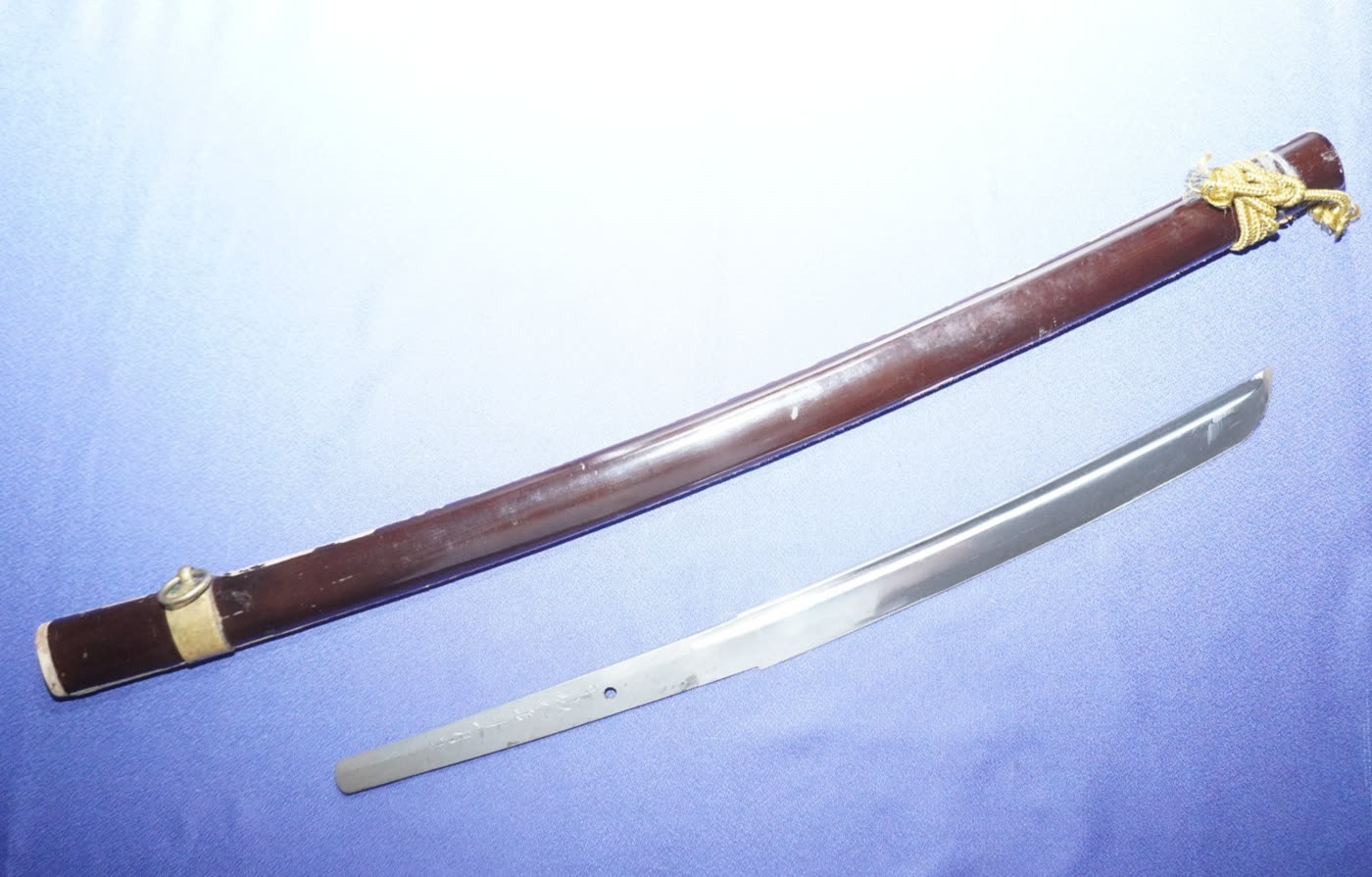
Plate IV.2 · 残欠・全体
Lot · second arrangement
The same two pieces rearranged, with the brass band and its suspension ring at the near end. The disparity in length between blade and scabbard is clearer in this framing.
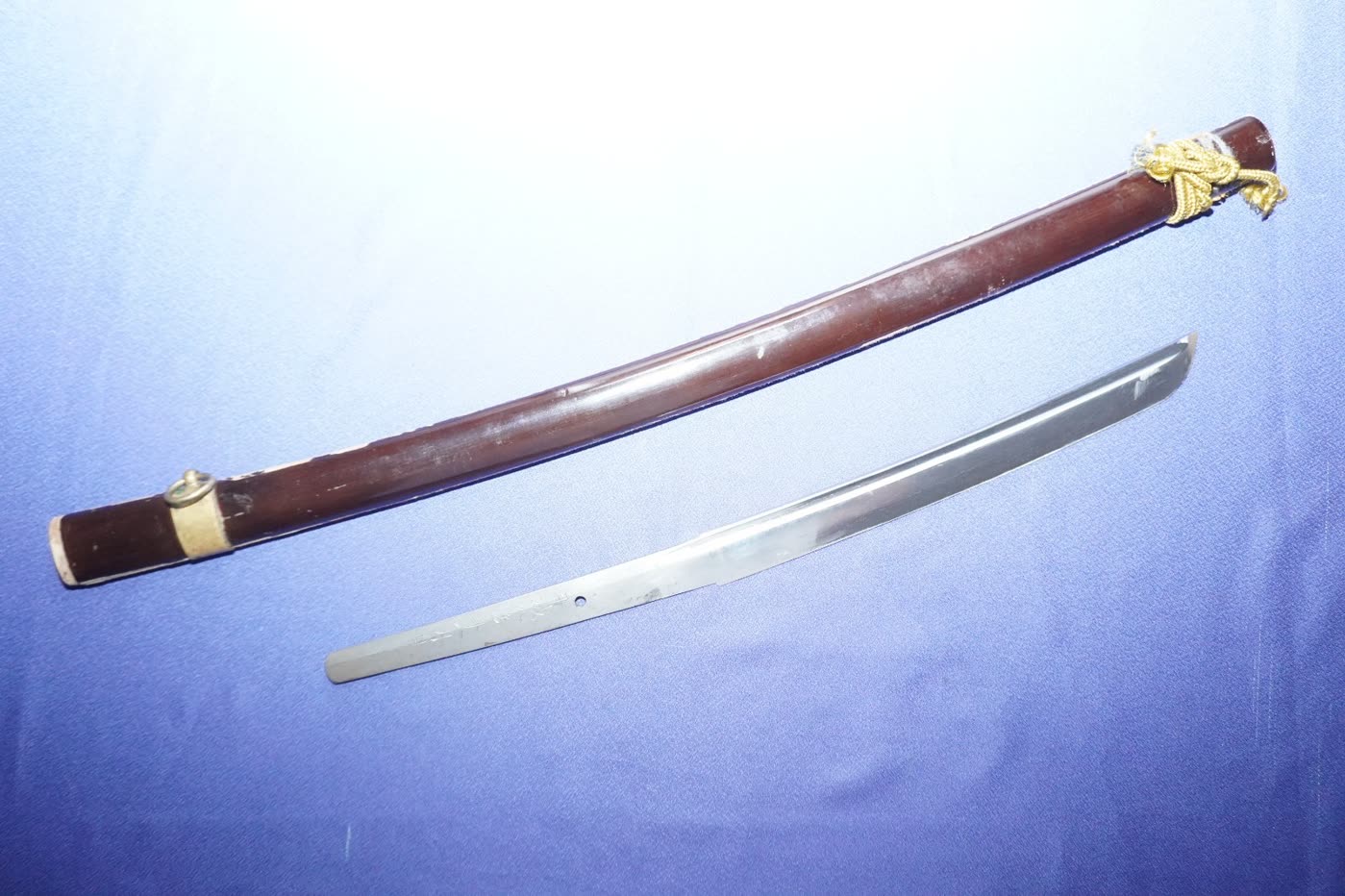
Plate IV.3 · 残欠・全体
Lot · third arrangement
A third view. The lacquer surface of the scabbard is largely sound over its length, with the damage concentrated at the mouth end.
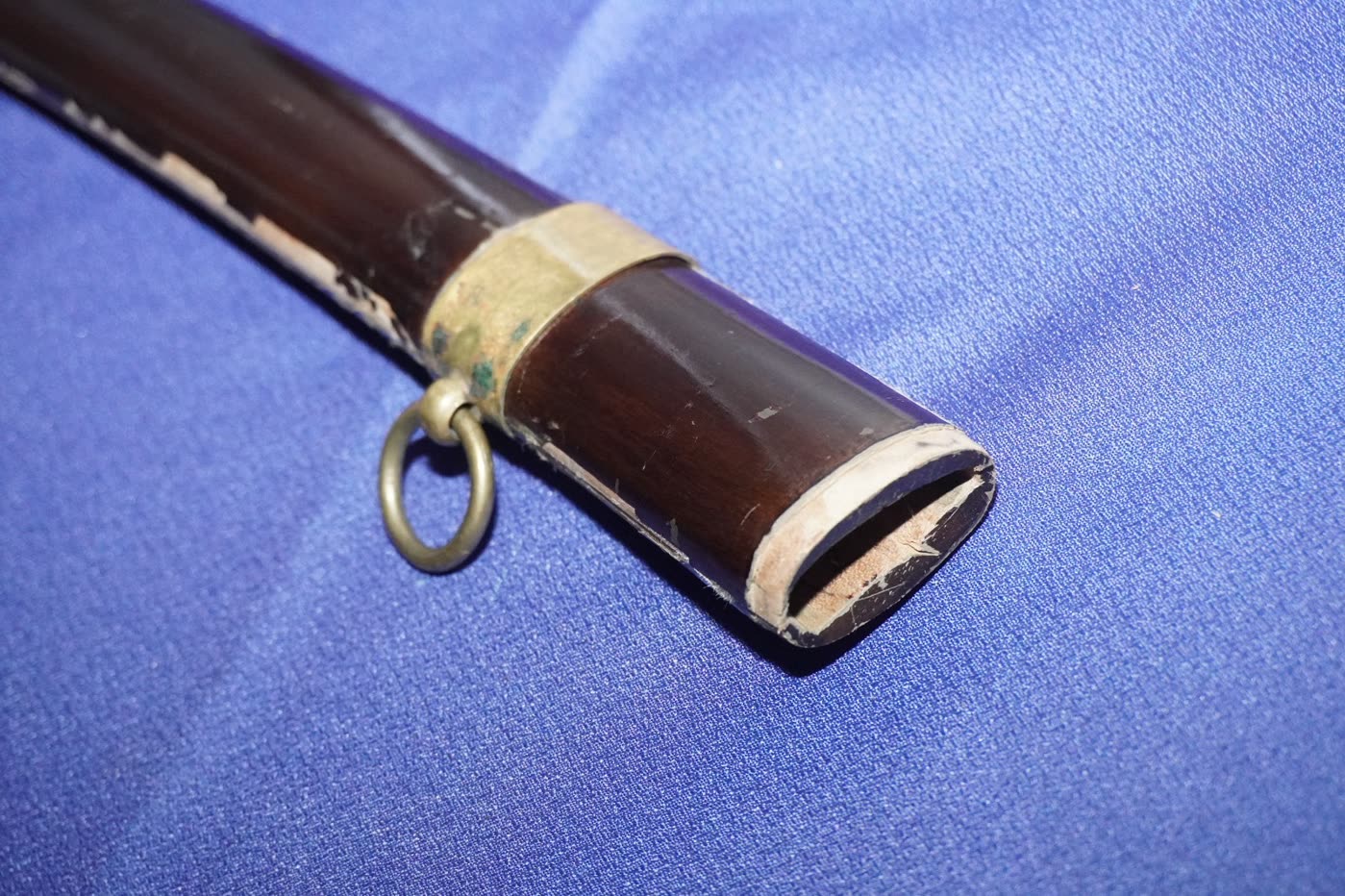
Plate IV.4 · 残欠・全体
· split mouth
The damaged end. The lacquer and one wall of the scabbard have split away along the mouth, exposing the wood core and a pale lining; the brass band alongside carries a suspension ring and has gone green with verdigris.
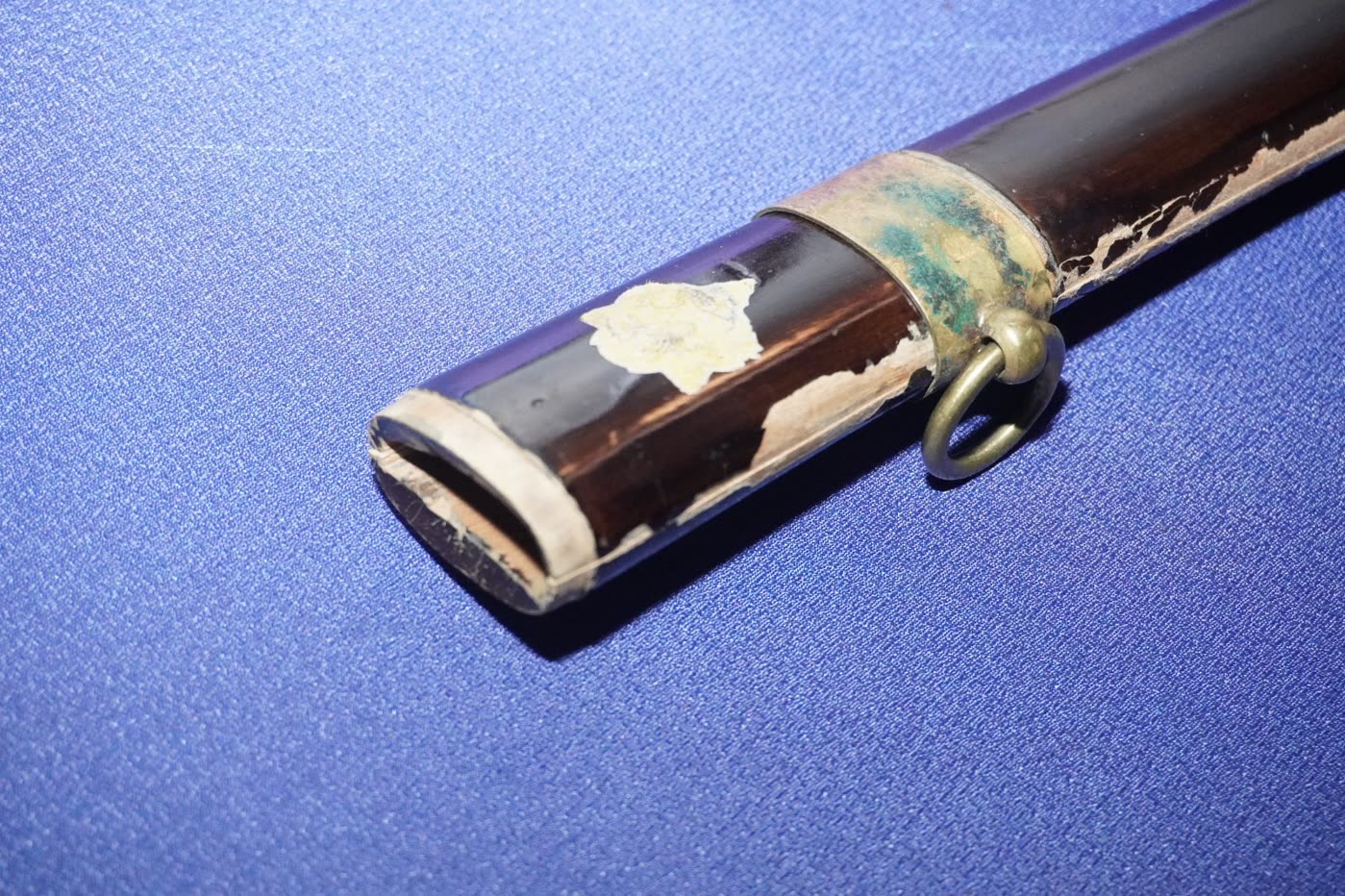
Plate IV.5 · 残欠・全体
· band & label
The same end from the other side, where a torn paper label remains stuck to the lacquer below the band. The split runs some distance back from the mouth along the seam.
II
Sugata & Nakago
姿・茎
13 plates
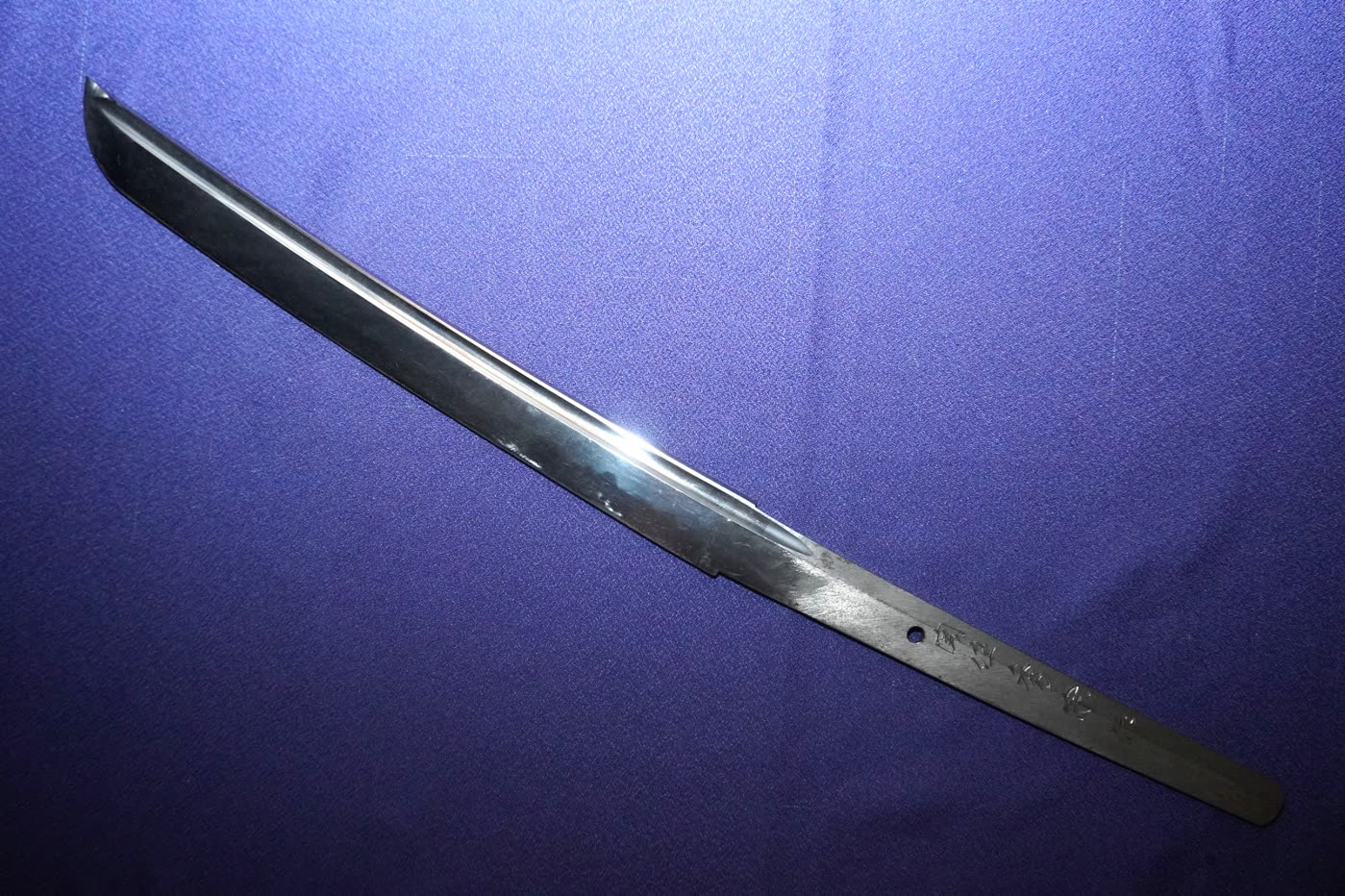
Plate II.1 · 姿・茎
Full · face
Full length on the signature face. Nagasa 31.2 cm with only 0.3 cm and a 3.3 cm motohaba (measurements per the source description) — markedly broad for the length, with a generous point section. The tang runs nearly half the blade's length and is bright rather than patinated.
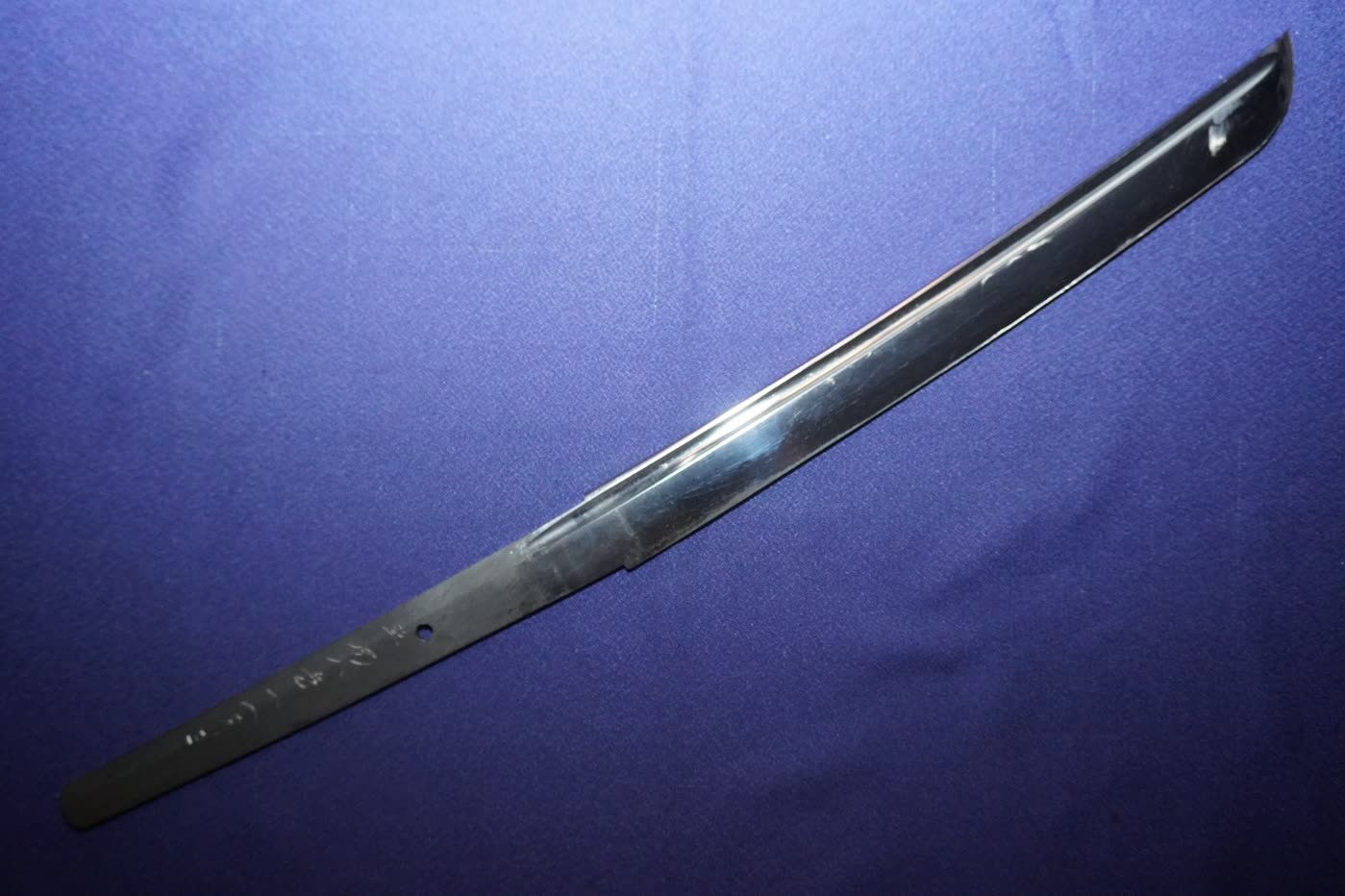
Plate II.2 · 姿・茎
Full · date face
Full length on the reverse, which carries the date. The hardened area shows as a broad lighter band following the edge for the whole length of the blade.
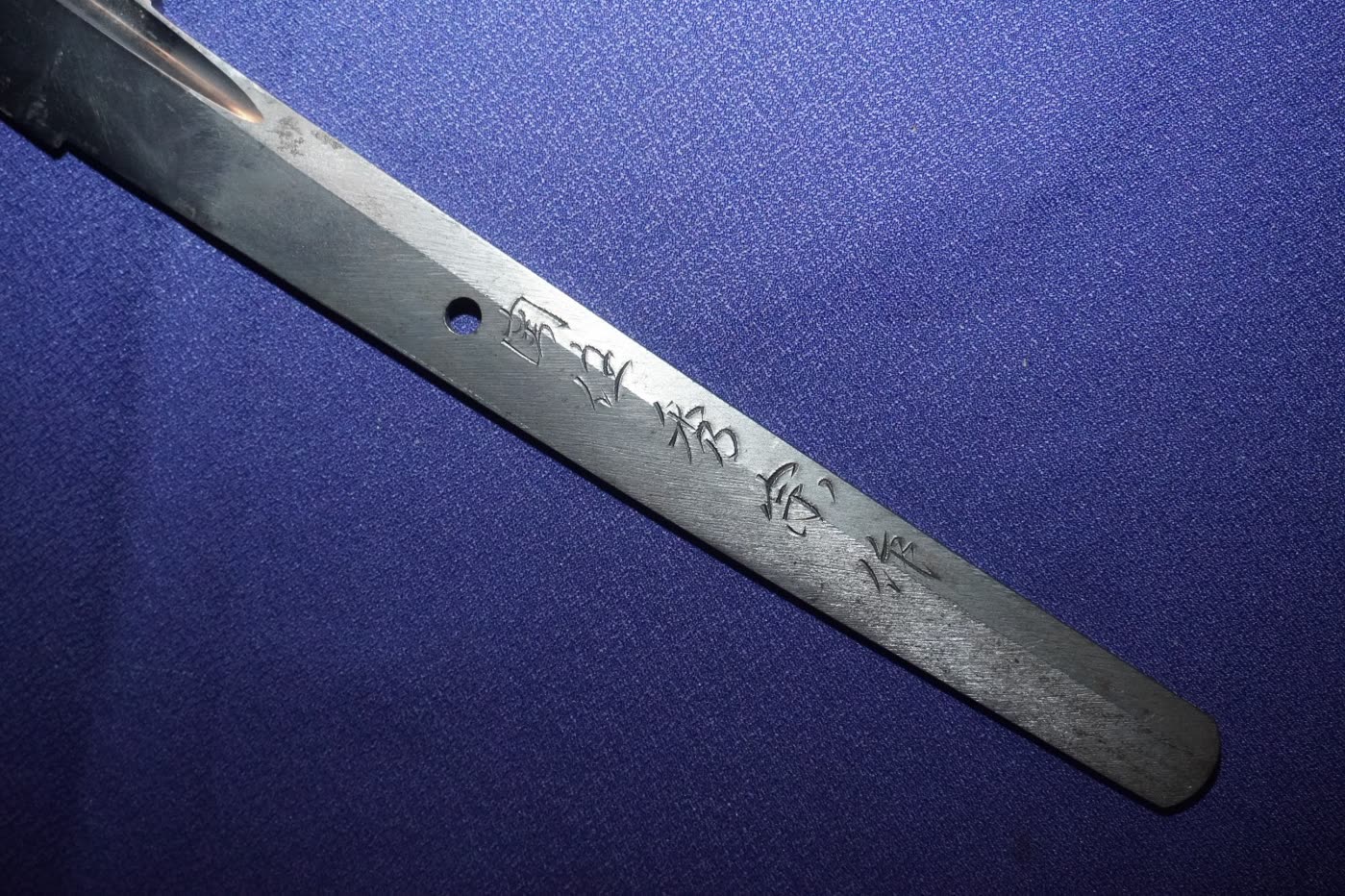
Plate II.3 · 姿・茎
·
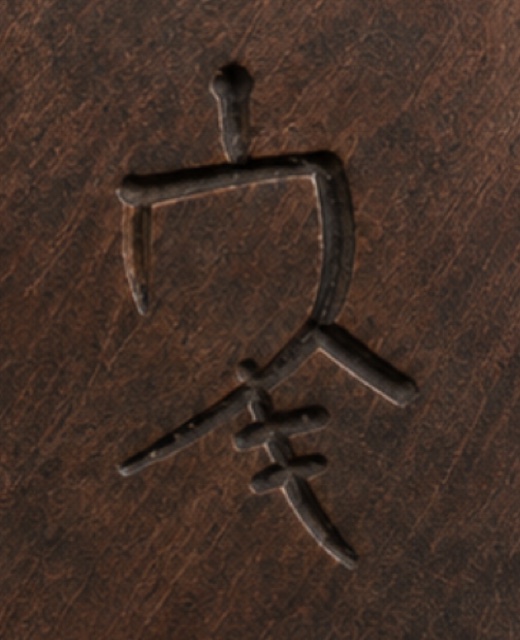
The signature at close range: five characters cut cleanly and deeply into bright steel, reading 関住秀宗作 — Seki jū Hidemune saku. The strokes are sharp-edged with no corrosion softening them, and the file marks of the tang run visibly beneath and around them.
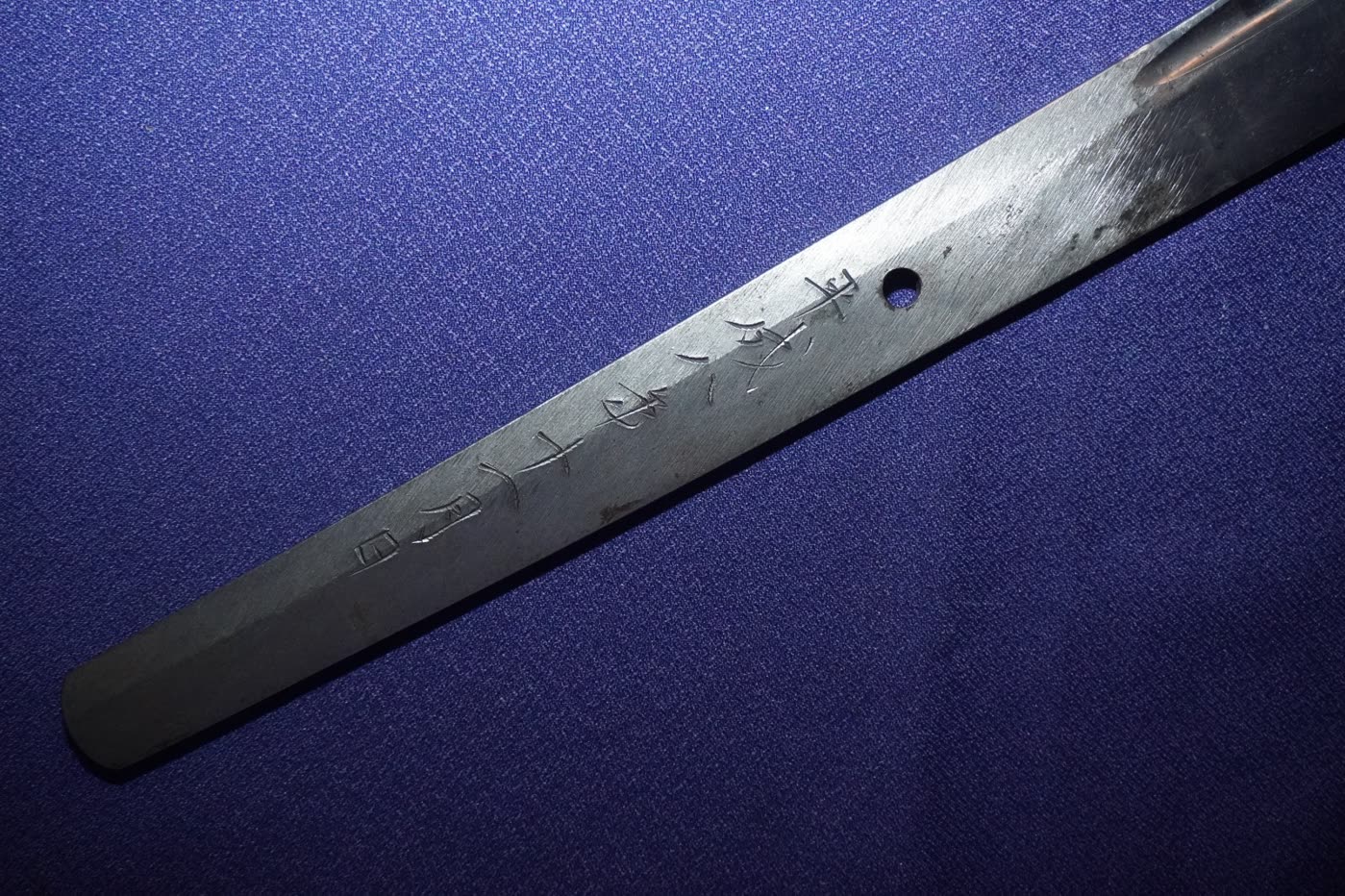
Plate II.4 · 姿・茎
· date
The date on the reverse: 平成八年十一月日 — a day in the eleventh month of Heisei 8, November 1996. It is cut in the same hand and to the same depth as the signature, and the two agree.
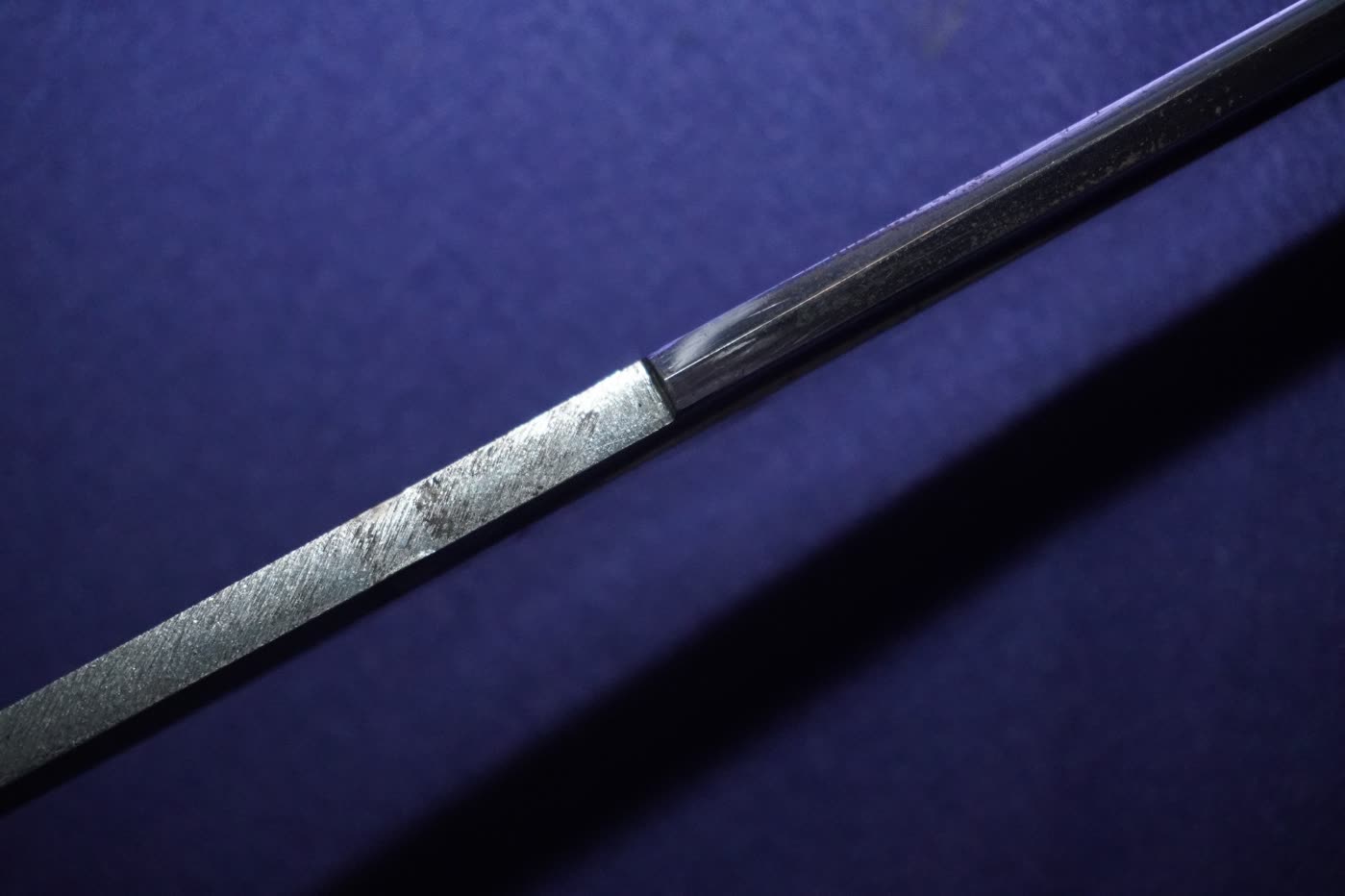
Plate II.5 · 姿・茎
& tang surface
The transition from blade to tang. The step at the is crisp and the tang surface carries even, deliberate file marks — the finish of a tang that has never been remounted or reworked.
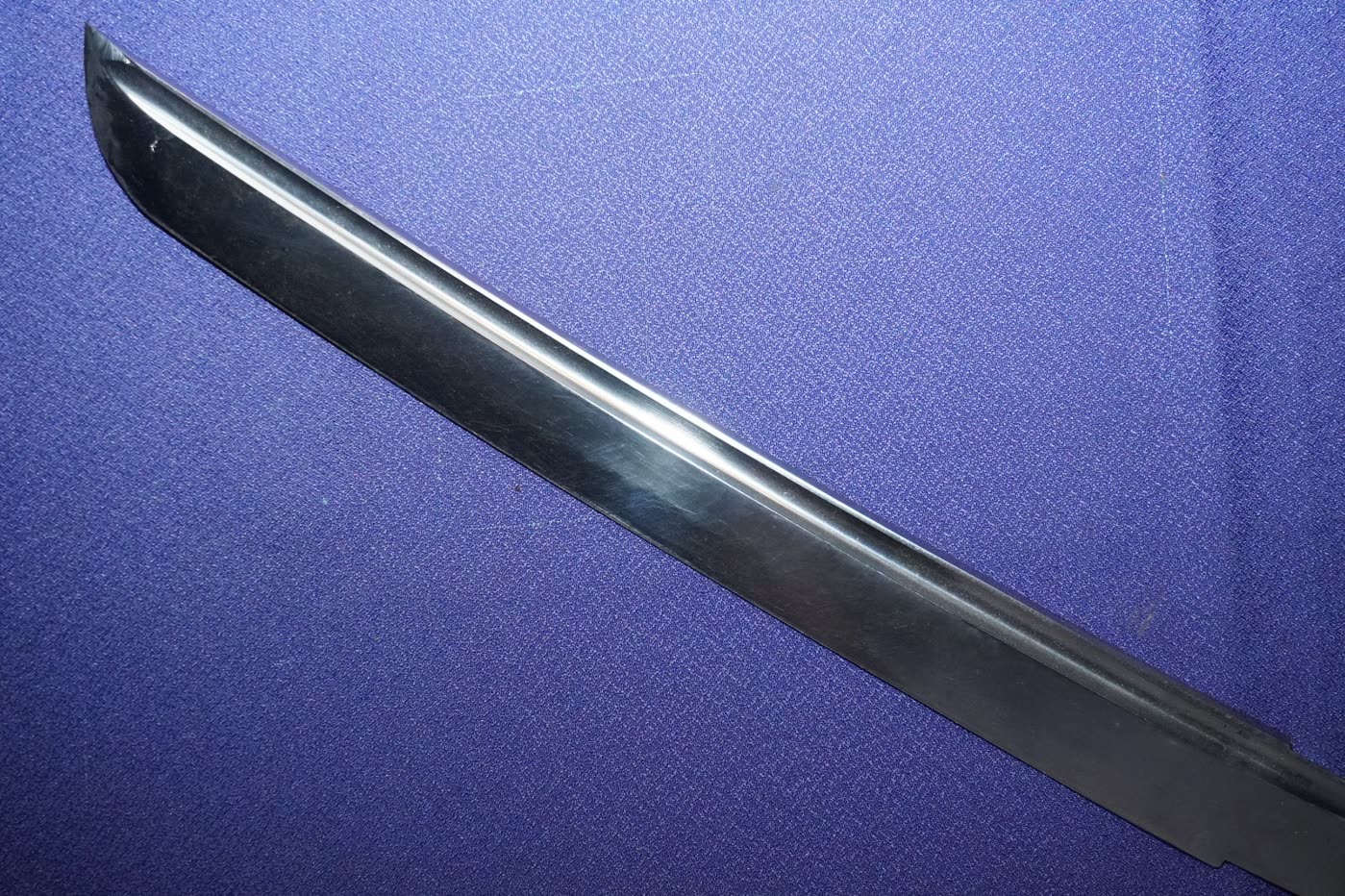
Plate II.6 · 地刃
Ji & ha · forward half
The forward half. A broad hazy band follows the edge against a darker ground above the ridge; the surface is clean, with only fine handling scratches.
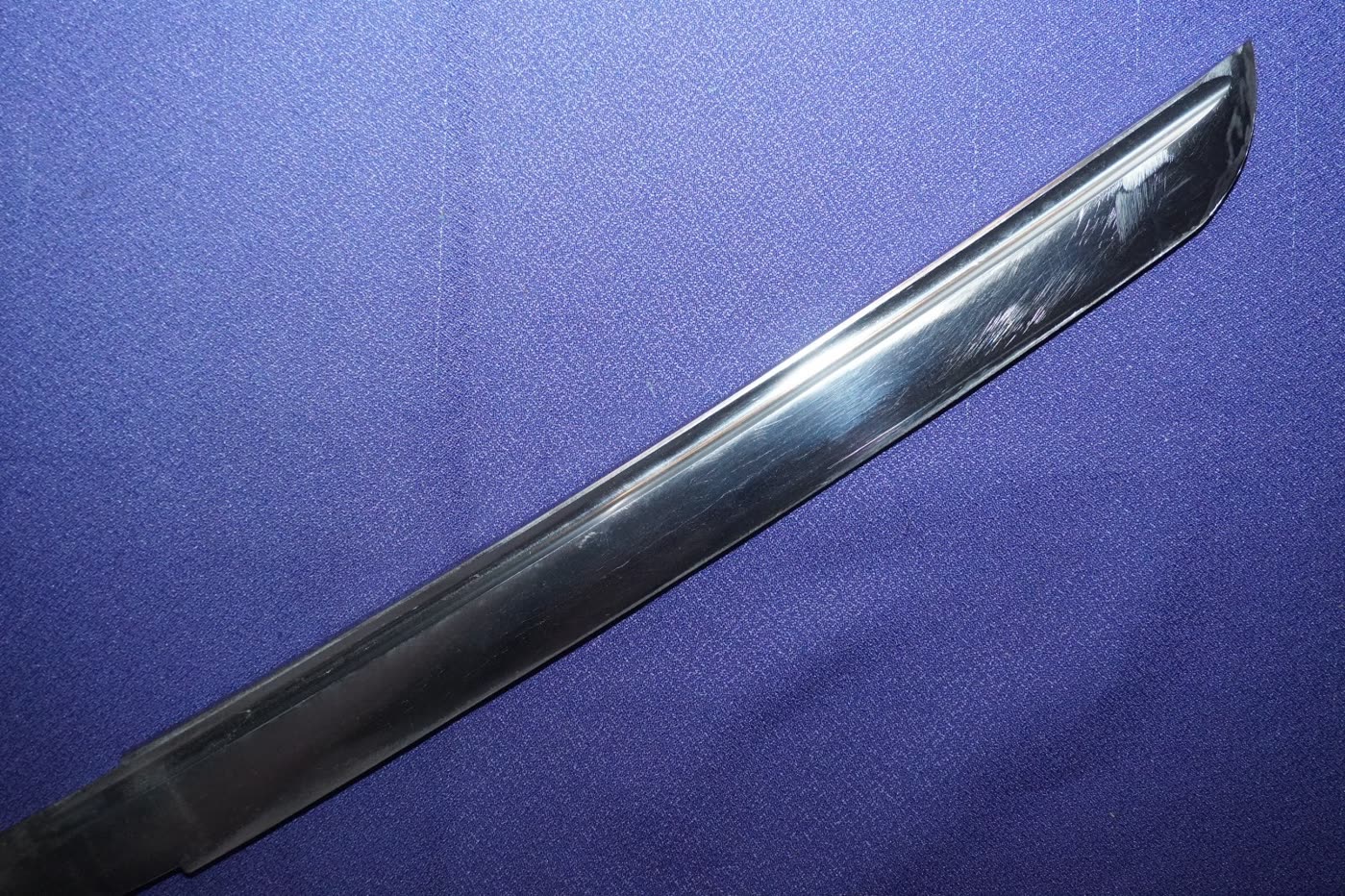
Plate II.7 · 地刃
Ji & ha · toward the point
Toward the point. The ridge catches the light as a continuous bright line and the hardened band widens slightly as the blade narrows.
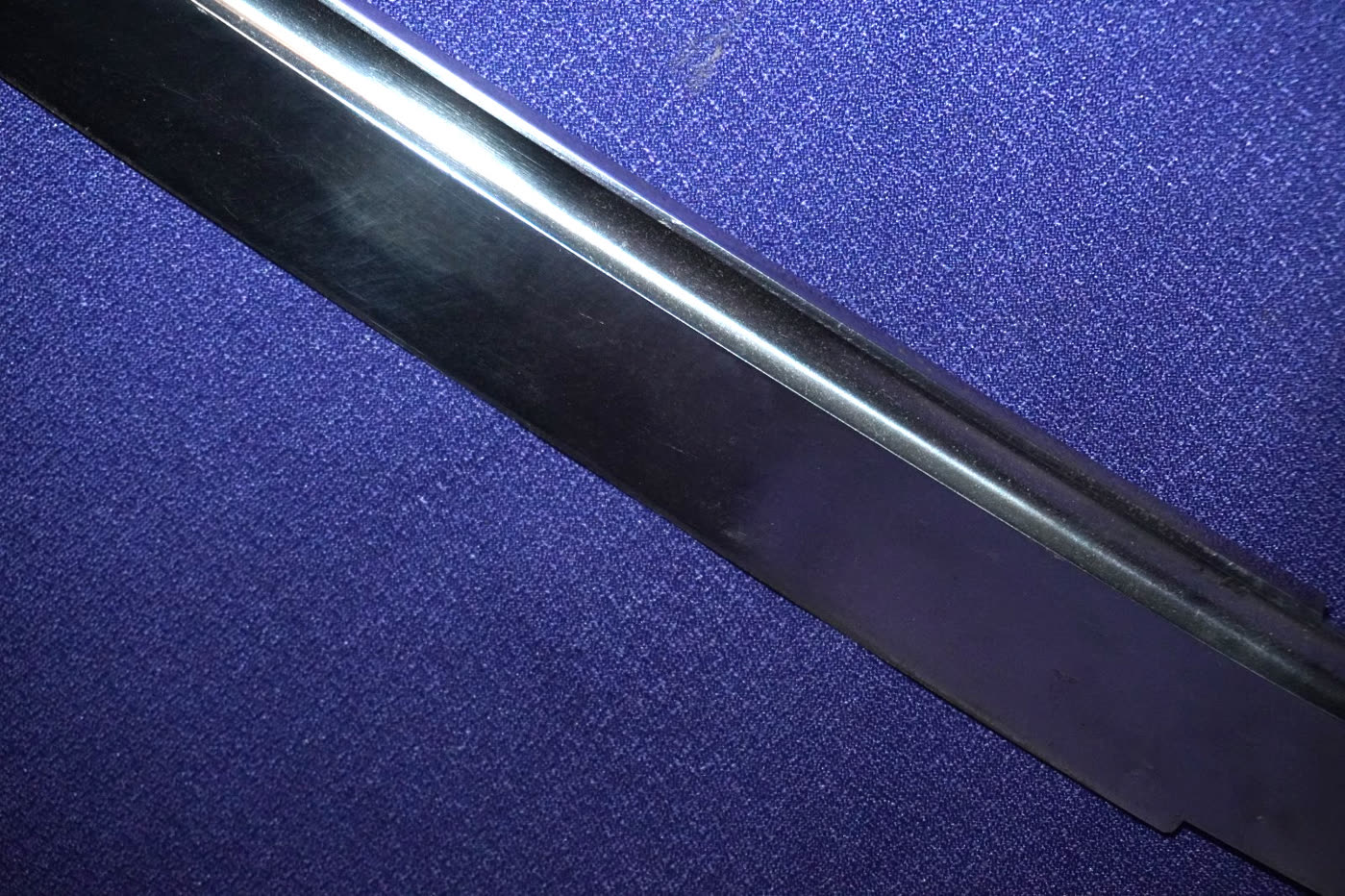
Plate II.8 · 地刃
Ji & ha · mid-blade
Mid-blade at close range, where the geometry reads clearly: a flat ground surface below the ridge and a narrower bevel above it.
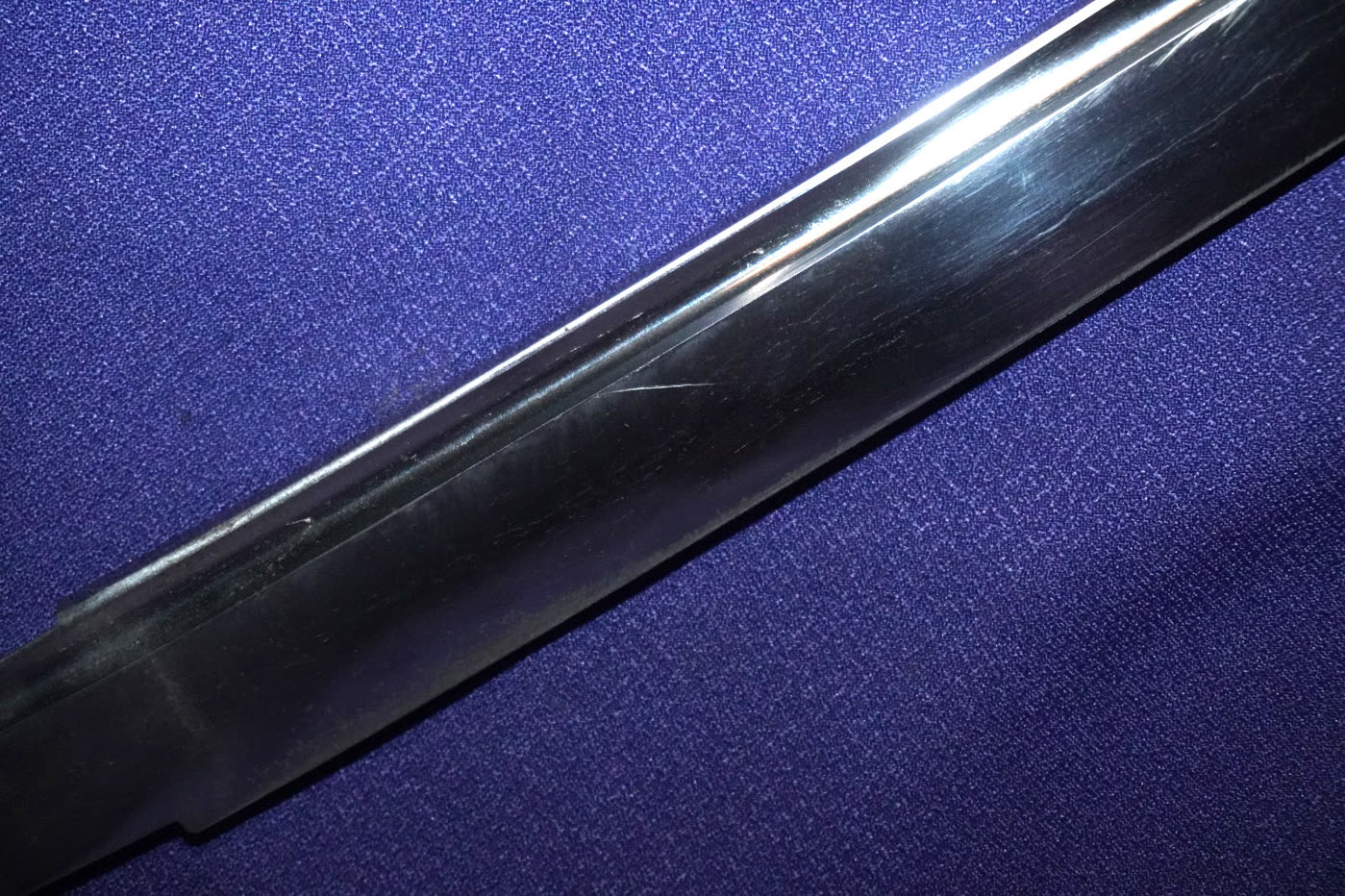
Plate II.9 · 地刃
Ji & ha · surface detail
Surface detail. Light scratching crosses the flat at a shallow angle; there is no clouding, staining, or rust anywhere in this frame.
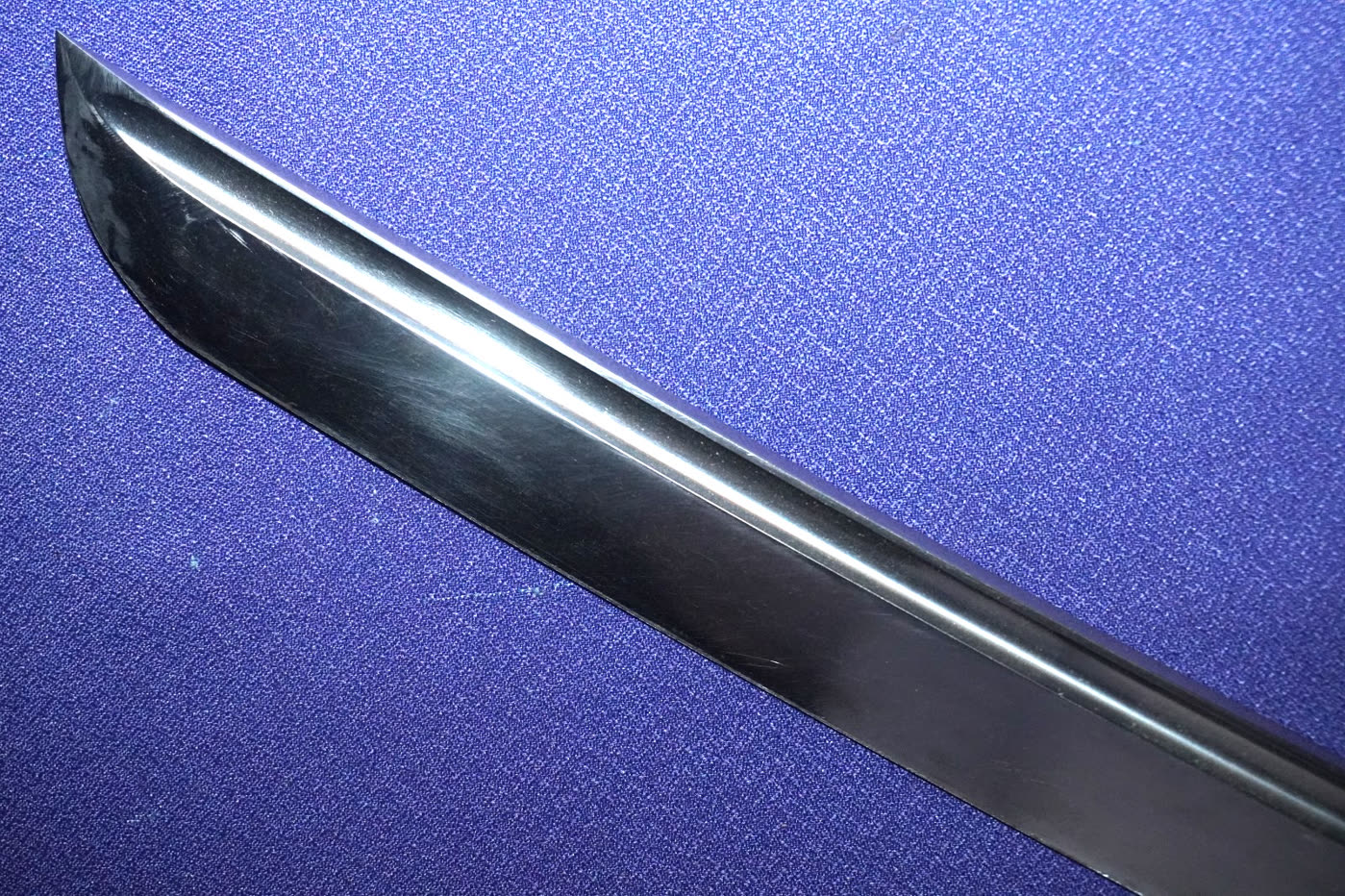
Plate II.10 · 地刃
Point region · broadside
The point region broadside. The hardened area sweeps up into the tip and the pattern within it becomes visible against the darker ground.
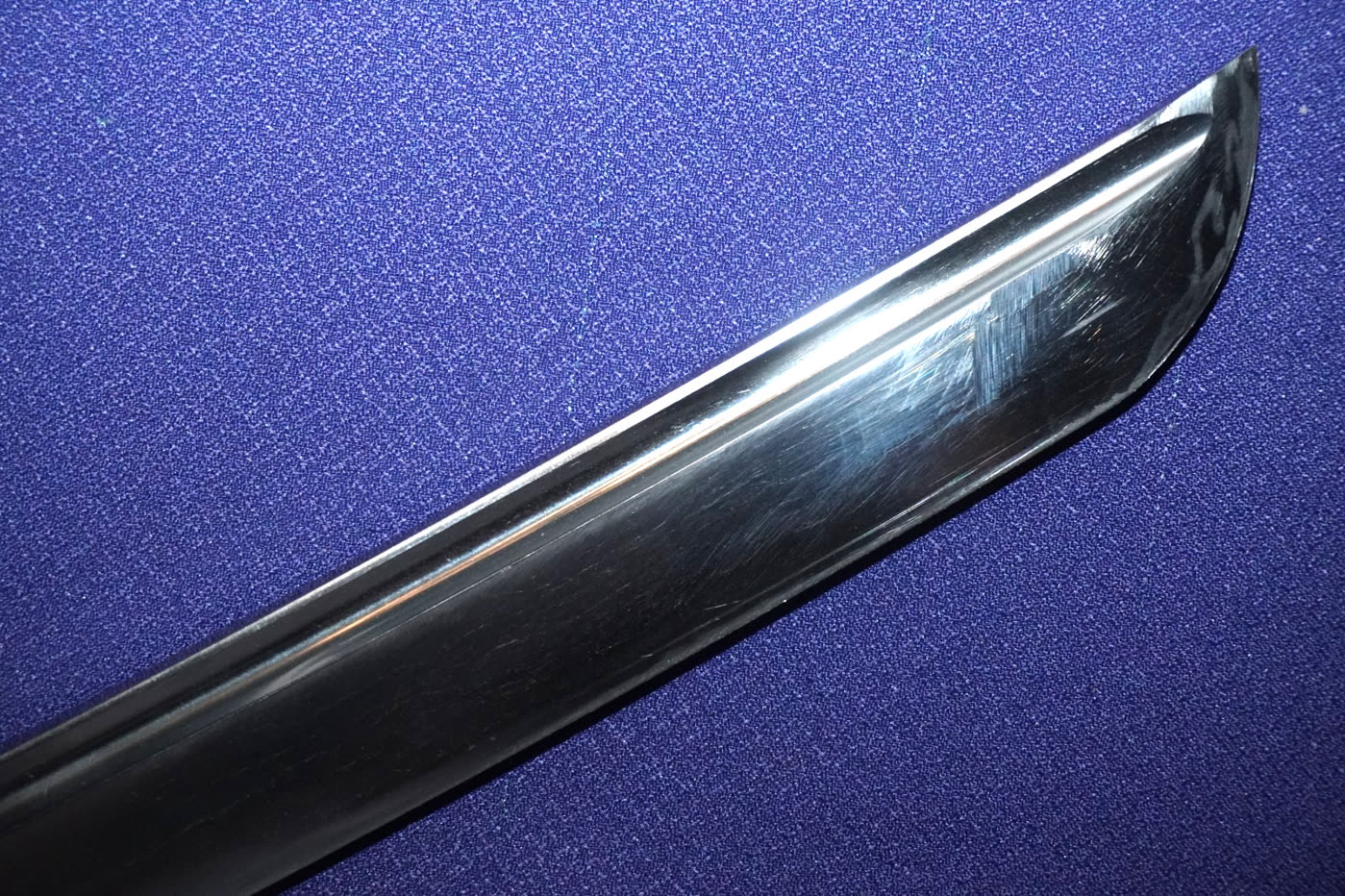
Plate II.11 · 地刃
Approaching the point
The stretch immediately below the point, where the ridge runs on toward the tip and the hardened band holds its width.
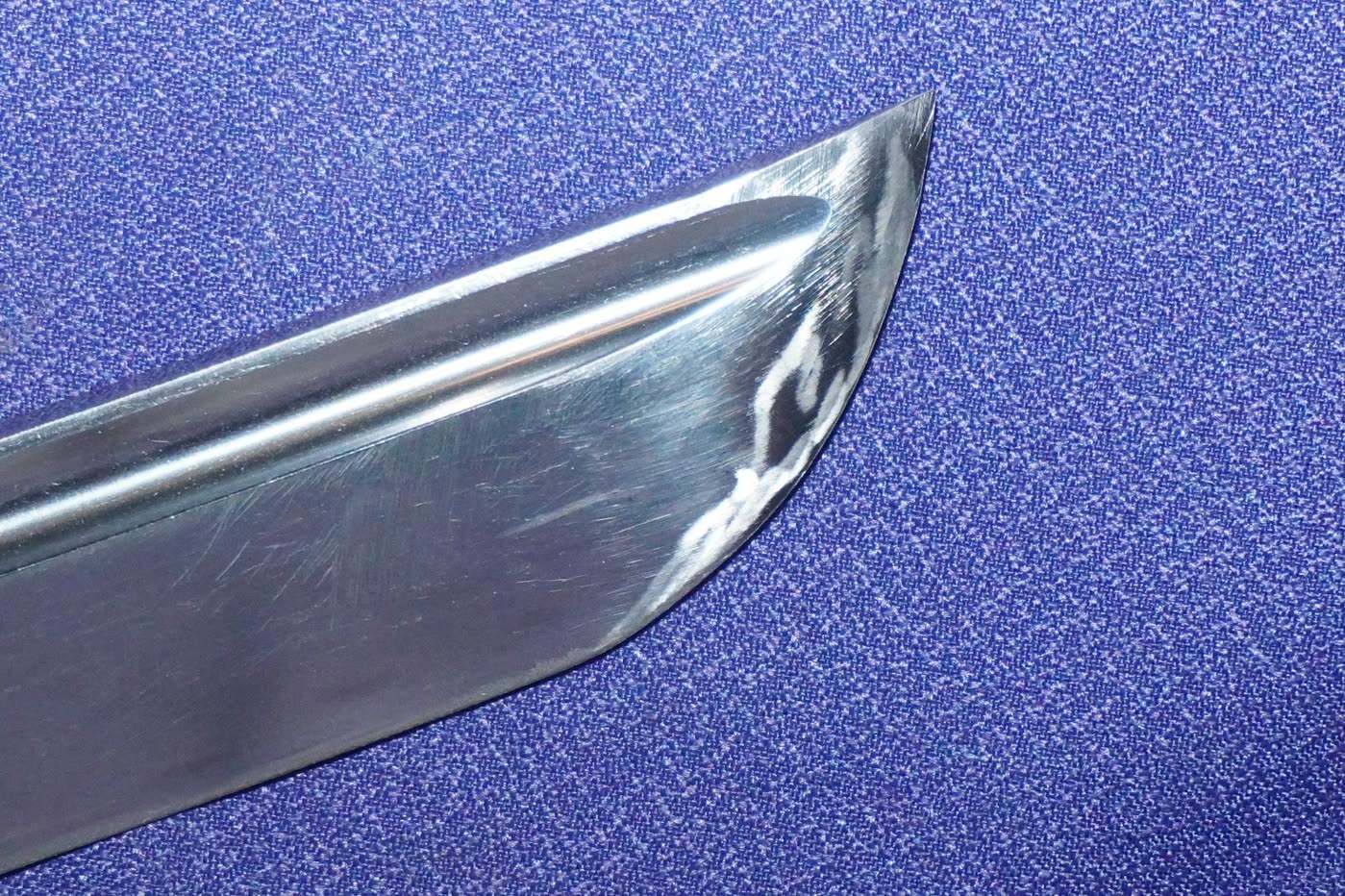
Plate II.12 · 地刃
The best record of the point: a generous , a clearly defined boundary running up into the tip, and a bright pattern within the point itself that turns back toward the back edge. The tip is undamaged.
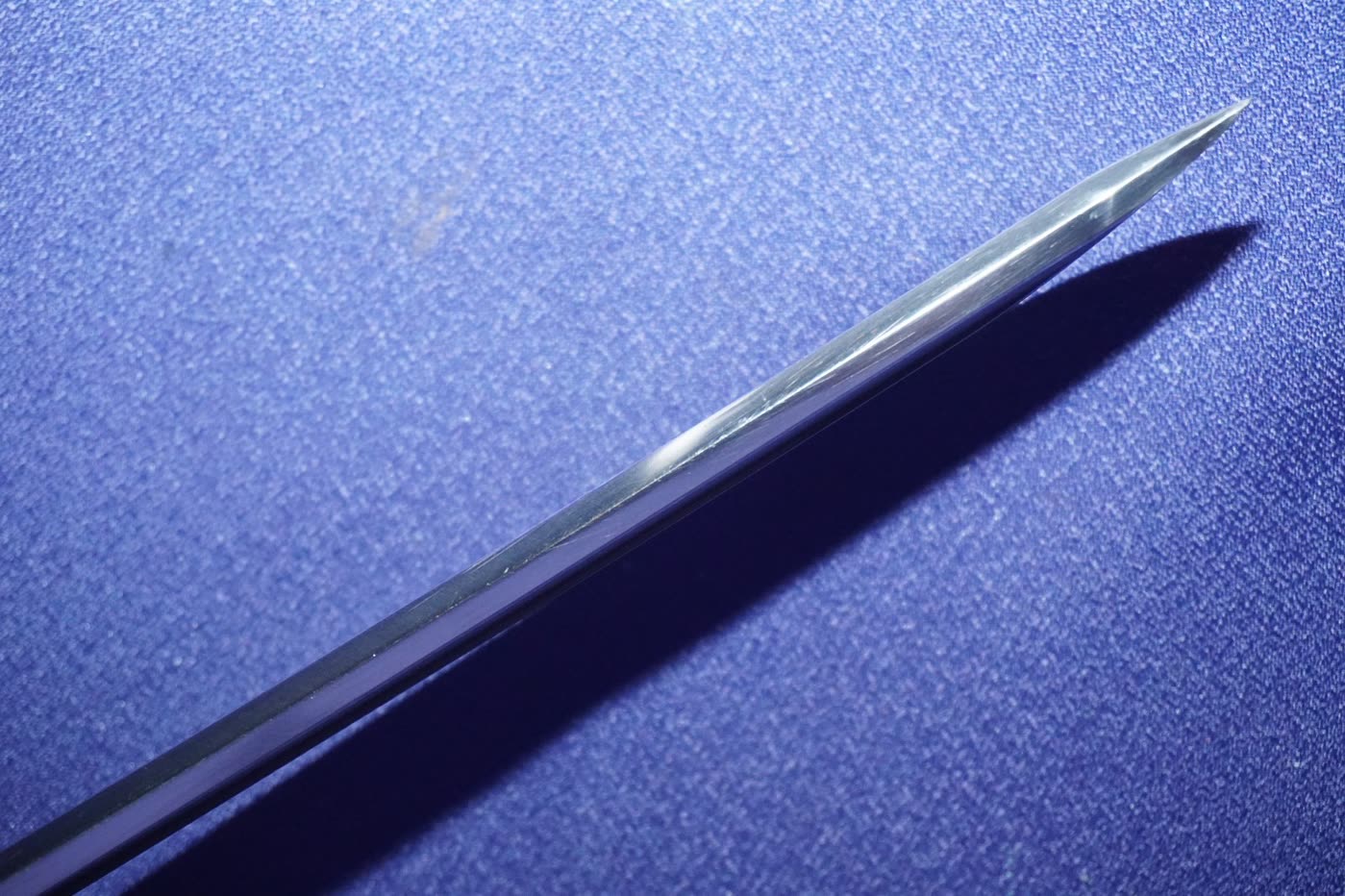
Plate II.13 · 地刃
Point, near-edge-on
A near-edge-on record showing the section running out to the tip and the straightness of the back edge along the forward half.
Photographs courtesy of GN-1-Japan, used with permission.
Revision history
- Catalogue record established from the ended listing and its 18 gallery photographs; the signature and date are fully legible and are recorded as read.