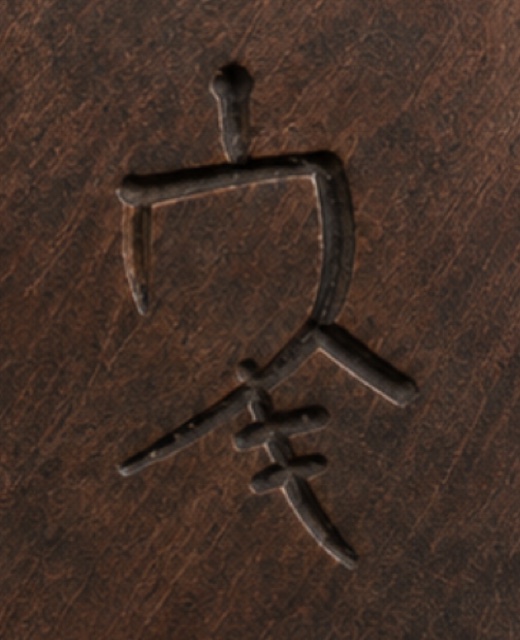
NA 2026.013
Last revised
Nihontō · Yari · Koshirae
Mumei Yari Study I
無銘槍 · 柄付
Period unrecorded · not established
An unsigned su-yari head of 9.9 cm with a groove cut in the blade, still seated on a short red-lacquered shaft that the source reports will not come off; rusted, and unpapered.
AttributionMumei · unattributed · 無銘Unsigned; the head remains mounted, so the tang cannot be examined and no attribution is proposed
- Nagasa
- 9.9 cm
- Profile
- Su-yari with a hi
- Condition
- Rusted · unpapered
Object record
Overview
Object record
- Item
- Yari (槍) mounted on its e (柄)
- Mei
- None visible · the tang is not accessible
- Nagasa
- 9.9 cm
- Width
- Motohaba 2.0 cm
- Kasane
- Motogasane 1.1 cm
- Form
- Su-yari · straight head, stout triangular section, hi cut in the blade
- Mounting
- Short red-lacquered wooden shaft; the source states it will not come off
- Period
- Unrecorded · no appraisal paper supplied
Condition record
- Photographs
- Fifteen archival photographs · no video
- Documents
- No registration card, NBTHK/NTHK paper, or other certificate shown
Photographic record
Plates · 15
Available views arranged as a comparative object study; descriptions distinguish observation from documentary attribution.
Click underlined specialist terms for concise notes and construction diagrams.
IV
Mounted Object
柄・全体
6 plates
Plate IV.1 · 柄・全体
Whole object · first face
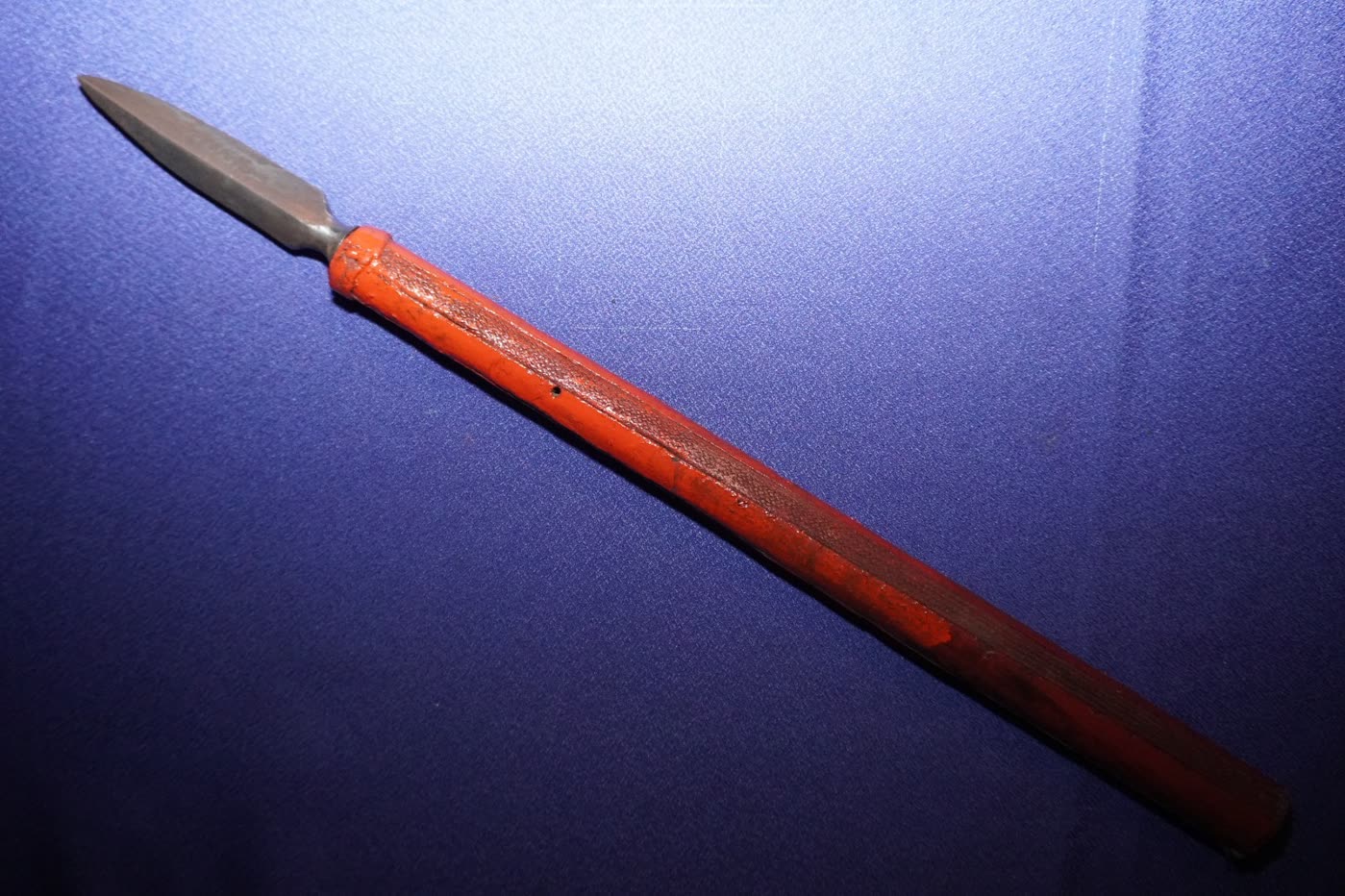
The object entire. A 9.9 cm head sits on a short red-lacquered shaft; the proportion of head to surviving shaft shows how much of the original length is gone. A small hole is visible through the shaft below the head.
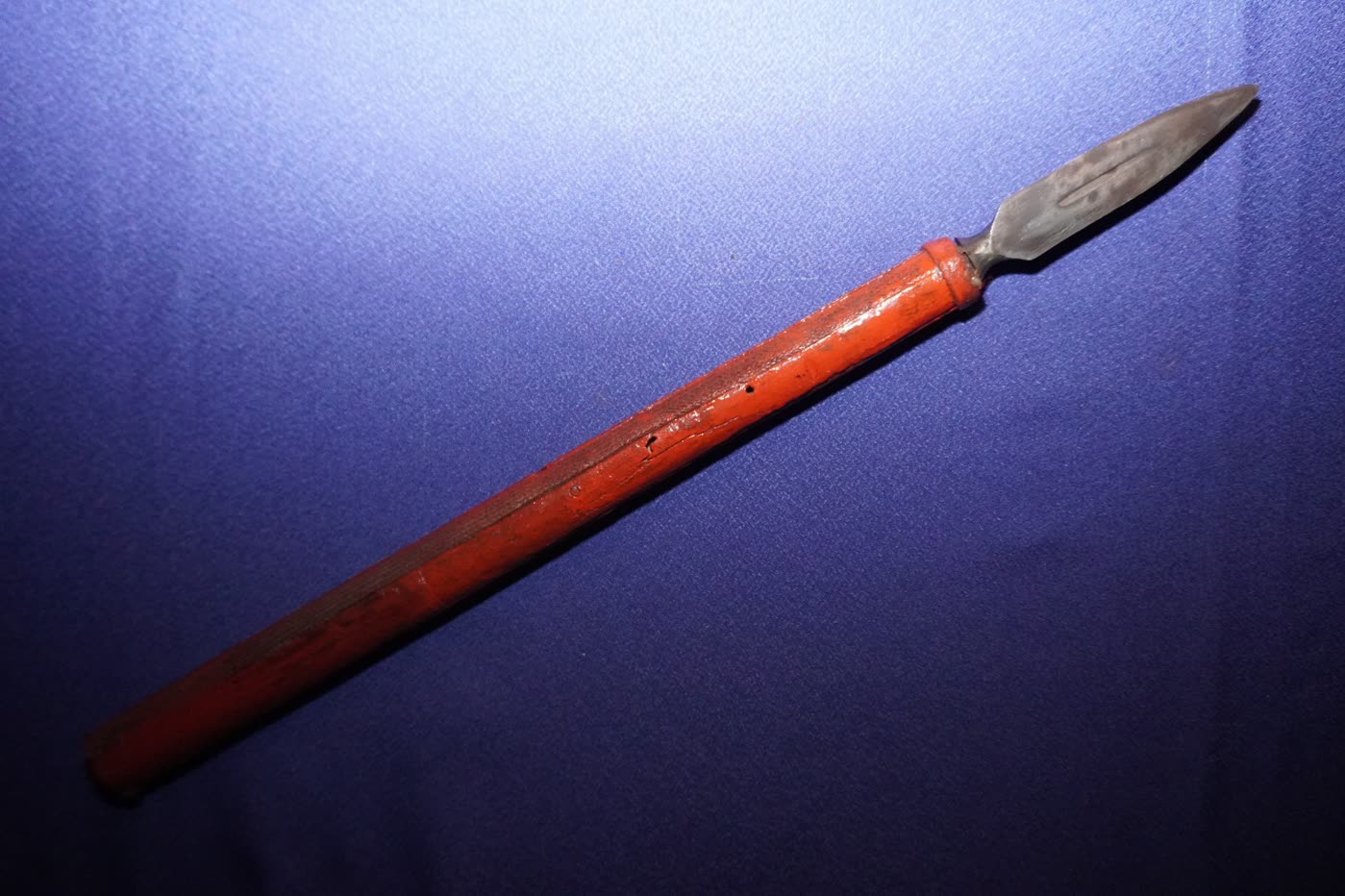
Plate IV.2 · 柄・全体
Whole object · second face
The reverse. The lacquer reads as a strong orange-red under this light, worn thin along the upper arris where handling has rubbed it back to a darker ground.
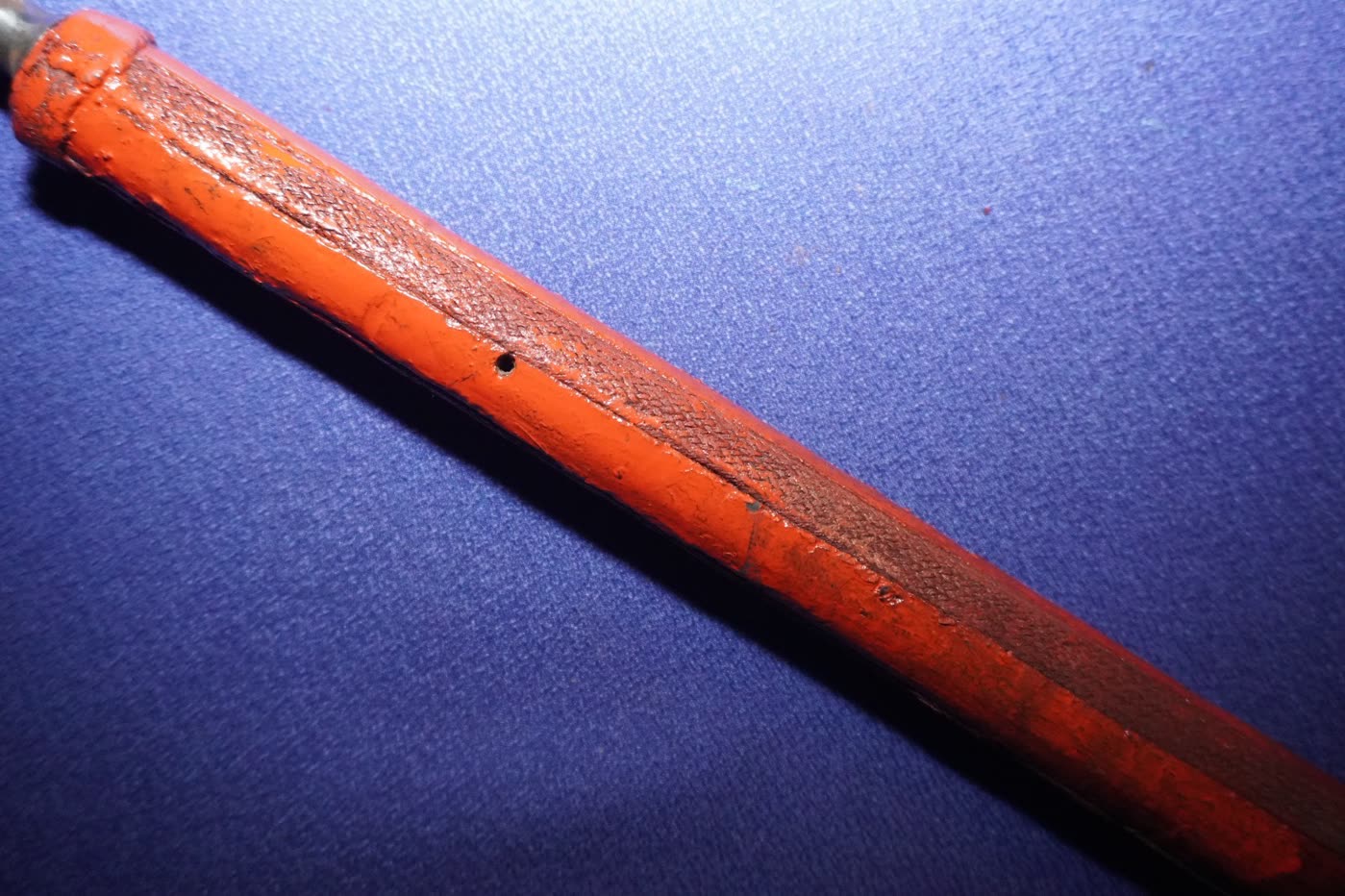
Plate IV.3 · 柄・全体
Shaft · pin hole & texture
The shaft at close range. A small round hole passes through it — the seat for a retaining pin — and one facet carries a fine diagonal cross-hatched texture beneath the lacquer, where an underlayer shows through the worn surface.
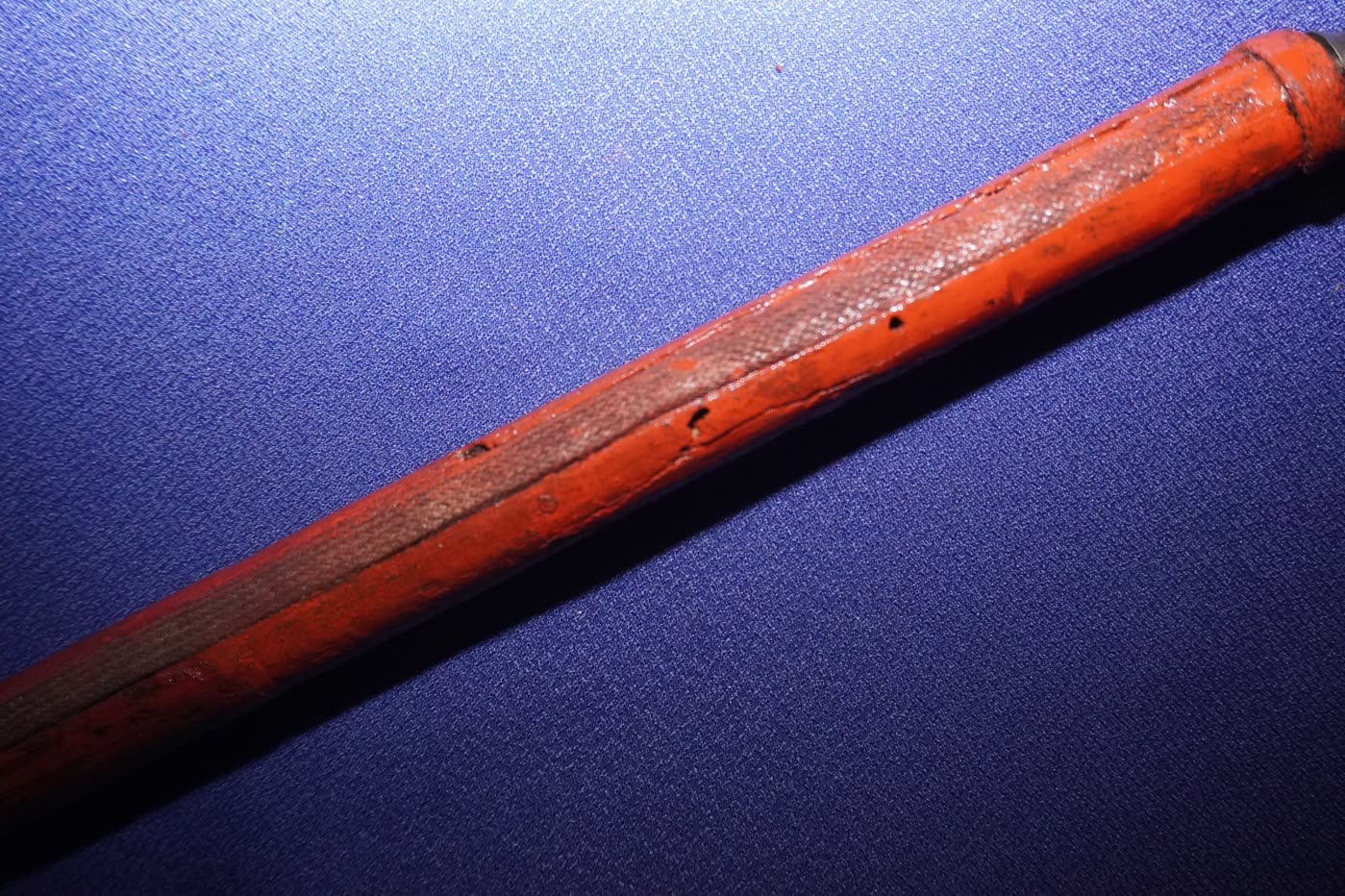
Plate IV.4 · 柄・全体
Shaft · lacquer wear
Lacquer condition along the shaft: the red survives well on the flats and has worn to a dark brown along the arrises, with small chips and a shallow gouge visible.
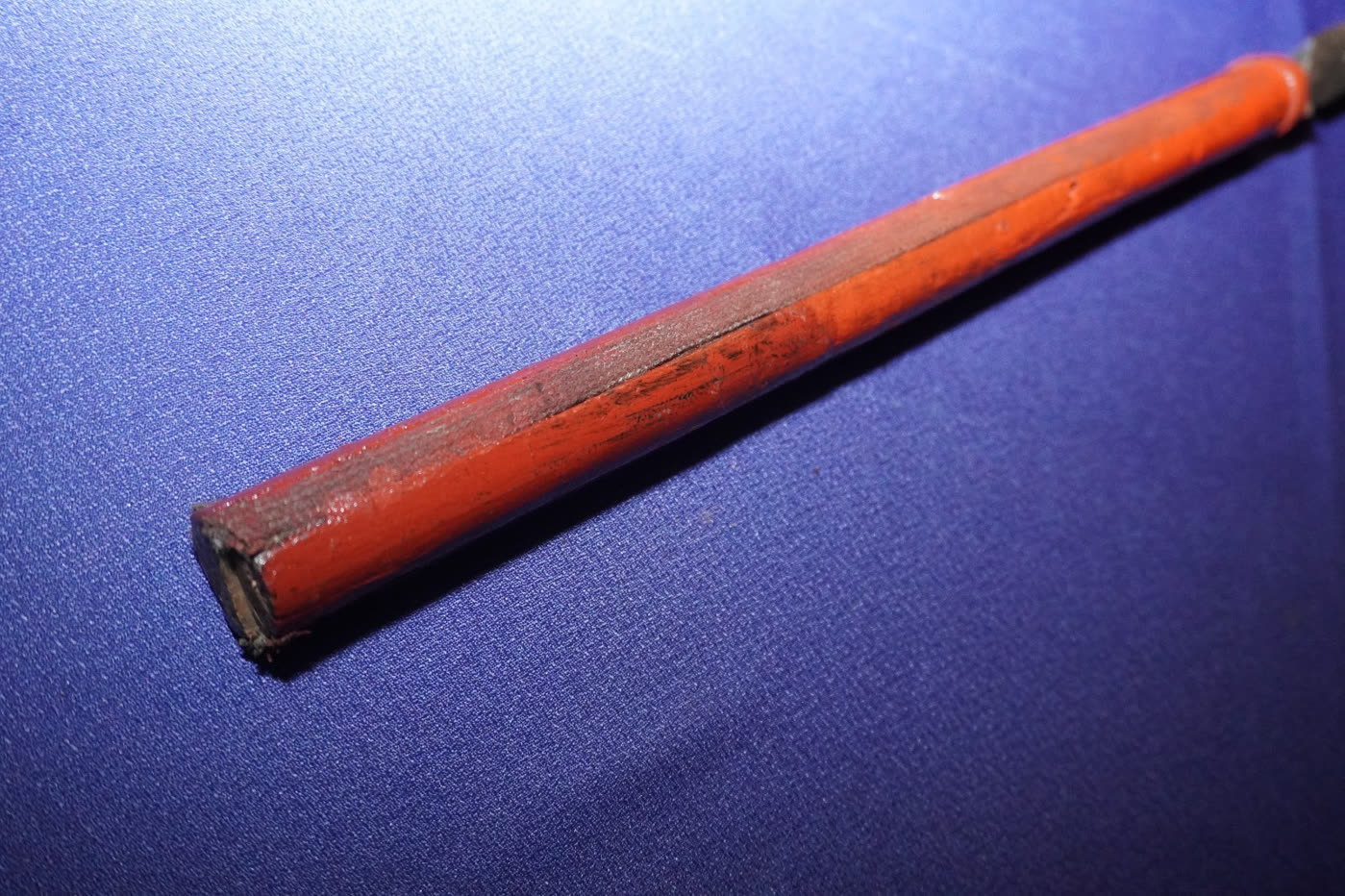
Plate IV.5 · 柄・全体
Shaft · butt end
The butt end, finished flat with no cap or ferrule and with lacquer loss around the edge exposing dark wood. The section reads as a rounded polygon rather than a true circle.
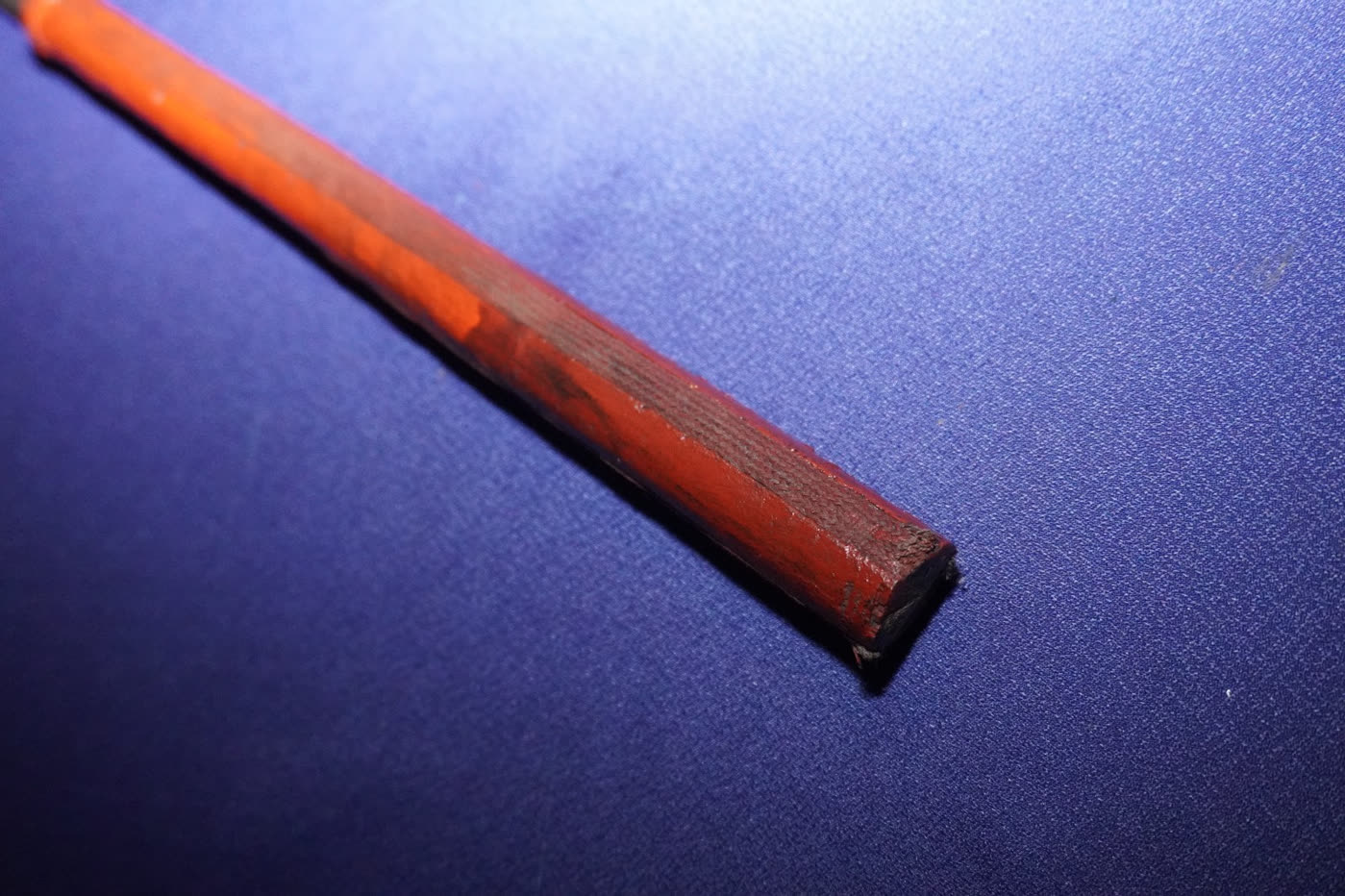
Plate IV.6 · 柄・全体
Shaft · section at the butt
The same end from a second angle, where the faceted section and the thickness of the lacquer layer over the wood core are both legible.
II
Head & Blade
穂・地刃
9 plates
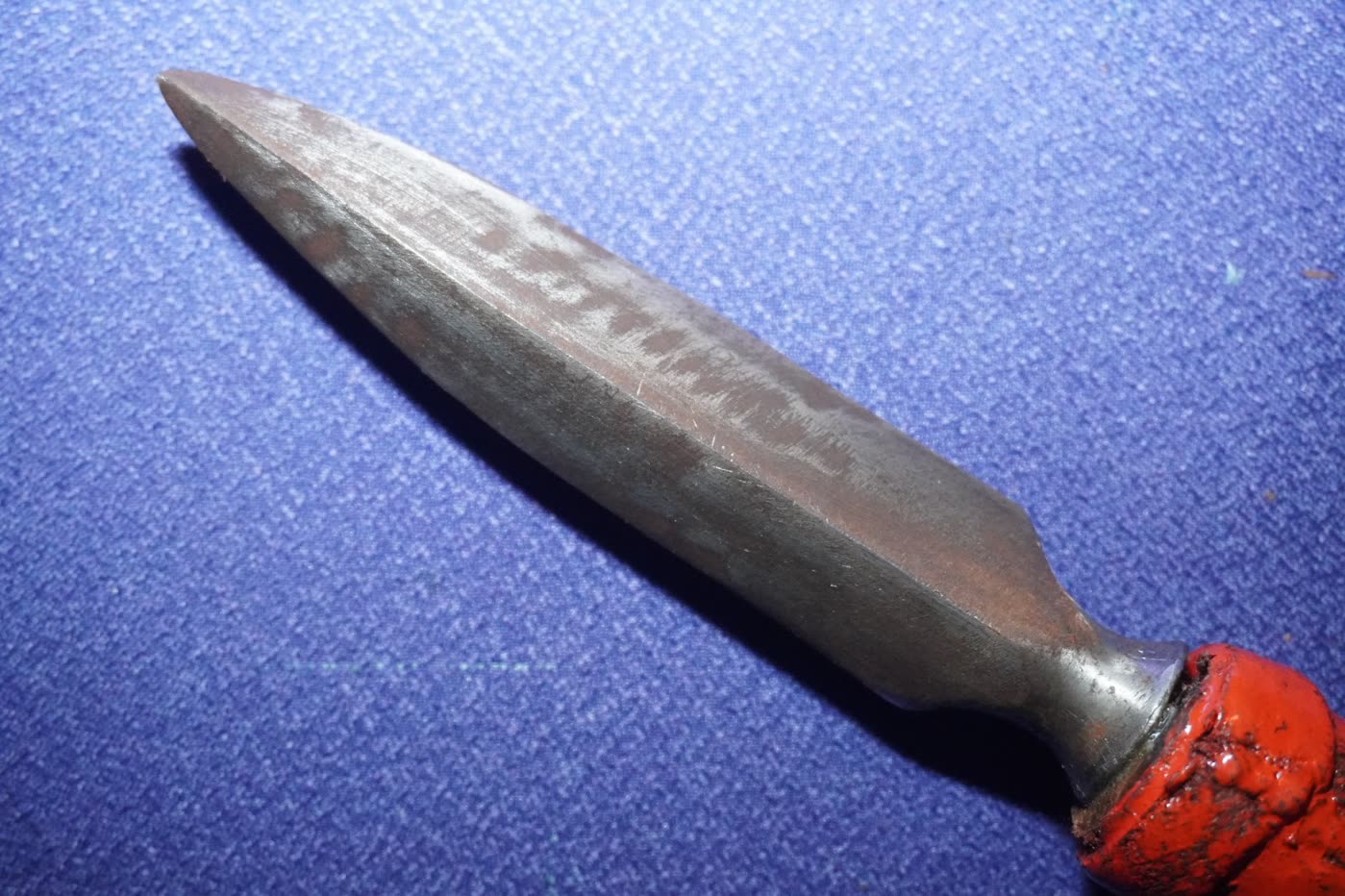
Plate II.1 · 穂・地刃
Head · first face
The head on its first face. Under an even brown rust film, a soft wavy band runs along the edge and reads as lighter than the ground above it. The outline of the point is unbroken and the section is markedly thick for the width.
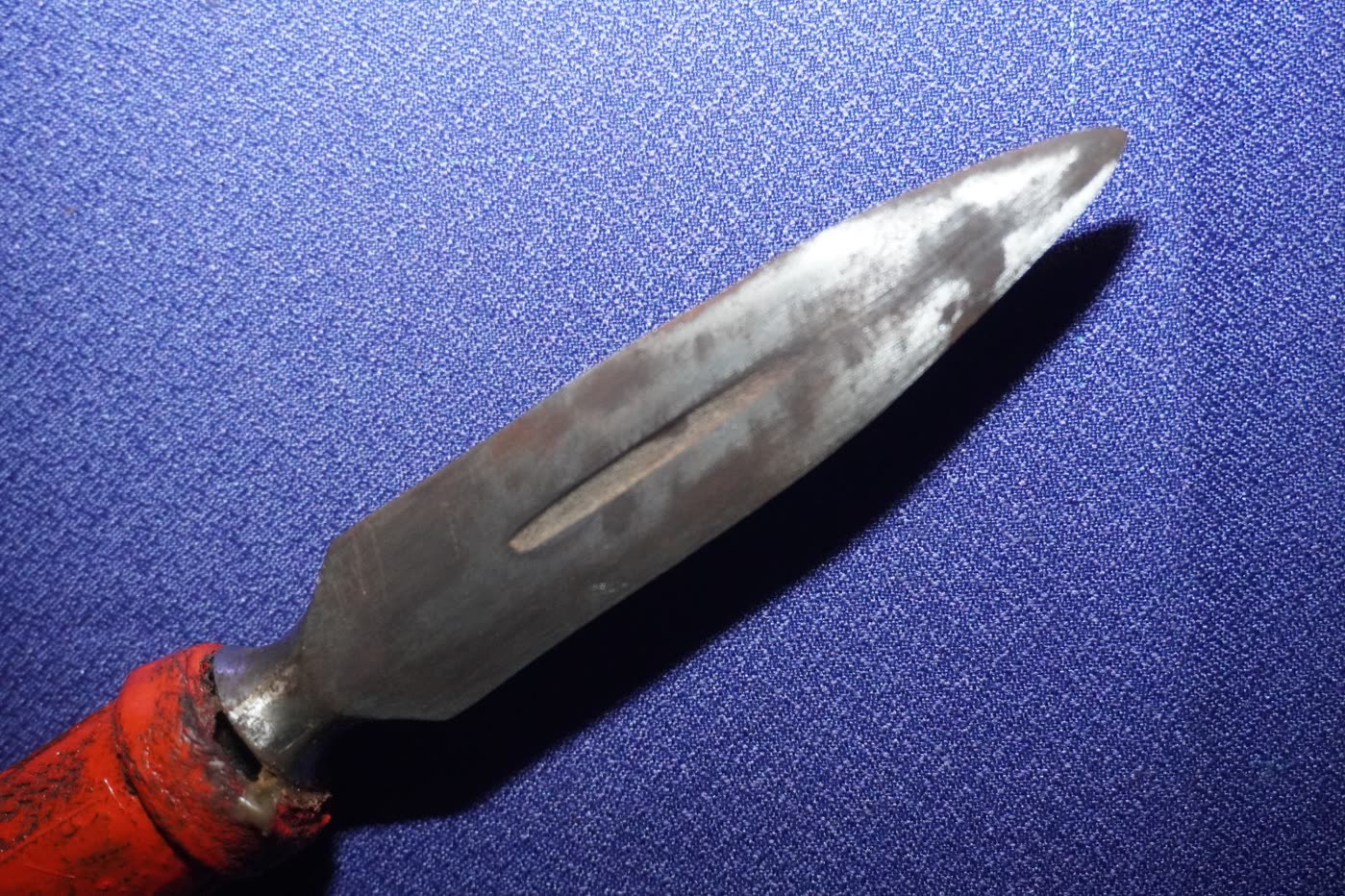
Plate II.2 · 穂・地刃
Head · hi
The second face carries a long narrow groove — a hi — cut along the centre of the blade and stopping short of both ends. Its floor is rust-filled and its walls are clean and parallel.
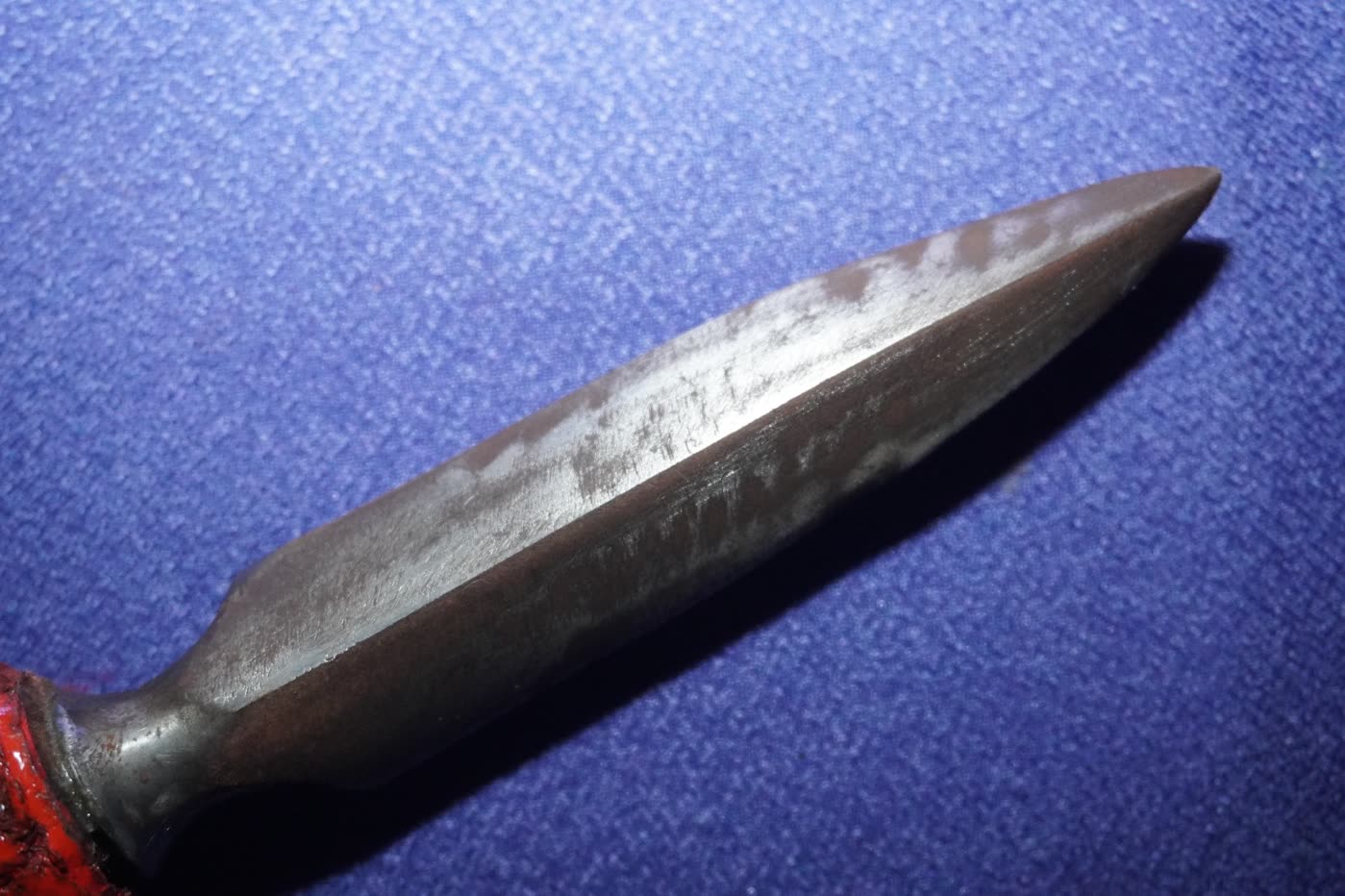
Plate II.3 · 穂・地刃
Head · raking light
The same head under a lower, harder light, which lifts the wavy edge band into a clearer pattern of pale patches. Whether that is a or differential rust is not settled from photographs.
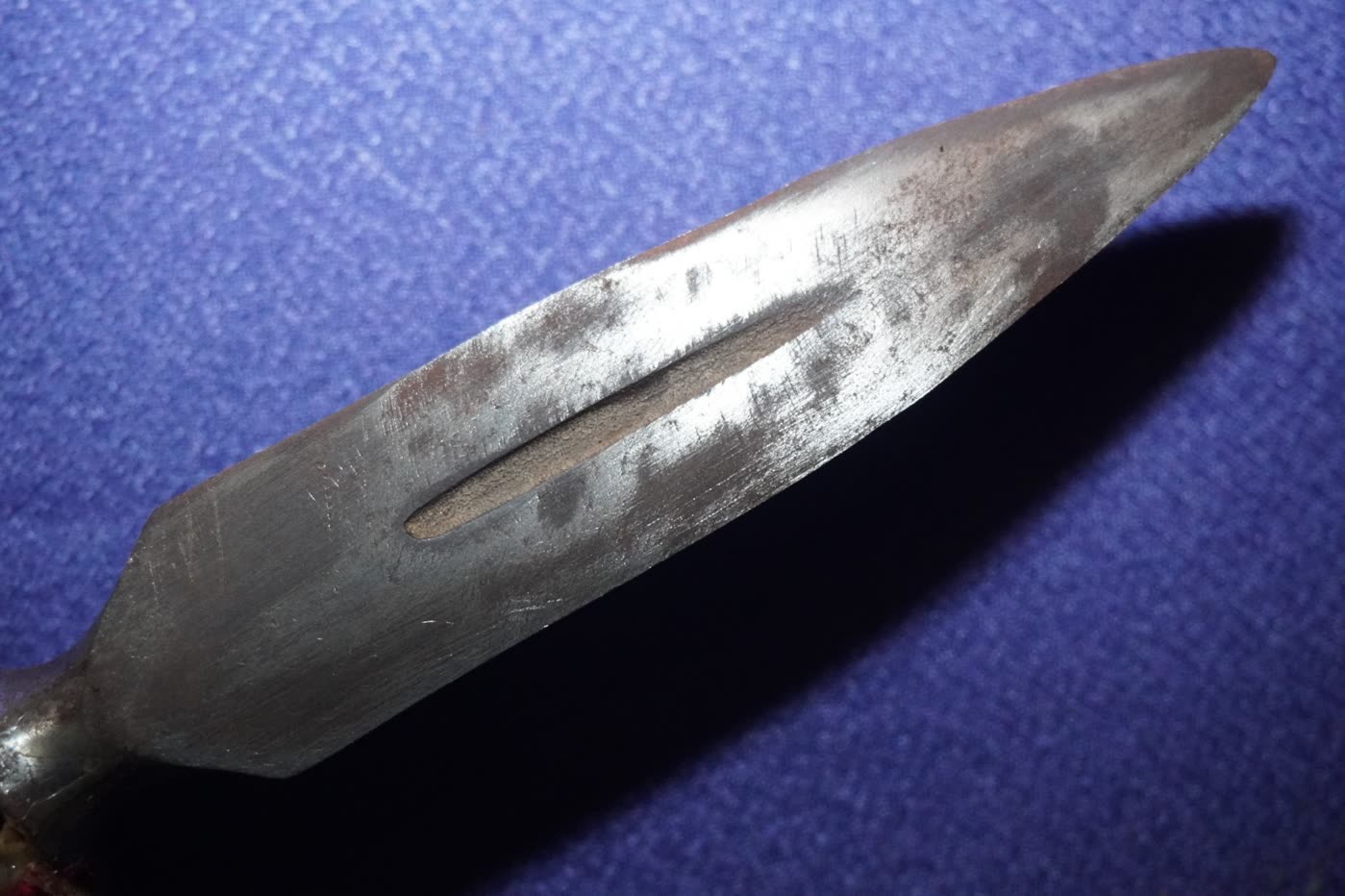
Plate II.4 · 穂・地刃
Hi & ridge
Closer on the groove. The central ridge runs unbroken from the base to the point on either side of it, giving the head its stiff triangular section.
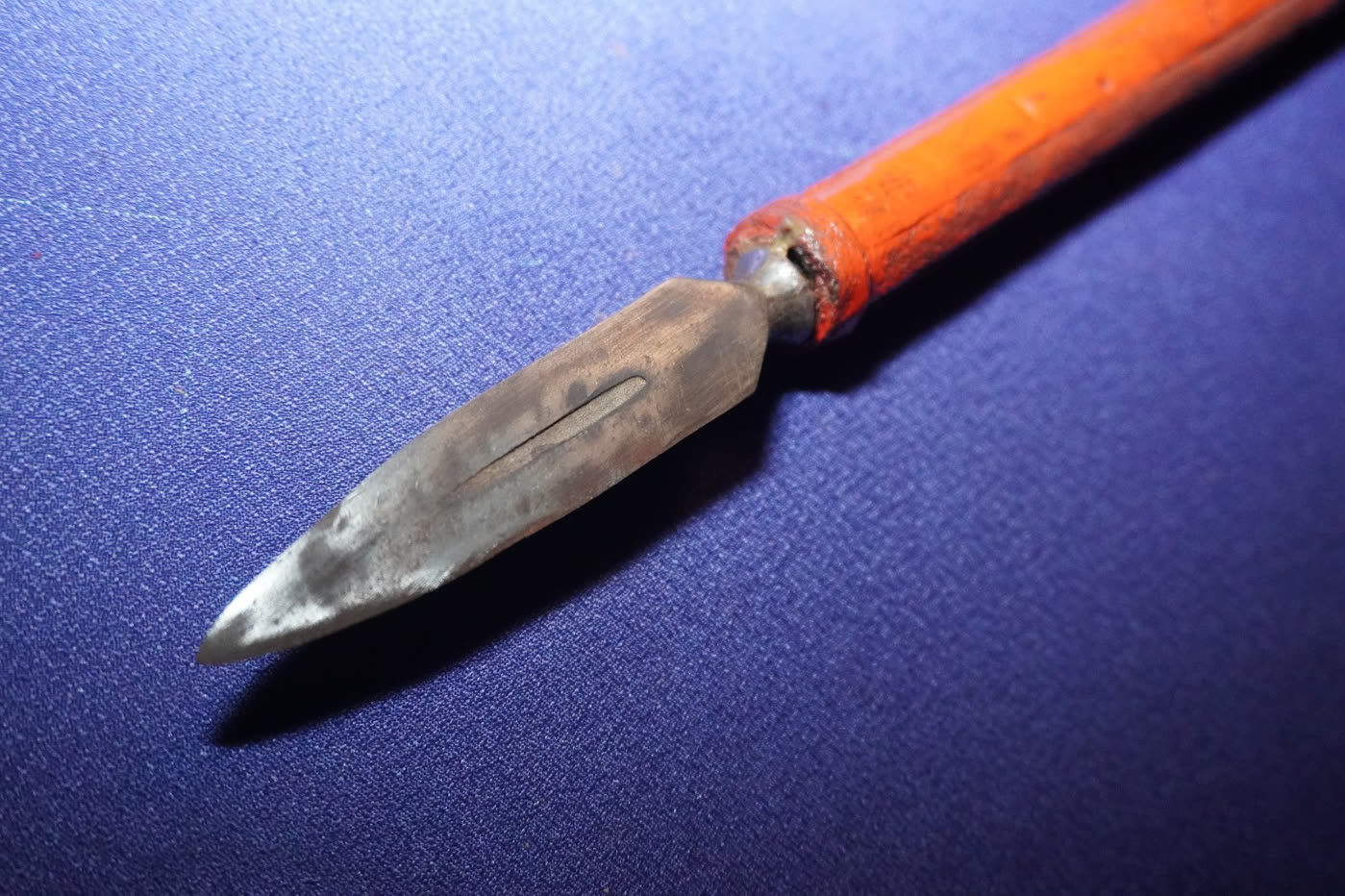
Plate II.5 · 穂・地刃
Head & shaft together
Head and shaft in one frame, with the metal collar visible where the base of the head enters the socket. The relationship of the two is fixed.
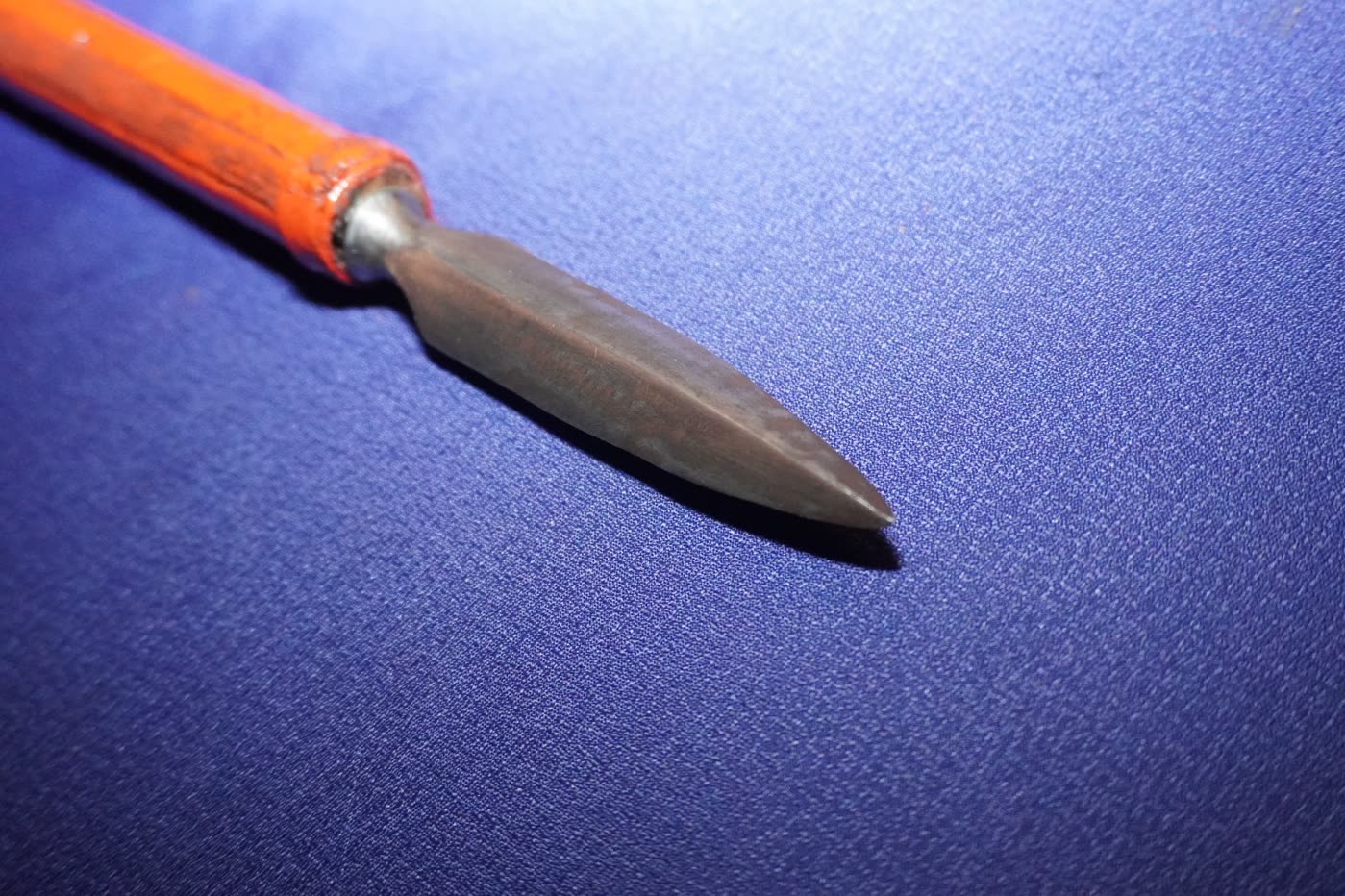
Plate II.6 · 穂・地刃
Point
The point at close range: intact, still acute, with the rust film thinning at the extreme tip where the surface has been handled.
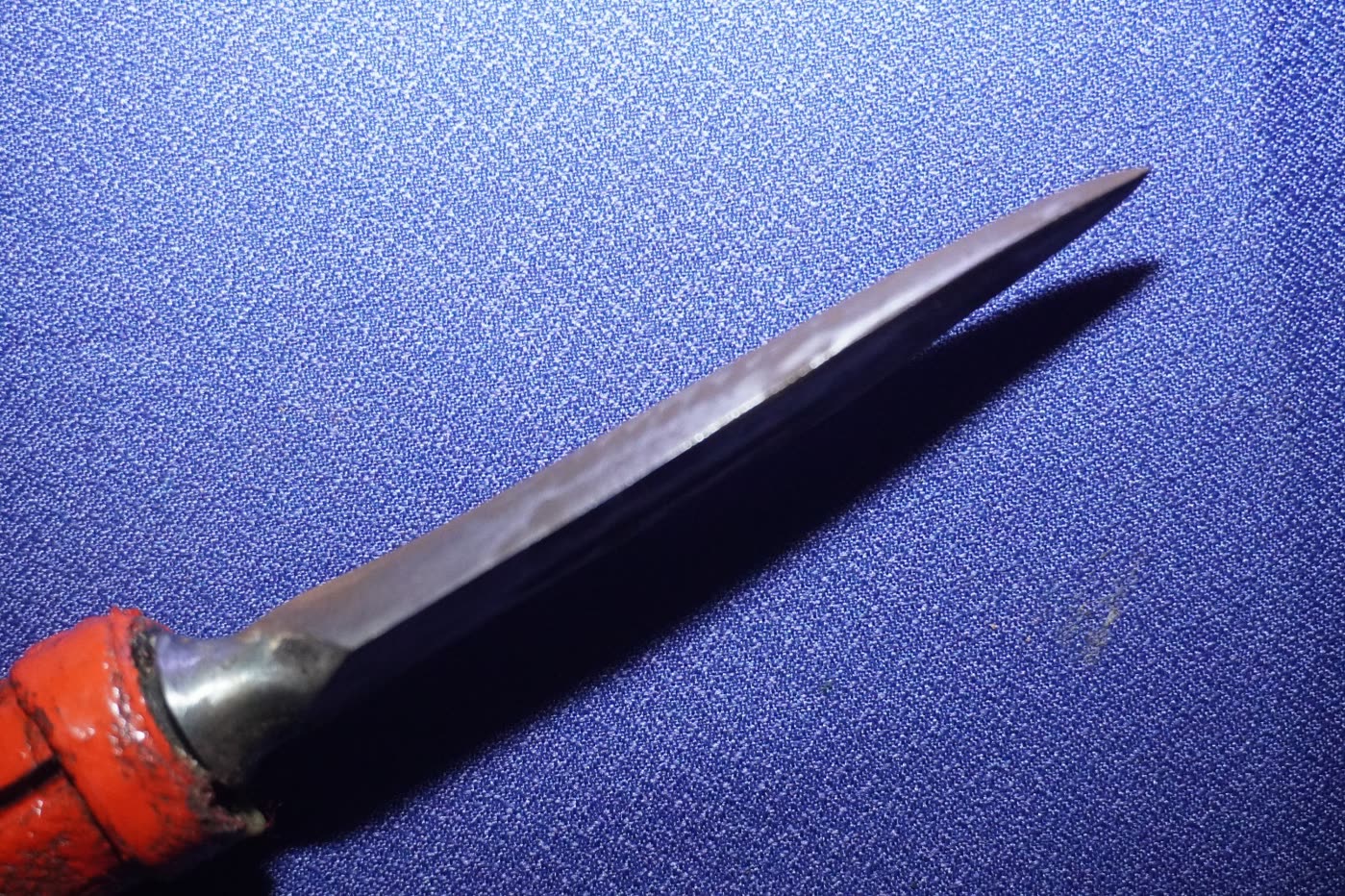
Plate II.7 · 穂・地刃
Head, edge-on
A near-edge-on record showing how the section stands up: a stout 1.1 cm at the base carried well forward before it runs out at the point.
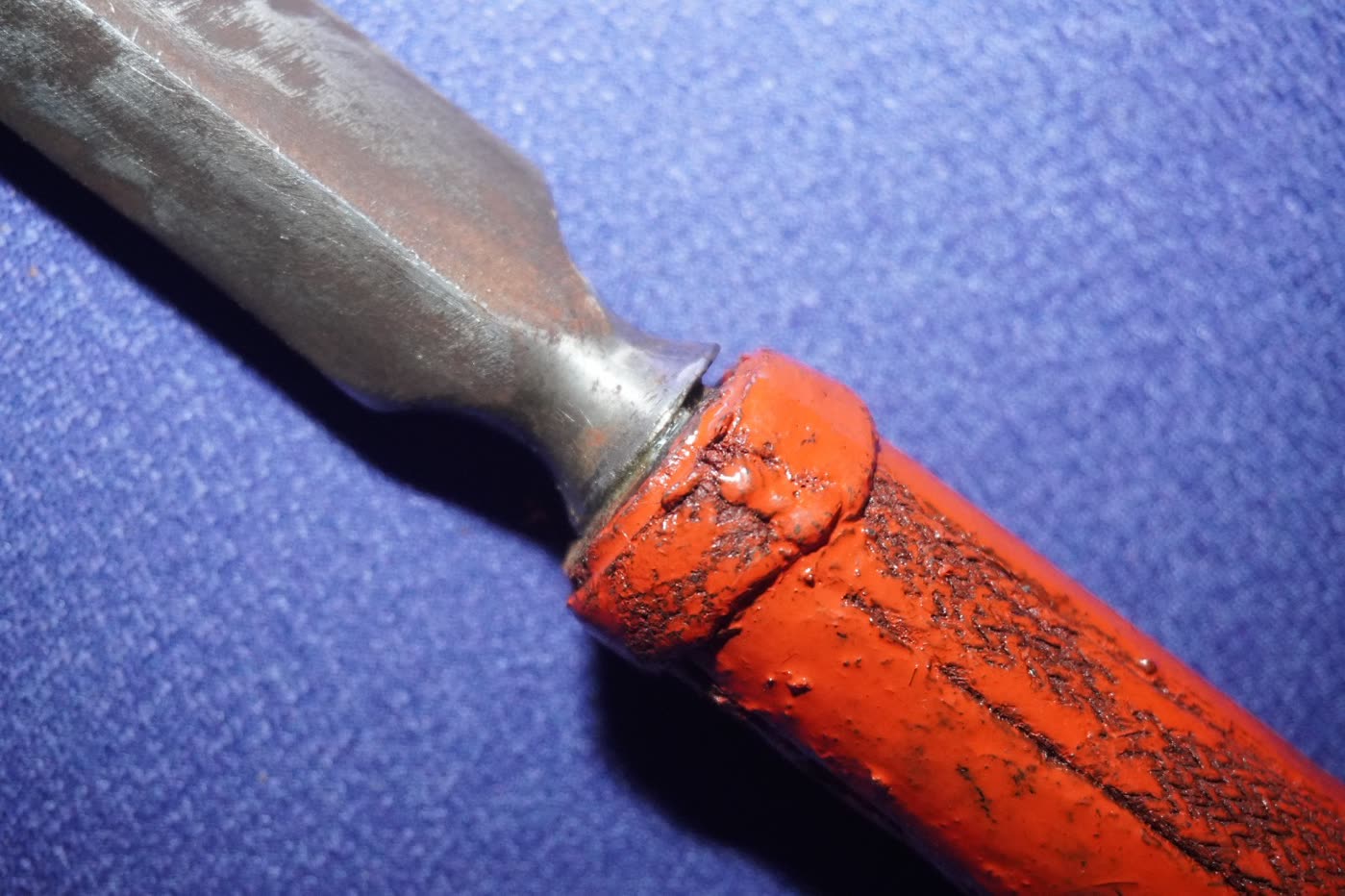
Plate II.8 · 穂・地刃
Base & socket
Where the head enters the shaft: the base swells to a shoulder and disappears into the lacquered socket. Nothing of the tang is visible past this point.
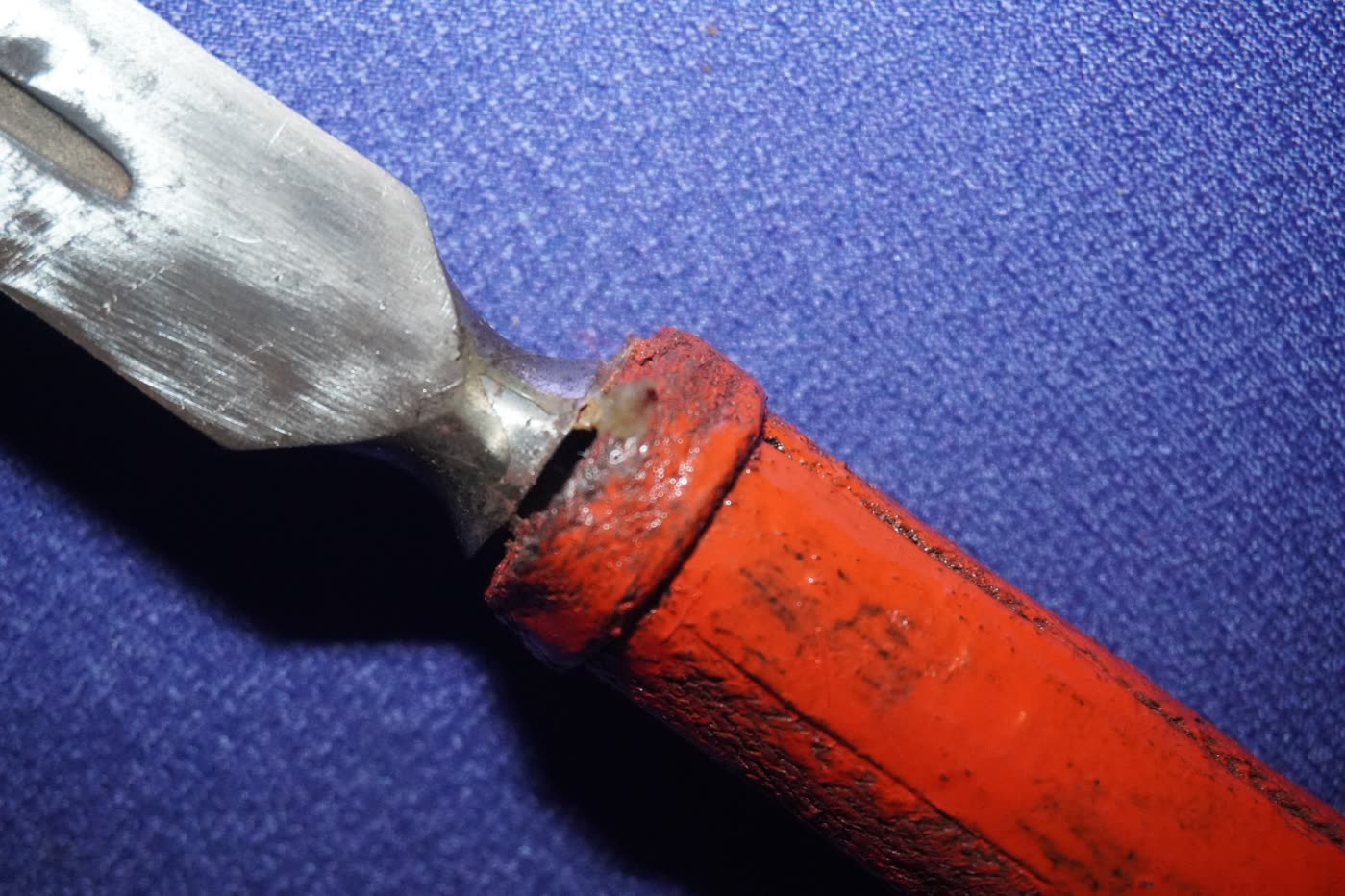
Plate II.9 · 穂・地刃
Junction, close
The junction at close range. A gap has opened between the shoulder of the head and the mouth of the socket, and old adhesive or filler is visible in it — the seating is loose but the head has not come free.
Photographs courtesy of GN-1-Japan, used with permission.
Revision history
- Catalogue record established from the ended listing and its 15 gallery photographs.